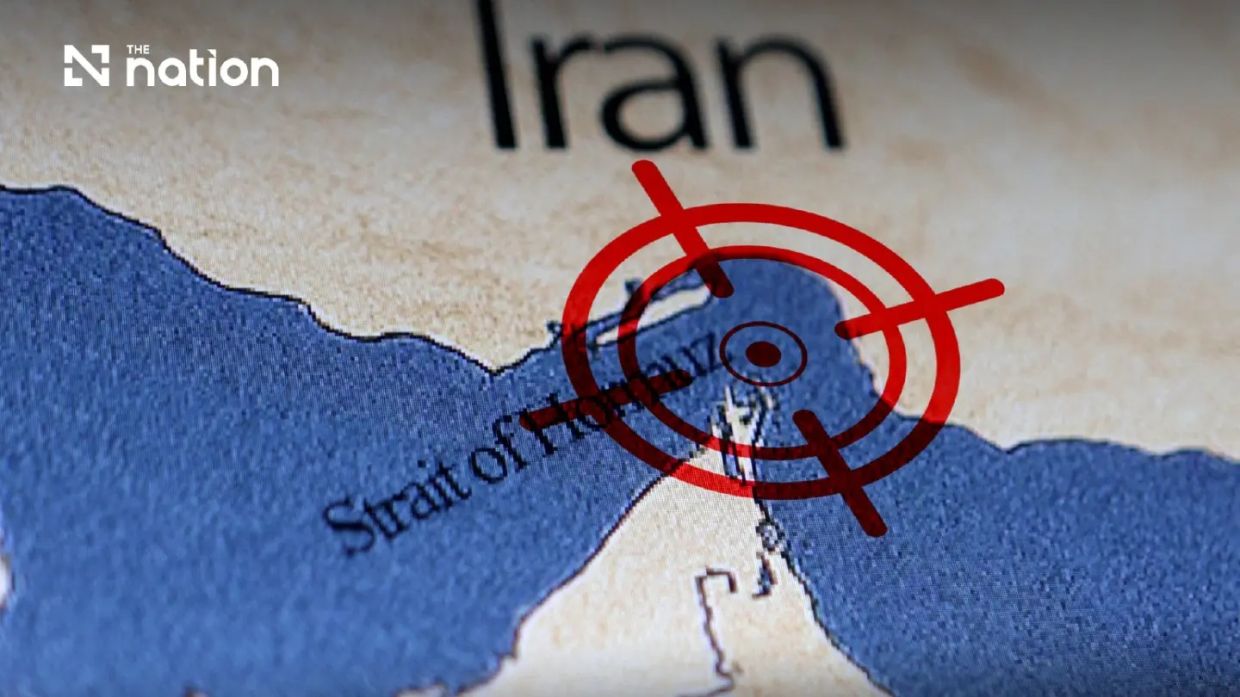
A Thai-flagged commercial vessel has reportedly been attacked by Iranian forces while attempting to navigate the Strait of Hormuz, according to Iran's semi-official Tasnim news agency, marking an alarming escalation in maritime risks within the world's most strategically vital energy chokepoint. The incident occurs against a backdrop of rapidly intensifying military operations between Washington and Tehran, with neither Thai authorities nor independent maritime organisations having yet confirmed details of the alleged attack or the vessel's condition, ownership, cargo, or crew welfare.
Tasnim's report provided minimal specifics about the vessel, withholding identification details, operational status, and whether damage or casualties occurred. The lack of corroboration from Thai shipping authorities or the vessel's operator underscores the fog of war surrounding incidents in the Strait of Hormuz, where competing claims and unverified allegations from state-linked sources have become increasingly difficult to independently assess. This ambiguity itself poses a significant risk to legitimate maritime commerce, as shipping companies struggle to distinguish credible security warnings from propaganda or exaggeration.
The reported attack coincides with Iranian announcements of heightened military activity throughout the waterway. State media citing the Islamic Revolutionary Guard Corps Navy alleged that the strait has become "extremely unsafe" and closed entirely due to what officials characterised as American aggression. More provocatively, the IRGC claimed to have intercepted four unidentified oil tankers allegedly attempting to pass through with US military support, ordering them to remain stationary during what it described as joint missile and drone operations. Such incidents, whether accurately reported or not, exemplify the dangerous cat-and-mouse dynamic now defining Hormuz operations.
Additional maritime emergencies further complicate the security picture. Tasnim separately reported that two oil tankers ignited following explosions while attempting to traverse an area Iranian media characterised as a minefield in the southern strait. These incidents, if confirmed, would mark a worrying escalation from warning manoeuvres to direct engagement with commercial vessels. The IRGC Navy warned shipowners to heed Iranian military notices rather than rely on US force protection, a clear attempt to intimidate commercial operators and undermine Western security assurances in the region.
The intensifying threats to Hormuz shipping carry profound implications for Southeast Asian economies, including Malaysia's. The strait remains the lifeblood for global energy markets, with roughly one-third of all seaborne traded oil transiting its waters daily. Any significant and sustained disruption would cascade across supply chains regionally and globally, elevating freight and insurance premiums, destabilising fuel prices, and potentially constraining energy supplies for manufacturing-dependent economies like Malaysia, Thailand, and Vietnam. Malaysian petrochemical producers, refineries, and industrial sectors dependent on stable energy costs face mounting exposure to Hormuz volatility.
These maritime incidents unfold as the United States has executed seven consecutive nights of airstrikes against Iranian military targets. US Central Command announced the latest operation commenced at 3pm East Coast time on Friday, describing the air campaign as intended to "continue degrading Iran's military capabilities." While CENTCOM has not disclosed comprehensive target lists or damage assessments, Iranian officials have asserted that previous strikes struck civilian infrastructure in the nation's south, including bridges, airports, power facilities, and railway stations. Foreign Minister Abbas Araghchi reported eight people killed in overnight strikes, including three fatalities from a bridge attack in Bandar Khamir.
Iranian state media additionally alleged that US forces attacked an Iranian oil tanker positioned at Kharg Island, a critical petroleum export facility. These claims remain unverified through independent sources, reflecting the broader difficulty in establishing ground truth as both capitals weaponise information in support of their military narratives. The reported civilian casualties, if authentic, risk further hardening Iranian resolve and potentially widening domestic support for retaliatory operations that could expand the conflict beyond existing military-to-military exchanges.
Iran has responded with its own military strikes across the Gulf region. The Islamic Revolutionary Guard Corps claimed responsibility for attacking US assets and military bases in Bahrain, Jordan, Kuwait, and Qatar, though the scale and effectiveness of these operations remain unclear. Qatari authorities stated their armed forces intercepted an incoming Iranian attack, with a child injured by falling debris during air defence interceptions. Meanwhile, the IRGC Navy asserted it destroyed a US MQ-9 Reaper drone over the port city of Bushehr using a newly developed air-defence system, a claim the United States has not confirmed.
These tit-for-tat military exchanges carry significant risks of geographic escalation. The Gulf region hosts substantial US military infrastructure and personnel across multiple countries—Bahrain, Kuwait, Qatar, the United Arab Emirates, and others—creating numerous potential flashpoints where miscalculation or accident could trigger direct engagement. Regional allies of Washington worry that widening confrontation could embroil their own territories or forces, drawing them into a conflict they did not initiate. The presence of competing claims about drone losses, intercepted attacks, and damaged targets suggests that both sides possess imperfect information and face strong incentives to declare tactical victories regardless of actual battlefield results.
For Southeast Asian nations, the escalating Gulf tensions present a dual challenge. First, the immediate risk: any significant shipping disruption would reverberate through regional trade flows, energy security, and economic growth. Malaysia, as a shipping hub and energy-dependent manufacturing centre, faces particular vulnerability. Second, the strategic imperative: prolonged US-Iran confrontation could eventually force regional states to navigate pressures from both Washington and its adversaries, complicating efforts to maintain strategic autonomy and non-aligned positioning. Thai authorities, whose vessel now sits at the centre of this crisis, must balance maintaining diplomatic relations with both the United States and Iran while prioritising the safety of their maritime interests.
The convergence of maritime attacks, civilian infrastructure damage, and competing military claims suggests that the US-Iran confrontation has entered a more volatile and unpredictable phase. The Strait of Hormuz, already one of the world's most dangerous waterways due to geography and geopolitics, has become a frontline in active great-power competition. Commercial vessels transiting its waters now face not merely geopolitical risk but direct military targeting by state actors, a development that threatens to permanently alter shipping economics and supply chain stability across Asia. Without diplomatic off-ramps or confidence-building measures, the cycle of escalation appears poised to continue, with global commerce bearing the tangible costs of regional conflict.

