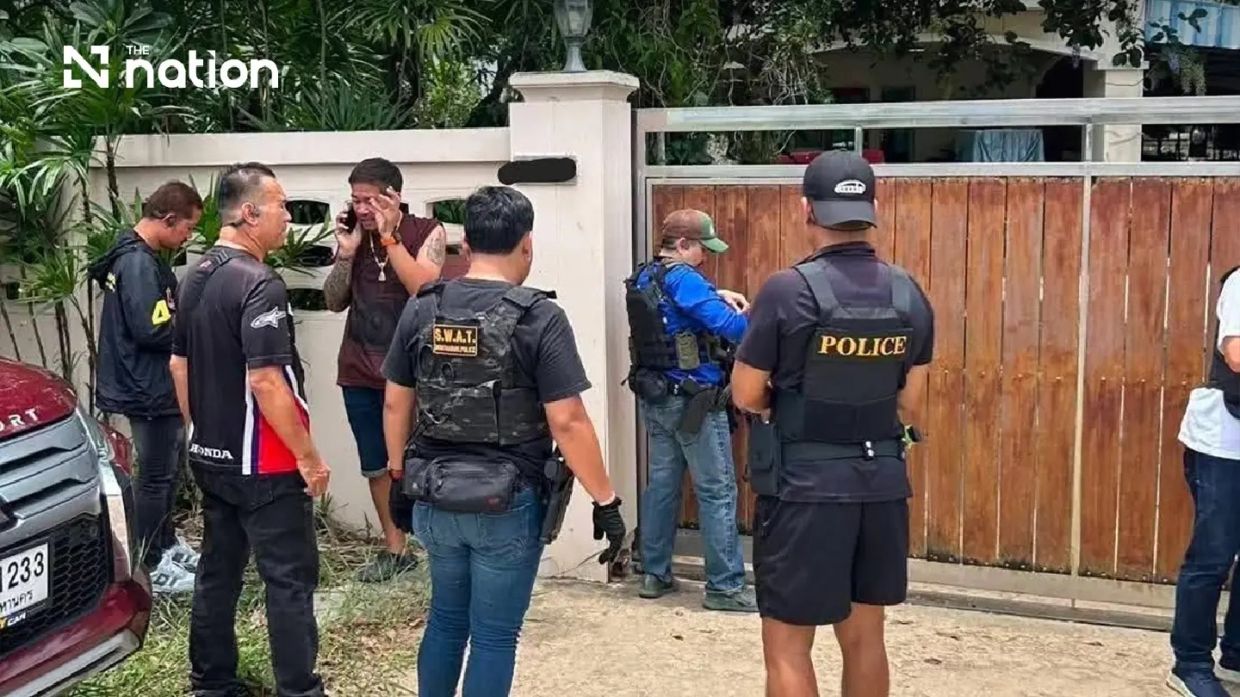
A secondary school student shot and killed his grandparents at their home in Nonthaburi before opening fire at his school on Friday morning, August 7, in what authorities describe as a devastating attack that left seven people dead and 15 injured. The suspected gunman, identified as a Mathayom 2 student, lived with his paternal grandparents in a residential area of Bang Bua Thong district before committing the crimes that shocked Thailand's education sector and reignited concerns about youth violence and firearm accessibility.
Investigators discovered the bodies of both grandparents at their residence in Soi Wat Lat Pla Duk, Bang Khu Rat subdistrict, with evidence suggesting they were killed using the same firearm that was later deployed in the school attack. The weapon, identified as a CZ 9mm handgun, was legally registered to the suspect's grandfather, raising critical questions about how a minor gained access to a secured firearm and whether proper storage protocols were followed. This detail has become central to the police investigation, as authorities work to understand the circumstances that allowed the juvenile to obtain both the gun and ammunition.
The shooting at Debsirin Nonthaburi School prompted an immediate emergency response, with officers bringing the situation under control by Friday morning. Police removed all injured individuals and the bodies of those killed from the school premises, with Pol Gen Kitrat Phanphet, Thailand's national police chief, personally overseeing the evidence collection and scene documentation. The incident claimed the lives of seven people including the suspected attacker, marking one of Thailand's deadliest school shootings in recent memory and placing intense scrutiny on security measures at educational institutions.
Royal Thai Police spokesman Pol Lt Gen Trairong Phiwphan stated that determining the underlying motive remained a significant challenge at the investigation's early stages. Officers had established that the suspect lived with his elderly relatives rather than with parents, a living arrangement that investigators believe may have been significant to understanding the events leading up to the attack. The police have contacted the suspect's guardians to gather information about his behaviour patterns, social interactions, and any warning signs that might have preceded the violence.
The investigation into how the juvenile acquired the firearm has become a focal point for authorities examining systemic failures in weapon storage and family supervision. While police confirmed that the CZ 9mm handgun belonged to the grandfather and was properly registered, investigators must now trace the complete chain of events through which the student removed the weapon from the residence, determine where ammunition was obtained, and establish whether the gun was stored securely or left accessible. These details hold profound implications not only for this case but for broader debates in Thailand about firearm regulations and responsible ownership practices.
Pol Lt Gen Trairong acknowledged the limitations of current understanding, stating that the force could only confirm the registered ownership of the weapon at that stage of the investigation. The broader questions surrounding the suspect's access to the firearm, the storage arrangements at the grandfather's home, and the sourcing of ammunition would require extended investigative work. This investigation methodology reflects Thai police procedures for serious crimes, where comprehensive examination of circumstances and relationships typically unfolds over weeks or months rather than days.
Beyond the immediate criminal investigation, authorities have prioritized psychological support for those affected by the tragedy. National police chief Pol Gen Kitrat Phanphet instructed the Police General Hospital's chief medical officer to deploy teams of psychologists and mental-health specialists to Debsirin Nonthaburi School and surrounding areas. These professionals will work with teachers, students, and community members to process the trauma of witnessing or learning about the mass shooting, with the explicit goal of mitigating potential long-term psychological consequences for survivors.
The incident raises uncomfortable questions for Southeast Asian education systems and parent communities about how schools can enhance security protocols while maintaining safe, welcoming learning environments. Thailand's experience with school shootings, though less frequent than in some other nations, highlights vulnerabilities in how families store weapons and the risks posed when adolescents have unsupervised access to firearms. The suspect's residence with elderly grandparents, rather than parents, may have created supervision gaps that warrant examination by child welfare and law enforcement agencies.
For Malaysian observers, the Nonthaburi school shooting serves as a cautionary reminder about firearm responsibility and the psychological factors that can culminate in violence among youth. While Malaysia's own gun laws are considerably more restrictive than Thailand's, cases of school violence—whether involving weapons or other means—remain a concern for educators and policymakers. The need for comprehensive mental-health support in schools, early warning systems for troubled students, and ongoing dialogue between schools, families, and authorities about student welfare has become increasingly evident across the region.
The coming weeks will see Thai investigators delve deeper into the suspect's background, relationships, academic performance, and any previous incidents that might have suggested psychological distress or violent ideation. Simultaneously, the case will likely prompt renewed scrutiny of Thailand's firearm registration system, storage requirements for gun owners, and whether educational institutions require enhanced security measures. The tragedy underscores the complex intersection of criminal investigation, public safety, mental health, and family responsibility in a moment of national grief.

