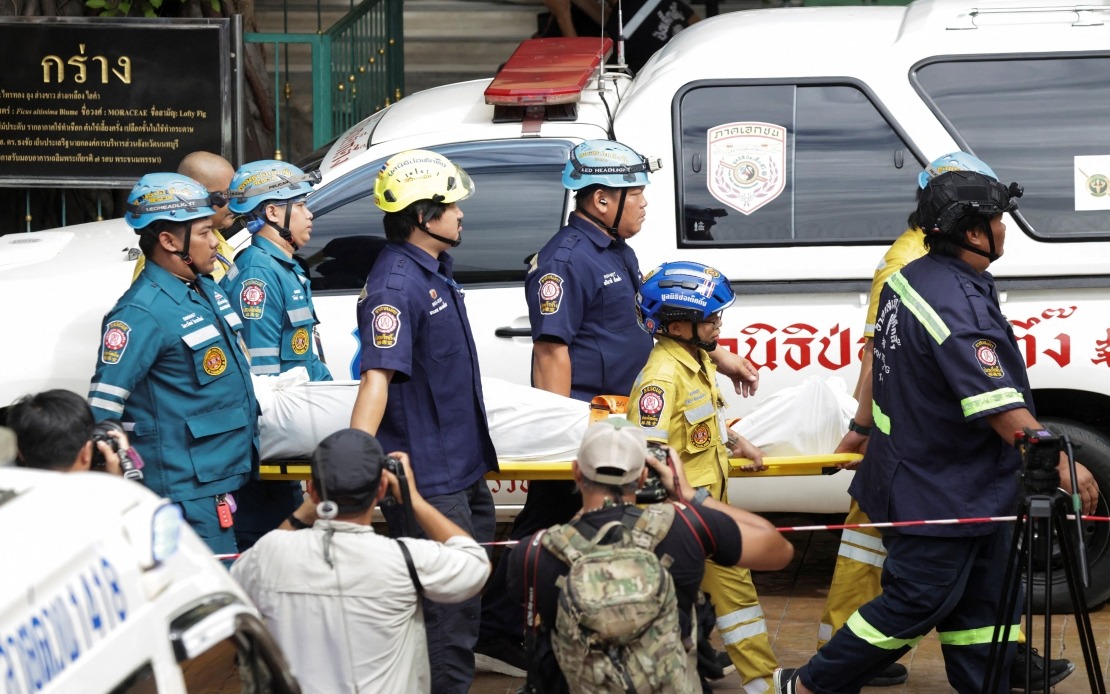
A shooting rampage at a school in Nonthaburi province on Friday has left six people dead and 15 others injured, with investigations now focusing on whether the student suspect fatally shot his own grandparents before the attack. Royal Thai Police Deputy Inspector-General Trairong Piwpan revealed that preliminary findings indicate the gunman had already discharged 26 rounds at his home before arriving at Debsirin Nonthaburi School around 10am, where he continued firing into the school population.
The discovery of the grandparents' bodies inside their residence in Bang Bua Thong district has transformed this incident into what authorities now suspect was a family tragedy preceding a mass casualty event. Both elderly victims sustained fatal gunshot wounds to the head, though police stressed that while evidence points to the suspect being responsible, the precise chronology and time intervals between the killings and the school assault remain subjects of ongoing forensic analysis. The recovered weapon—a 9mm handgun—and 34 additional rounds of ammunition discovered outside the magazine during a search of the suspect's home suggest premeditation and a substantial cache of lethal resources.
At the school itself, the attacker's shooting spree claimed the lives of three teachers and three students, while causing injuries to 15 additional victims ranging in severity. The incident unfolded during morning hours, a period when schools typically operate at full capacity, amplifying the potential death toll. The suspected gunman was subsequently found dead at the scene, ending the violence though leaving a community and nation grappling with the trauma of what constitutes one of Thailand's most lethal recent mass shooting incidents.
For Southeast Asian observers, this tragedy underscores persistent vulnerabilities within Thailand's security apparatus and gun regulations. Mass shooting incidents remain comparatively rare across much of the region, yet Thailand has experienced several devastating attacks in recent years, suggesting systematic issues rather than isolated incidents. The apparent ease with which the suspect obtained and retained access to firearms raises critical questions about licensing procedures, background checks, and secure storage requirements that Thai authorities will face under intense scrutiny.
The motive behind the violence remains the subject of active investigation. Police have not disclosed whether domestic disputes, mental health crises, educational grievances, or other factors precipitated the violence. Understanding causation is essential not merely for prosecutorial purposes—complicated by the suspect's death—but for developing preventive strategies that might intercept similar trajectories before they culminate in mass casualties. Thai officials have committed to reconstructing the sequence of events in meticulous detail, recognizing that public confidence in institutional safety depends upon transparent and comprehensive investigation.
The concentration of lethality over a brief timeframe reflects the devastating efficiency that access to automatic or semi-automatic weapons facilitates in confined environments such as schools. The choice of target location amplifies the symbolic dimension of the attack; schools represent not merely places of education but also psychological anchors of community safety and social investment in future generations. The simultaneous murder of family members and subsequent mass shooting suggests a perpetrator experiencing acute psychological disintegration or radicalization, phenomena that mental health professionals and security specialists will need to examine exhaustively.
From a regional perspective, the incident invites uncomfortable comparison with mass shooting phenomena observed in other developing democracies, where rapid urbanization, economic pressures, and inadequate mental health infrastructure occasionally converge with weapons access to produce catastrophic outcomes. Malaysia and other neighbouring nations will observe Thai policy responses closely, particularly around whether incidents of this magnitude spur legislative or enforcement reforms around firearm regulation, safe storage requirements, or mental health intervention protocols.
The 15 injured survivors will require not only immediate medical attention but sustained psychological support in the aftermath of witnessing or experiencing violence within a supposedly protected institutional setting. Schools throughout Thailand will likely implement heightened security measures in response, reflecting the tragic reality that mass shooting incidents reshape institutional cultures and parental threat assessments instantaneously. The ripple effects of such trauma extend far beyond immediate casualty counts, affecting educational trajectories, community trust, and collective psychological wellbeing across affected regions.
As investigations progress, Thai authorities face the dual challenge of pursuing accountability—limited by the suspect's death—while simultaneously implementing preventive mechanisms that might reduce the likelihood of similar incidents. Regional security analysts will monitor whether Thailand's response prioritizes emergency mental health screening protocols for high-risk individuals, strengthens firearm regulation enforcement, or implements threat assessment systems within educational institutions. The findings and subsequent policy responses will establish important precedents for how Southeast Asian democracies address the intersection of domestic violence and mass casualty events in institutional settings.

