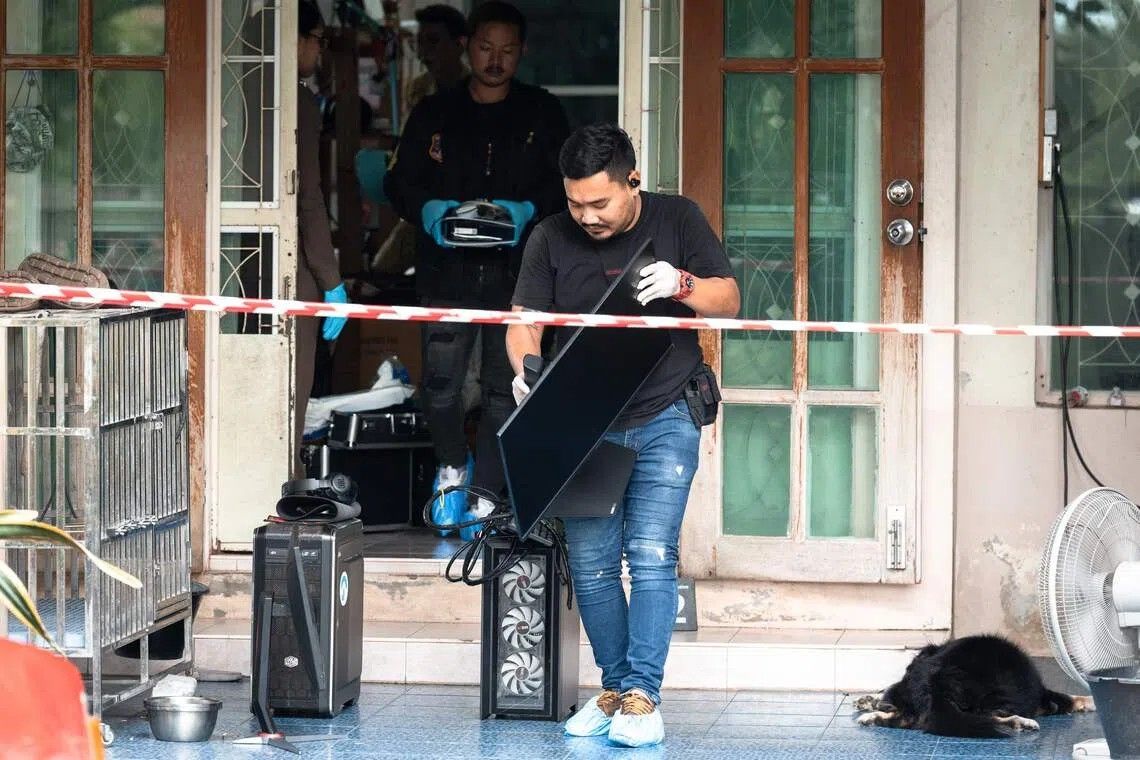
Thai police investigating the August 7 shooting at Debsirin Nonthaburi School have turned their attention to the digital footprint of the 14-year-old suspect, discovering that he had conducted internet searches about mass shootings at American schools. The discovery represents a key line of inquiry as investigators attempt to piece together what motivated the teenager to carry out the attack, though authorities have cautioned against drawing direct connections between the searches and the violence that occurred.
The tragic sequence of events began at the suspect's home in Bang Khu Rat subdistrict, Bang Bua Thong district, where investigators believe the teenager fatally shot his grandparents before departing for school. Officers and forensic teams discovered the bodies inside the residence after gaining entry to the property. The front door had been secured from the outside, suggesting the suspect locked it as he left, a detail that may become significant in understanding his state of mind and the premeditation involved in his actions.
Wattana Yichin, commissioner of Provincial Police Region 1, personally visited the residence to oversee aspects of the investigation. The methodical approach reflects the seriousness with which Thai authorities are treating the incident, which represents an exceptionally rare occurrence of gun violence in schools within Thailand's context. The involvement of senior police leadership signals the profile and complexity of the case.
Forensic examination of the teenager's computer has revealed that between approximately July 30 and the time of the shooting, he had engaged in online searches related to school shootings in the United States. Additionally, investigators found that the suspect spent substantial time playing video games featuring violent content. However, police have been explicit in stating that they have not yet established any causal link between these digital activities and the actual shootings. The distinction is important as investigators methodically examine multiple potential contributing factors rather than rushing to conclusions.
The firearm used in the attacks was legally registered to the teenager's grandfather, according to police records. This detail raises questions about firearm security within the household and whether the weapon was stored in a manner that would have prevented unauthorised access by a minor. Such questions about adult responsibility for firearms storage have become increasingly relevant in Thai discussions about gun ownership and safety protocols.
Family members and investigators are attempting to construct a psychological profile of the suspect to understand his state of mind. According to information provided by the teenager's uncle to police, the boy had lived with his grandparents since early childhood following his parents' separation. He was characterised as a solitary individual who spent considerable time on computer games and generally avoided social interaction with peers. The uncle reported no obvious signs of distress or visible emotional difficulties preceding the incident.
Thananyaporn, the 60-year-old sister of the deceased grandfather, provided additional context about the teenager's domestic situation. She described him as quiet and well-behaved, someone who rarely ventured outside the home. His grandfather, a former bank manager, would handle his daily transportation to and from school, while his grandmother worked as a teacher. By all accounts from family members, the three lived in close proximity and maintained strong emotional bonds. Thananyaporn rejected suggestions that family discord played any role, emphasising the genuine affection that characterised their relationships.
The teenager's isolation from peer relationships stands out as a notable factor in the preliminary investigation. Unlike other adolescents who develop wider social circles and engage in group activities, this teenager remained confined largely to the home environment, his social interactions limited primarily to family members. The extent to which this isolation contributed to psychological distress or played any role in the subsequent violence remains unclear and forms part of the ongoing investigative work.
Police have emphasised that their inquiry remains in its early stages, focused on establishing a clear timeline of events and identifying any factors—whether psychological, environmental, familial, or otherwise—that may have contributed to the violence. The investigation represents an uncommon scenario for Thai law enforcement, as school shootings remain extraordinarily rare within the country. This rarity means that officials are navigating uncharted territory in their attempts to understand the teenager's motivations and prevent similar incidents in the future.
The discovery of internet searches related to American school shootings has inevitably drawn attention to questions about online content consumption and its potential psychological effects on vulnerable individuals. While the specific searches are now under scrutiny, investigators must distinguish between curiosity-driven internet browsing and genuinely predictive indicators of violent intent. The presence of these searches alone does not constitute evidence of causation, yet their existence cannot be entirely dismissed in the context of understanding the suspect's mental landscape in the weeks preceding the attack.
The case raises broader concerns within Thailand about youth mental health, social isolation, access to firearms, and digital literacy. The combination of a socially withdrawn teenager, unrestricted access to a legally owned weapon, and online exposure to information about school violence creates a nexus of risk factors that may prompt policy discussions. Questions about how schools, families, and communities can better identify and support at-risk youth will likely emerge as the investigation concludes and public discourse intensifies.

