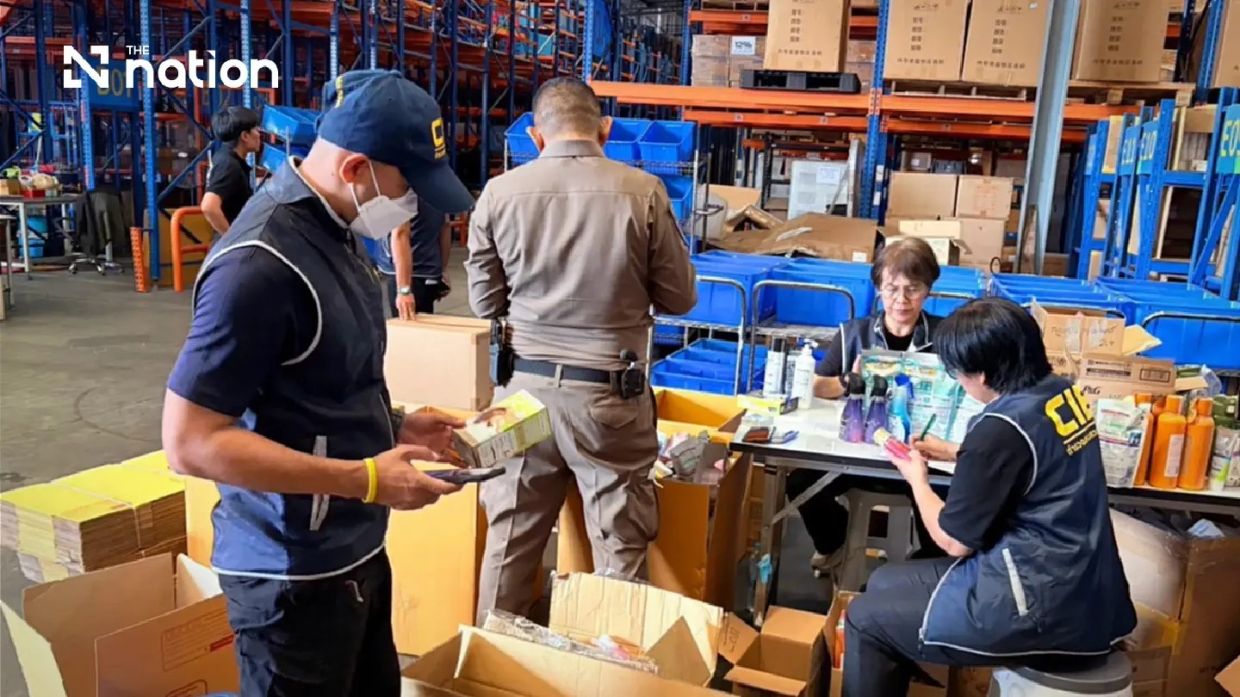
Consumer protection authorities in Thailand have shut down a significant smuggling operation centred on a warehouse in Bang Phli, Samut Prakan province, uncovering what investigators describe as a systematic scheme to distribute uncertified Japanese consumer goods through online retail networks. The Consumer Protection Police Division (CPPD), acting under orders from Pol Maj Gen Kongkrit Lertsittikul, seized 83,483 items comprising 116 different varieties of cosmetics, dietary supplements, and medicinal products on Thursday, August 13. The contraband carried an estimated value exceeding 8.34 million baht and represented a sophisticated distribution chain that had operated largely undetected for over four years.
The investigation traces its origins to mounting consumer complaints regarding online retailers offering health and beauty products without Thai-language labelling or proper documentation. These goods, predominantly sourced from Japan, had circumvented Thailand's mandatory safety certification processes and regulatory approvals required by the government. Rather than targeting individual sellers scattered across e-commerce platforms, investigators methodically traced the supply chain upstream, identifying the warehouse as the central hub connecting Japanese manufacturers with dozens of online businesses. This approach proved far more effective than piecemeal enforcement against scattered retailers, potentially dismantling an entire distribution network in a single operation.
The warehouse's operational model reveals the structural vulnerabilities in Thailand's current oversight mechanisms. The facility had initially been established as a conventional storage depot for imported goods, but gradually expanded into a sophisticated fulfillment centre serving multiple e-commerce vendors. Remarkably, the operation processed between 200 and 300 items daily, charging sellers a packing fee of 10 to 12 baht per box, indicating substantial commercial scale and generating consistent revenue streams. This dual-function approach—combining storage with value-added packing services—allowed the operators to maintain plausible deniability about their awareness of the products' regulatory status, a common tactic in transnational smuggling operations.
The products themselves pose genuine consumer health risks that extend beyond mere administrative violations. The seized cosmetics lacked requisite safety testing, particularly concerning given the prevalence of hazardous substances in unregulated beauty products, including banned preservatives, heavy metals, and carcinogenic compounds. Dietary supplements and medicinal products, which typically lack binding regulations in Japan comparable to Thai standards, carry additional risks when distributed without expert verification. Thai consumers purchasing these items through online platforms would have had no awareness of their unapproved status or potential contamination, making this a particularly egregious consumer protection failure.
The legal framework mobilised against those responsible spans multiple regulatory regimes, reflecting the complexity of enforcing import standards across intersecting product categories. Investigators referred the case for prosecution under Thailand's Cosmetics Act, Food Act, Drug Act, and Hazardous Substances Act, providing prosecutors multiple avenues for pursuing criminal and administrative charges. This prosecutorial approach maximises the likelihood of successful convictions while creating deterrent effects for potential operators contemplating similar schemes. The multi-statute approach also complicates defendants' ability to exploit technicalities or narrow interpretations of individual laws.
For Malaysian readers and policymakers, this operation illuminates vulnerabilities in regional regulatory frameworks governing e-commerce and cross-border product flows. Thailand's experience demonstrates that centralised warehouses supplying online retailers present enforcement opportunities that distributed smuggling networks do not offer. Authorities in Malaysia might apply similar investigative methodologies, working backwards from consumer complaints through retail platforms to identify distribution hubs. The cross-border nature of the Japanese products also raises questions about port-of-entry controls and customs procedures that warrant examination across Southeast Asia.
The four-year operational span before detection suggests that enforcement capacity remains inadequate relative to the scale of illicit trade. During that period, potentially hundreds of thousands of unapproved products reached Thai consumers through online channels, creating latent public health risks that may only emerge years later through adverse event reports or health complications. The warehouse's integration with online commerce platforms—likely including major regional marketplaces serving multiple Southeast Asian nations—implies that exposure extended beyond Thailand's borders.
The investigation's success rested partly on intelligence gathering and court cooperation, with officers securing judicial approval for the warehouse inspection before executing the seizure. This procedural requirement, while ensuring legal validity, also creates windows of opportunity for subjects to relocate goods or destroy evidence. Modernising regulatory frameworks to enable more rapid response mechanisms, perhaps through emergency provisions for suspected imminent distribution of hazardous materials, could strengthen enforcement outcomes. Thailand's use of coordinated police action under centralised command also demonstrates the value of institutional coordination that sometimes remains fragmented in regional enforcement efforts.
The case underscores persistent challenges in regulating beauty and wellness products, categories where consumer demand for novel foreign products often outpaces regulatory vigilance. Online commerce has dramatically reduced friction in transnational product flows, allowing suppliers to bypass traditional retail channels where product verification occurred more consistently. The ease of establishing online seller accounts, combined with the high profit margins on unregulated health products and cosmetics, creates powerful incentives for smuggling operations that will likely persist despite this enforcement success.
Moving forward, Thai authorities should consider implementing supply-side controls requiring e-commerce platforms to verify that merchants offer only certified products, potentially including random product sampling and testing. Such measures would shift compliance burdens from resource-constrained enforcement agencies to better-resourced technology platforms. Regional cooperation agreements enabling cross-border pursuit of smuggling networks, particularly given the prevalence of Japanese and other foreign products throughout Southeast Asia, could substantially magnify enforcement impact. The warehouse seizure represents a significant tactical victory, but addressing the structural factors enabling such operations remains an ongoing strategic challenge.

