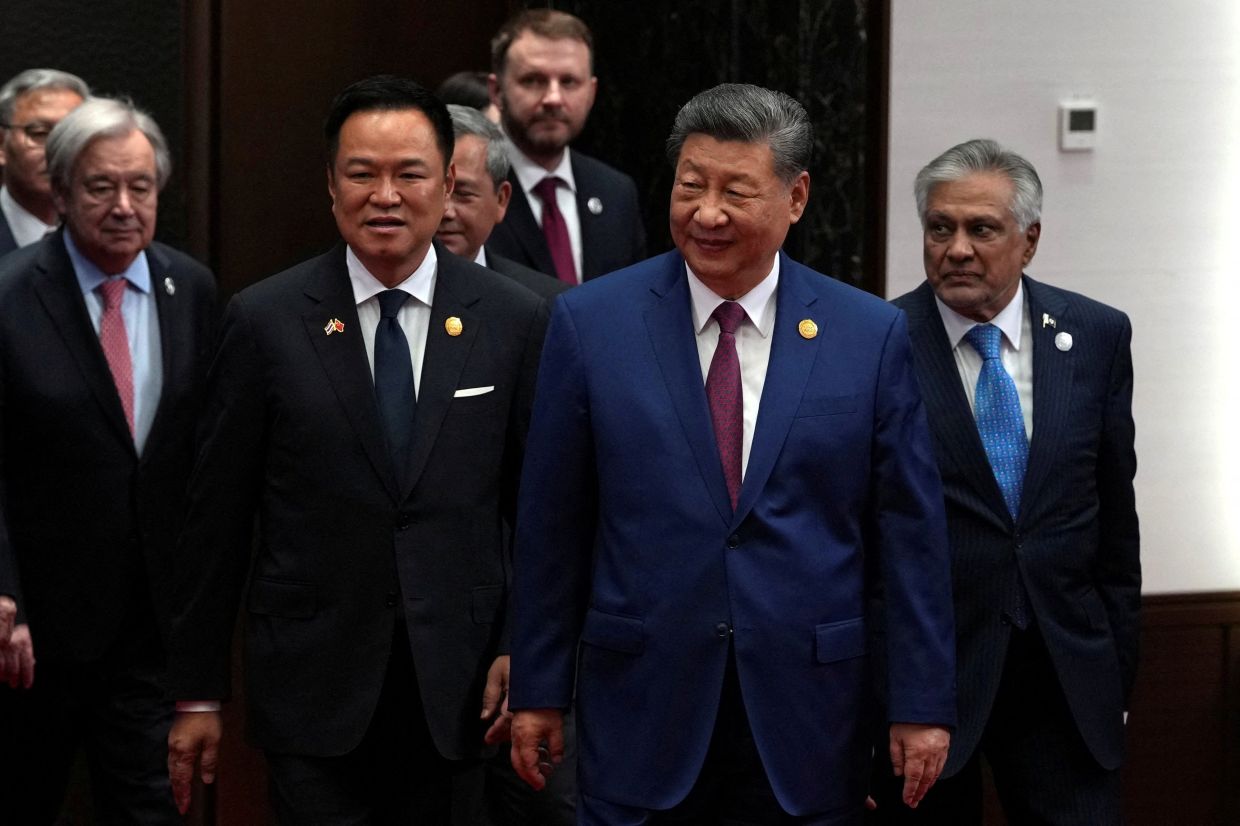
Thai Prime Minister Anutin Charnvirakul has embraced an unconventional approach to statecraft by incorporating live musical performances into high-level diplomatic engagements across Asia. During a formal state lunch in Beijing on Monday, the Thai leader demonstrated this distinctive style by performing a classic Teresa Teng composition while seated beside Chinese Premier Li Qiang, creating an unusual moment of cultural exchange at an official gathering. The performance, documented by footage released through Anutin's office, saw the Thai premier holding a microphone as regional flags adorned the venue and attending dignitaries offered their applause.
This Beijing performance represents merely the latest iteration of what observers have begun characterizing as Anutin's personal brand of musical diplomacy. Earlier this month, the Thai leader collaborated with Malaysian Prime Minister Anwar Ibrahim in a rendition of "My Way", the Frank Sinatra standard that has become an iconic song across the region. In that performance, Anutin demonstrated his proficiency with the saxophone while his Malaysian counterpart took vocal duties, blending the two nations' diplomatic engagement with a memorable cultural moment. The pairing of the two senior leaders performing together underscores how this musical engagement serves practical relationship-building functions beyond ceremonial protocol.
Anut's regional tour of musical performances extended to Vietnam, where he visited Hanoi in recent weeks and participated in a jam session featuring traditional Vietnamese instrumentation. Performing alongside local musicians in front of Prime Minister Le Minh Hung, the Thai leader demonstrated his willingness to engage with each nation's cultural heritage rather than impose a singular diplomatic template. This attention to local artistic traditions suggests a calculated effort to establish deeper personal connections with counterparts while simultaneously signalling respect for Vietnamese cultural identity and musical practices.
The Thai Prime Minister's multifaceted musical abilities provide the practical foundation for this distinctive diplomatic style. Beyond his performances at state functions, Anutin maintains proficiency with the piano and the Thai flute, instruments that reflect both Western and Southeast Asian musical traditions. He also pilots jets as a hobbyist, a capability that further underscores his cultivation of an image as a leader engaged in diverse pursuits beyond the conventional bounds of executive governance. These varied competencies allow him to adapt his performances to different national contexts and audiences, whether performing Western standards or engaging with traditional regional instruments.
Anutin ascended to Thailand's highest office in September 2025 before securing his political position through victory in February elections. As the scion of a prominent construction conglomerate, his background suggests significant wealth and privilege. However, his public presentation deliberately emphasizes accessibility and connection with ordinary citizens, a positioning that carries particular resonance in Thailand's predominantly conservative social landscape. The musical performances serve this broader narrative strategy, positioning the prime minister as culturally attuned and emotionally engaged rather than distant or aloof, qualities that resonate with Thai voters and regional partners alike.
The musical diplomacy extends beyond performances with other government leaders. Anutin has recently collaborated with a Thai teenager whose saxophonist performance achieved viral prominence following an appearance on the international talent competition America's Got Talent. By associating himself with this young performer and contemporary entertainment phenomena, the Thai leader continues developing an image that bridges generational and cultural divides. Such performances demonstrate an understanding of modern media dynamics and the capacity of informal cultural engagement to generate positive international attention.
From a broader Southeast Asian perspective, Anutin's approach to diplomacy reflects evolving practices in regional engagement that move beyond traditional formality. As nations across ASEAN seek to deepen bilateral relationships and establish personal rapport between leaders, musical and cultural performances offer valuable mechanisms for humanizing political relationships and creating memorable moments that extend beyond routine diplomatic discourse. The performances with Malaysian, Chinese, and Vietnamese leaders specifically underscore Thailand's interest in maintaining strong relationships across key regional partnerships, with musical engagement serving as an accessible entry point for discussion and cultural understanding.
The strategic deployment of musical performance in diplomatic contexts carries implications for how Thailand positions itself within the region's increasingly complex geopolitical landscape. By emphasizing cultural exchange and personal connection through performance, Anutin signals an orientation toward building relationships grounded in shared humanity rather than purely transactional state interests. This approach may prove particularly effective in strengthening ties with neighbouring nations that share cultural and historical connections, offering a distinctive alternative to more confrontational or purely interest-based diplomatic positioning that characterizes other regional powers.
While unconventional, Anutin's musical diplomacy aligns with Thailand's historical role as a cultural bridge across Southeast Asia and its positioning as a nation with significant soft power resources. The performances also serve domestic political purposes, reinforcing his carefully constructed public persona as a leader who is simultaneously connected to Thailand's traditional conservatism—a positioning that maintains support among the nation's established institutions—while appearing culturally engaged and accessible to broader populations. This delicate balancing act, facilitated through musical performances that appeal across generational and class divides, demonstrates sophisticated understanding of contemporary political communication and relationship-building in an era where public perception and personal connection increasingly influence diplomatic effectiveness.

