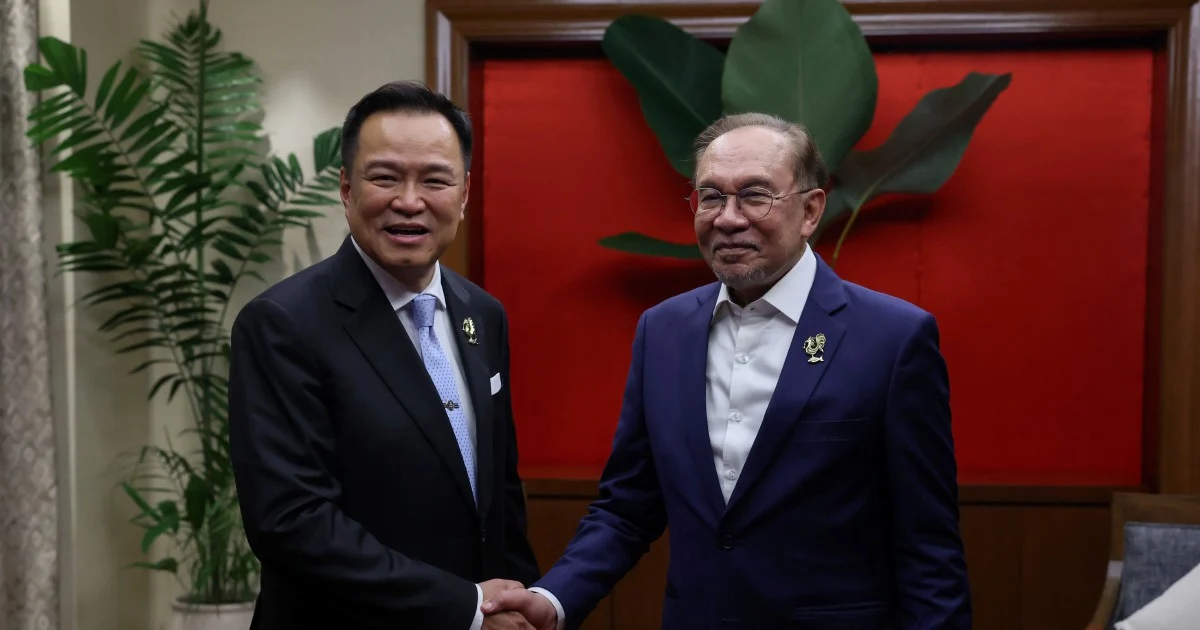
Thailand's Prime Minister Anutin Charnvirakul is set to make an official visit to Malaysia on July 9 and 10, marking another significant engagement in Bangkok and Kuala Lumpur's broader agenda to strengthen bilateral relations. The two-day trip will see Anutin hold substantive discussions with Malaysian Prime Minister Datuk Seri Anwar Ibrahim, with officials indicating that border security matters and avenues for economic expansion will feature prominently on their joint agenda.
The timing of this visit underscores the importance both countries place on addressing transnational challenges that have long characterized their shared border regions. Malaysia and Thailand have historically grappled with cross-border security threats ranging from smuggling networks to human trafficking, issues that have demanded sustained diplomatic and operational coordination. The July visit provides a platform for senior leadership to review existing security frameworks and explore enhanced mechanisms for cooperation, reflecting the pragmatic approach both governments have adopted toward managing these complex challenges.
Economic cooperation constitutes the second major pillar of the planned discussions. Both nations recognize substantial untapped potential in bilateral trade and investment flows, particularly given their complementary economic structures and geographic proximity. The conversations are likely to explore expanded market access, investment promotion initiatives, and collaboration in emerging sectors such as digital commerce and renewable energy. For Malaysian businesses, deeper ties with Thailand offer pathways into the broader Indochinese market, while Thai enterprises seek to leverage Malaysia's status as a regional financial hub and gateway to Southeast Asian consumer bases.
The visit also carries broader implications for regional stability and cohesion within ASEAN. Malaysia and Thailand, as founding members of the Association of Southeast Asian Nations, play pivotal roles in the bloc's decision-making processes and operational effectiveness. Strong bilateral relations between them reinforce ASEAN's internal coherence during a period when the region faces external pressures and internal divergences on key policy matters. Enhanced cooperation between Bangkok and Kuala Lumpur sets a constructive example for other member states seeking to balance national interests with collective regional objectives.
From a Malaysian perspective, the engagement with Thailand addresses several strategic imperatives. The northern frontier with Thailand has traditionally been a concern for Malaysian authorities, particularly regarding the infiltration of illicit goods and the flow of undocumented migrants. Joint efforts to strengthen border checkpoints, improve intelligence sharing, and coordinate law enforcement operations can yield tangible security dividends. Moreover, Malaysia's position as a middle power in Southeast Asia is reinforced through high-level diplomatic engagements that demonstrate its capacity to shape regional agendas and maintain strong partnerships with neighboring states.
The security dimension of these talks extends beyond traditional law enforcement. Both countries share concerns about transnational organized crime networks, drug trafficking operations, and the smuggling of firearms and explosives across porous border areas. Intelligence agencies from both sides have increasingly emphasized the need for sophisticated surveillance systems, joint task forces, and real-time information sharing mechanisms. The Prime Ministers' discussions will likely authorize senior officials to pursue technical agreements and operational protocols that can be implemented without extensive parliamentary delays.
Economically, the relationship reflects the broader pattern of intra-ASEAN trade expansion. Thailand remains a significant trading partner for Malaysia, with bilateral commerce spanning sectors from automotive components to agricultural products. The visit provides an opportunity to address regulatory impediments to cross-border commerce, negotiate tariff reductions on priority sectors, and establish investment guarantees that reduce perceived risks for entrepreneurs considering ventures in either country. Malaysian logistics companies, in particular, stand to benefit from streamlined procedures at key border crossings.
The cultural and people-to-people dimensions should not be overlooked. Thailand and Malaysia share significant historical ties, complementary tourism industries, and overlapping diaspora communities. Enhanced cooperation between the governments can facilitate visa facilitation for business travelers, support joint cultural initiatives, and expand educational exchange programs. These softer dimensions of bilateral relations create social foundations that support broader diplomatic objectives and foster mutual understanding between populations.
Prime Minister Anwar Ibrahim's engagement with Anutin also reflects Malaysia's broader Southeast Asian diplomacy under the current administration. Anwar has emphasized Malaysia's role as a responsible regional partner committed to peaceful dispute resolution and inclusive economic development. The Thailand visit demonstrates this commitment while signaling to other ASEAN members Malaysia's openness to sustained bilateral dialogue on matters of mutual concern. The discussions can also serve as a template for addressing similar transnational challenges with other neighboring states.
Technically, the visit is expected to produce joint statements outlining areas of agreement and, possibly, signing memoranda of understanding on specific cooperation initiatives. Previous high-level visits between the two countries have yielded concrete outcomes in areas such as joint patrols along the maritime boundary and cooperative development initiatives in the border regions. Officials will likely brief the media following the talks, providing clarity on the scope and timeline for implementing agreed initiatives.
Looking ahead, the success of this visit will be measured not merely by the rhetoric of partnership but by substantive implementation of commitments made. Both governments face domestic pressures and competing priorities, yet sustained engagement at the Prime Ministerial level signals genuine commitment to advancing shared interests. The outcome will likely influence the trajectory of Malaysia-Thailand relations over the coming years and contribute to broader regional stability in Southeast Asia.

