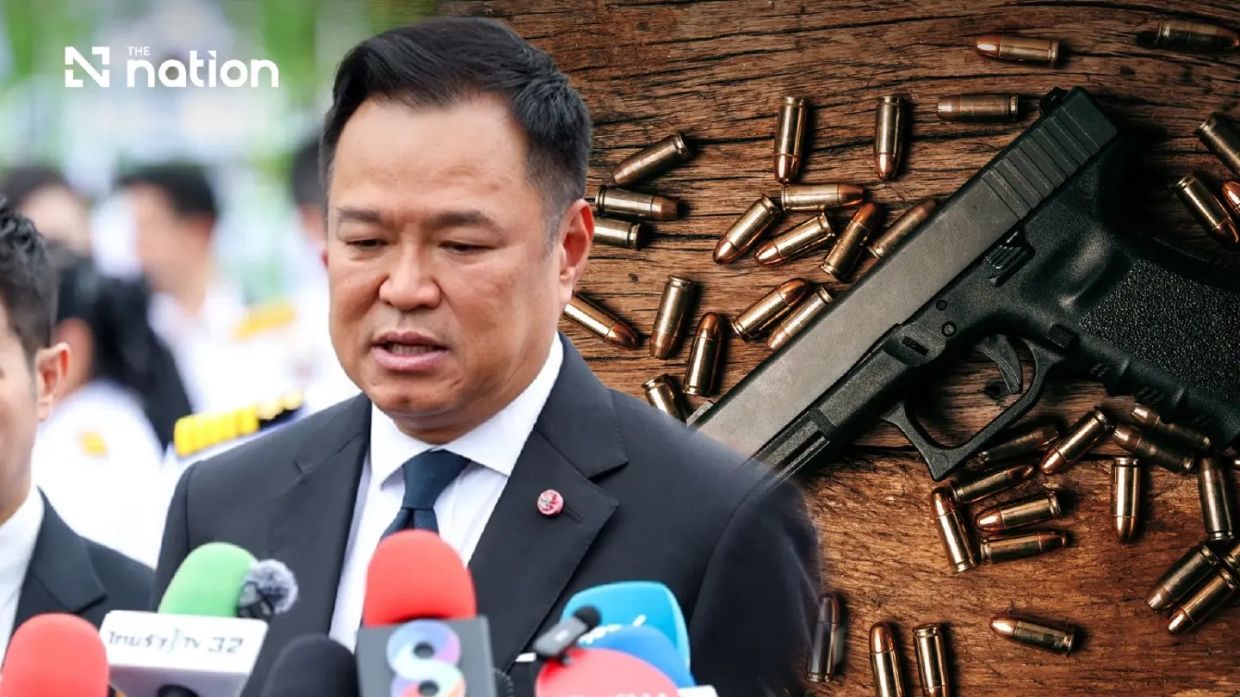
Thailand's government is moving to strengthen its approach to firearm regulation in the wake of a mass shooting at Debsirin Nonthaburi School. Prime Minister Anutin Charnvirakul has signalled his intention to work with Deputy Prime Minister Pakorn Nilprapunt on legislative amendments designed to impose stricter controls on gun ownership and use. The announcement comes after the premier visited the school in Muang Thong Thani and held discussions with national police chief Pol Gen Kittharath Punpetch at Government House regarding the incident and measures to prevent similar tragedies.
At the heart of the government's response is a commitment to rigorous enforcement of existing prohibitions on unauthorised firearm possession in public spaces. Anutin emphasised that individuals discovered carrying weapons outside their homes without official justification—whether in vehicles, on streets, or other public locations—will face severe legal consequences. The Prime Minister framed this as a fundamental principle that must guide police operations going forward, with checkpoint operations and inspections becoming routine components of law enforcement strategy to identify and apprehend those violating firearms regulations.
One contentious proposal that emerged in the aftermath of the shooting was a suggestion that teachers be permitted to carry firearms for self-defence purposes. Anutin firmly rejected this idea, contending that the classroom environment requires a fundamentally different approach to safety. Teachers, he argued, are educators rather than law enforcement personnel and therefore lack the training, authorisation, and institutional framework necessary to responsibly carry weapons. This position reflects a broader conviction that arming civilians in non-security roles would create more dangers than it would prevent, potentially increasing accident risks and complicating emergency response situations.
The government is also reviving discussions around a firearms amnesty programme that would allow citizens to surrender illegal or unauthorised weapons without facing criminal penalties. However, Anutin was clear that such a programme represents an opportunity for voluntary compliance rather than a permanent shield against prosecution. He stressed that any firearms currently in circulation without proper authorisation must ultimately be removed from civilian hands, and that individuals who fail to take advantage of an amnesty window would have no excuse for continued possession. The message was deliberately harsh: keeping an illegal gun is simply not worth the legal and personal risk involved.
To facilitate voluntary surrender, the government is designating multiple collection points where citizens can hand over unauthorised weapons while ensuring proper documentation. The Department of Provincial Administration, district offices, and police stations will all accept firearm surrenders, creating accessible pathways for compliance. This multi-channel approach is designed to reduce barriers to participation in any amnesty programme and make it logistically simple for people to divest themselves of illegal weapons.
Separate from the immediate gun control response, the Prime Minister acknowledged that broader social factors may have contributed to the shooting incident. Reports suggesting that the student responsible for the attack had experienced bullying raised questions about school safety, peer relationships, and mental health support systems. However, Anutin urged restraint in drawing premature conclusions, emphasising that police investigations must be allowed to proceed without public speculation. He cautioned against unsubstantiated claims that might inadvertently stigmatise schools or students and create unnecessary anxiety in the community.
The handling of these investigative findings will be crucial for public trust. Anutin's call for patience reflects a recognition that hasty or incomplete analyses of the shooting's causes could lead to misguided policy responses or unfair blame directed at individuals and institutions. The completed investigation is expected to provide clearer insight into the specific circumstances surrounding the incident and whether bullying, along with other factors, played a meaningful role.
Beyond immediate enforcement, the government is adopting a comprehensive approach that extends across multiple agencies and encompasses storage practices for registered weapons. Anutin stressed that firearms kept in private homes must be registered, secured in ways that prevent unauthorised access—particularly by children—and stored according to strict safety standards. This housekeeping dimension of gun control is often overlooked but represents a critical safeguard against accidental discharge, theft, or misuse by family members who lack proper training.
Liability for improper firearm storage is being broadened under the government's approach. Both registered owners and individuals who actually use weapons in crimes will face responsibility, creating a dual layer of accountability. This means that owners cannot simply claim ignorance if their improperly stored weapons are stolen or accessed by others who commit crimes. Such a framework incentivises meticulous compliance with storage requirements and heightens awareness that negligence carries consequences.
The coordination between the Department of Provincial Administration, police forces, and other authorised agencies indicates that the government views gun control as a multi-institutional challenge requiring sustained cooperation rather than isolated efforts by single agencies. Anutin has reportedly issued directives and policy guidance that obligate these agencies to conduct thorough and consistent inspections, suggesting that public expectations for enforcement will become more stringent. This systemic approach, if properly implemented, could create a more robust environment for compliance and detection of violations.
For regional observers, Thailand's response offers a case study in how democracies grapple with sudden violent incidents and the temptation to pursue quick but potentially counterproductive solutions. The rejection of teacher-carried weapons, emphasis on existing law enforcement mechanisms, and consideration of amnesty programmes reflect pragmatism about what actually reduces gun violence. Whether these measures will effectively prevent future incidents depends substantially on consistent implementation and sustained political will beyond the immediate crisis period that typically follows mass casualty events.

