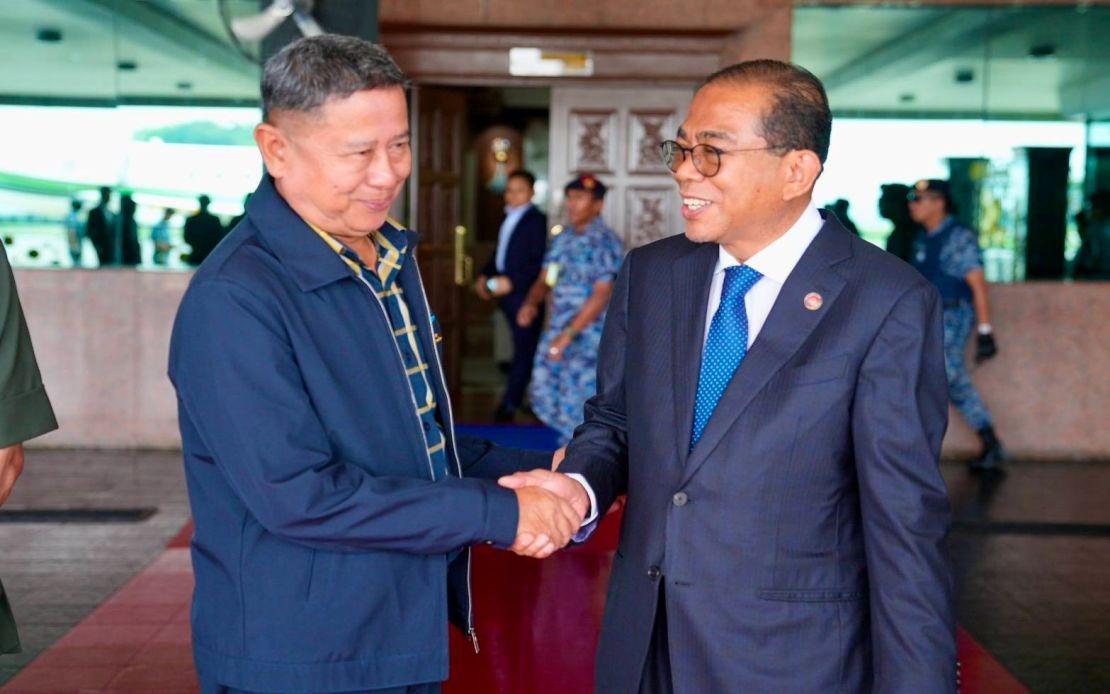
Thailand's Defence Minister Lt Gen Adul Boonthamcharoen travelled to Kuala Lumpur on Wednesday for an urgent meeting with Malaysian Defence Minister Datuk Seri Mohamed Khaled Nordin, seeking to update the Malaysian government on rapidly deteriorating security conditions affecting Thailand's southern border region. The timing of the visit, coming just one day after Bangkok announced the postponement of peace negotiations scheduled for September with southern insurgent groups, signals Bangkok's determination to maintain strong diplomatic coordination with its most important regional security partner on this sensitive matter.
The meeting represented a significant diplomatic moment in Thai-Malaysian relations, particularly given the critical juncture at which Thailand's long-running insurgency struggle currently stands. Thailand's Defence Ministry issued a formal statement indicating that the Thai delegation used the forum to provide comprehensive briefings on the progress of ongoing security and peacekeeping efforts across its southern provinces. In doing so, Bangkok reiterated its commitment to pursuing a comprehensive peace-building strategy that balances active counter-insurgency operations with genuine dialogue initiatives, while simultaneously prioritising the welfare and security of civilian populations and working to rebuild trust among all stakeholders in the conflict.
During their discussions, both ministers explored the multifaceted nature of security challenges confronting Thailand's southern border region and how these developments intersect with broader regional stability concerns. The bilateral engagement allowed for a detailed exchange of perspectives on the current threat environment, which has been characterised by increasing militant activity and civilian casualties. Beyond immediate security assessments, the two ministers used the occasion to reaffirm their respective governments' shared commitment to strengthening strategic security cooperation across multiple dimensions, including enhanced intelligence sharing protocols that would enable both nations to better anticipate and respond to cross-border security threats.
The conversation also centred on fortifying border security mechanisms between the two countries, a matter of considerable importance given the porous nature of the Thai-Malaysian frontier and its historical susceptibility to insurgent movement and weapons trafficking. Both officials recognised that the rapidly evolving security landscape in Southeast Asia demands greater coordination and mutual support among neighbouring nations. They acknowledged that effective border management requires sophisticated real-time information exchange, coordinated patrols, and unified operational strategies that transcend traditional national boundaries while respecting each country's sovereignty.
Lt Gen Adul emphasised during the meeting that Thailand places extraordinary value on its relationship with Malaysia, viewing the nation not merely as a geographical neighbour but as a fundamental strategic partner whose role is indispensable to addressing the interconnected security challenges facing the region. He underscored that Thailand's government remains steadfastly committed to working collaboratively with Malaysia on the foundational principles of mutual trust, reciprocal respect, and alignment of strategic interests. This framing suggests Bangkok views the Malaysian partnership as essential to achieving its long-term objectives in the southern provinces, where decades of conflict have created deeply entrenched grievances and structural instability.
In his remarks, the Thai Defence Minister advanced a nuanced argument about the prerequisites for achieving sustainable peace in the troubled southern border provinces. He contended that lasting peace cannot emerge from military action alone, but rather requires a multifaceted approach rooted in genuine cooperation, authentic commitment from all parties, and coordinated action involving both governments and international stakeholders. This philosophy reflects an apparent Thai recognition that military solutions, while tactically important, have proven insufficient to resolve the underlying political, economic, and social dimensions of the southern insurgency.
The backdrop for this high-level diplomatic engagement involves a significant escalation in militant activity in Thailand's southern provinces. Just days before the ministerial meeting, a particularly deadly attack occurred in Narathiwat province, prompting the Thai government to declare martial law across thirteen districts within the province. This represented one of the most serious security incidents in recent months and triggered an immediate policy response from Bangkok, including the decision to suspend the scheduled September peace talks. The scale of the military response underscores the severity with which Thai authorities view the current threat environment.
According to statements made by Thanat Suwannanont, the National Intelligence Agency Director who also chairs Thailand's Southern Border Provinces Peace Dialogue Panel, the decision to suspend negotiations was made in response to the deadly attack that demonstrated the militant groups' capacity and willingness to conduct large-scale operations. The suspension of talks represents a significant setback for peace efforts that have been ongoing, albeit irregularly, for many years. Thanat's dual role as both intelligence chief and peace dialogue chairman reflects the Thai government's attempt to integrate security and diplomatic considerations in its approach to the southern conflict.
For Malaysia, Thailand's briefing carries important implications given Kuala Lumpur's traditional role as a neutral venue for peace negotiations and its substantial Muslim population with historical and cultural ties to the Thai-Malay border region. Malaysia has long sought to position itself as a constructive mediator and peacemaker in the conflict, partly out of humanitarian concern and partly from recognition that instability in Thailand's south can generate refugee flows and security spillovers into Malaysian Borneo and the peninsula. The maintenance of strong bilateral security cooperation ensures that Malaysian authorities can better manage any transnational consequences of Thai instability.
The commitment both ministers reaffirmed to supporting regional peace and stability reflects a broader Southeast Asian interest in preventing the southern Thai conflict from evolving into a more intractable regional security crisis. Any significant deterioration in Thailand's security situation could potentially create humanitarian challenges, affect regional trade and connectivity, and provide space for extremist movements to exploit local grievances for broader strategic purposes. Both nations recognise that their mutual interest in long-term regional stability requires sustained cooperation on counterterrorism, border management, and peace dialogue support.
Looking forward, the meeting suggests that while Bangkok has temporarily suspended formal peace negotiations, it remains committed to maintaining high-level communication with Malaysia and pursuing parallel diplomatic channels to address the insurgency. The decision to brief the Malaysian Defence Minister reflects Bangkok's assessment that international engagement, particularly from key regional partners, remains essential to developing a durable resolution to the conflict. Malaysia's continued willingness to host discussions and provide diplomatic support indicates its ongoing commitment to regional peace architecture, even as Thailand takes tactical security measures in response to militant attacks.
The broader context reveals that Southeast Asia's approach to managing internal conflicts has evolved toward emphasising multilateral cooperation and shared responsibility for regional stability. Thailand's engagement with Malaysia on this matter exemplifies how bilateral security partnerships function as mechanisms for managing transnational challenges that defy purely national solutions. As both nations navigate the difficult terrain between military necessity and peace-building aspiration, their continued coordination will likely prove central to determining whether the southern insurgency moves toward eventual resolution or continues as a persistent source of regional instability.

