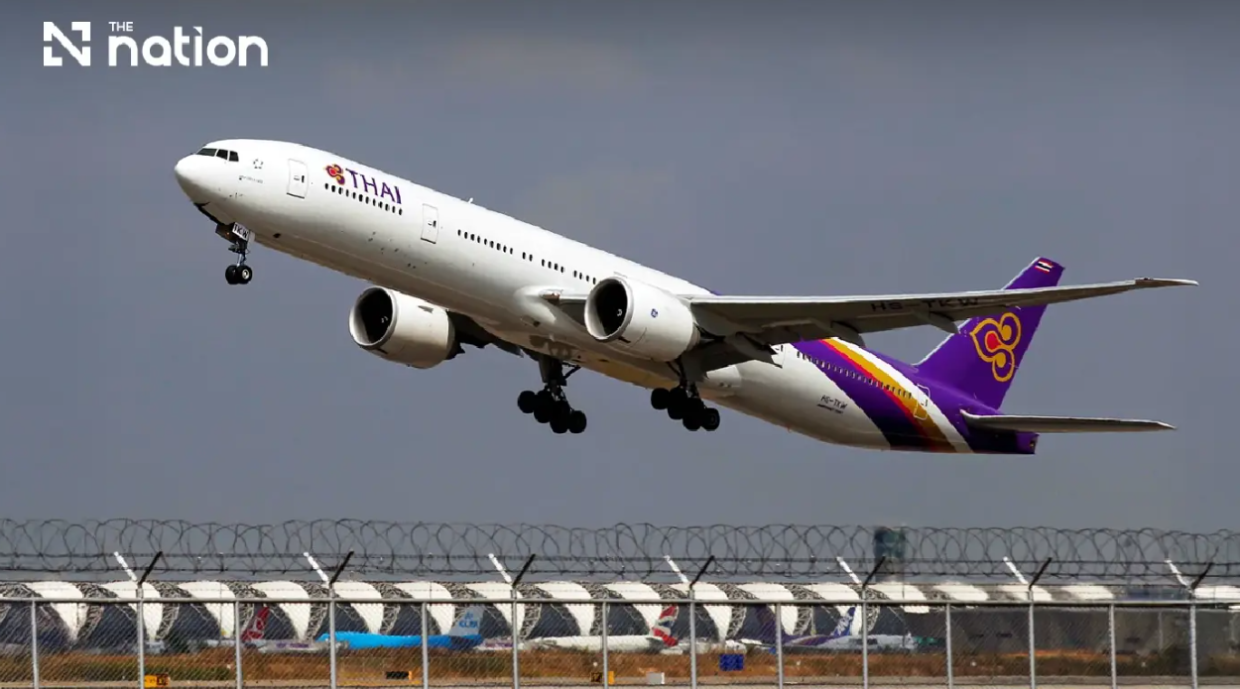
Thai Airways International chief executive Chai Eamsiri has committed to unreserved cooperation with Australian authorities in the case of a cabin crew member arrested at Melbourne Airport with a significant heroin consignment, while emphasising that the airline will not obstruct the legal process. The incident, which unfolded on June 25 when the aircraft arrived in Melbourne, has prompted swift internal action and raised questions about security protocols governing international aviation staff.
The accused, a 26-year-old Thai national employed as a cabin crew member on flight TG465 from Bangkok to Melbourne, was apprehended after authorities discovered more than one kilogramme of heroin concealed in her baggage upon arrival. Australian law-enforcement agencies have valued the seized narcotics at approximately A$500,000, equivalent to around 11.5 million baht. The severity of the alleged offence is reflected in the charges laid: importing and possessing a marketable quantity of a border-controlled drug, each carrying a potential 25-year prison sentence under Australian law.
Chartier's immediate response demonstrates the airline's awareness that the incident threatens its operational credibility and the trust placed in Thai nationals working within international aviation. Thai Airways has suspended the crew member from active duty while simultaneously establishing a fact-finding and disciplinary panel to examine the case according to internal company procedures. The airline has indicated that the investigation should conclude within seven days, with the possibility of completing it sooner. Should the inquiry substantiate the allegations, the employee faces dismissal—the airline's maximum disciplinary penalty.
Chair Eamsiri acknowledged that the case inflicts substantial reputational damage to Thai Airways, potentially complicating the travel experience for Thai crew members and other nationals seeking to enter Australia. However, he expressed confidence that foreign authorities would evaluate individual cases on their merits rather than imposing blanket restrictions on all travellers based on a single incident. This concern reflects a broader anxiety within the aviation industry about how security breaches by individual employees might affect broader workforce mobility and interstate relations in aviation commerce.
The airline has emphasised its existing stringent protocols governing flight crew and other personnel. Employees receive comprehensive pre-flight briefings addressing regulatory requirements, prohibited items, and the distinction between lawful and unlawful goods. Thai Airways maintains a workforce exceeding 4,000 cabin crew members and more than 1,000 pilots, and the CEO acknowledged that despite robust oversight systems, controlling individual conduct remains an ongoing challenge. In response to this incident, Chai Eamsiri has instructed relevant departments to intensify supervisory mechanisms, signalling that existing controls may require enhancement.
The suspect was remanded in custody on June 26 and is scheduled to reappear before Melbourne Magistrates' Court on September 14. Australian Federal Police and the Australian Border Force jointly investigate the matter, examining the circumstances surrounding how such a quantity of contraband was allegedly transported through international security checkpoints and onto a commercial aircraft. The progression of the case will likely attract scrutiny given Australia's hardline stance on drug trafficking and the international dimensions of aviation security.
Thailand's Civil Aviation Authority (CAAT) has initiated its own institutional response, contacting both the airport operator and Thai Airways to scrutinise the facts and evaluate existing procedures. The authority maintains that passenger and baggage screening at Thai airports complies with CAAT requirements and international standards established by the International Civil Aviation Organization (ICAO). However, the incident raises questions about whether existing protocols are sufficiently robust, particularly regarding crew members who, by virtue of their employment status and frequent travel, may navigate security arrangements differently than ordinary passengers.
The CAAT has clarified that aviation-security screening primarily aims to prevent items that could jeopardise aircraft safety, passenger welfare, and crew security. Narcotics enforcement, the authority emphasises, remains primarily the responsibility of dedicated law-enforcement agencies requiring coordination across domestic and international borders. This delineation of responsibility, while technically accurate, underscores a potential gap: security systems designed to detect weapons and explosives may not be calibrated to identify all contraband, particularly when transported by individuals with legitimate access to restricted areas.
The regulatory authority has indicated it will monitor the preliminary investigation and may take action affecting the crew member's aviation certificate should misconduct be confirmed. Such action reflects CAAT's mandate to maintain safety standards and uphold international confidence in Thailand's civil aviation system. The reputational implications extend beyond the individual airline, potentially affecting how Thailand's aviation sector is perceived globally and whether international partners view Thai aviation oversight as adequately rigorous. For Malaysian readers and Southeast Asian observers, the case illustrates how individual employee actions can trigger institutional reviews across multiple jurisdictions, affecting regional aviation operations and trust in cross-border compliance mechanisms.

