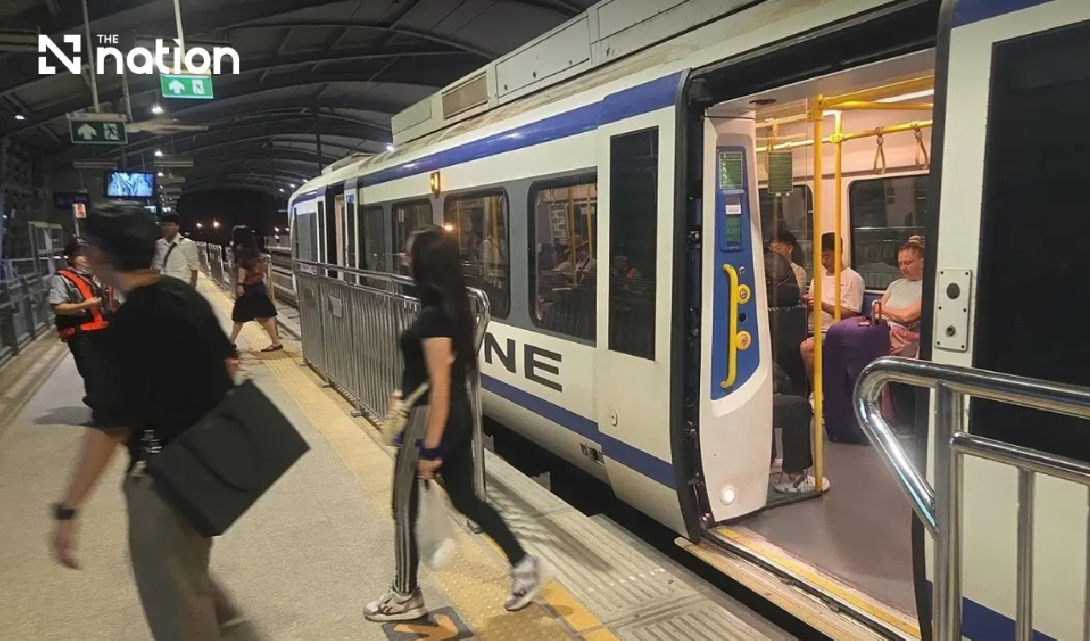
Bangkok's critical airport rail connection returned to full operation late Wednesday evening after maintenance crews resolved a mechanical fault that had severely disrupted the vital transport link connecting the city to Suvarnabhumi Airport. The State Railway of Thailand, SRT Electrified Train Company, and Asia Era One jointly announced that normal services resumed at 10.07pm after specialists completed repairs and cleared obstructions that had prevented trains from moving freely along the route throughout the day.
The disruption centred on a faulty track switch located at the turnback point within the Khlong Tan maintenance depot, a critical infrastructure component essential for train operations and maintenance scheduling. Engineers from both public rail authorities and private contractors worked systematically to inspect and repair the assembly, with teams simultaneously addressing a stranded train that had been blocking access to and from the Airport Rail Link system. The coordination required to clear this obstruction and restore service capacity demonstrated the complexity of managing operations on one of Southeast Asia's busiest urban rail networks.
Governor Anan Phonimdeang of the State Railway of Thailand indicated that the deputy transport minister had instructed all railway entities to prioritise rapid service restoration and coordinate closely with relevant agencies. This high-level directive reflected the significance of the Airport Rail Link to Thailand's transport infrastructure and economy, particularly given its critical role in connecting central Bangkok with the country's largest international airport. The mobilisation of specialists from multiple public and private organisations throughout the disruption period highlighted the urgency placed on resolving the issue before evening peak travel.
Despite successfully restoring full service, the operator emphasised that a comprehensive technical investigation would continue to identify the root cause of the track switch failure. Asia Era One confirmed that the assembly had undergone inspection and repair strictly according to established operational safety standards, carried out under State Railway supervision to ensure quality and compliance. This measured approach to both immediate problem-solving and longer-term analysis reflects international best practices in rail infrastructure management.
The company has committed to replacing the entire track switch assembly at the depot's turnback point and conducting a broader assessment of potential vulnerabilities across the maintenance facility and other locations on the network. This proactive stance suggests that operators recognise the failure as symptomatic of potential systemic issues that warrant investigation beyond the immediate point of failure. Such preventive analysis could help extend the serviceable life of critical infrastructure components and reduce the probability of similar disruptions affecting commuters and airport passengers.
Operational contingency planning has also become a focus for improvement. Asia Era One indicated it would review and refine its backup timetables and alternative operating procedures to minimise passenger impact should future disruptions occur. These measures reflect lessons learned from Wednesday's disruption and demonstrate a commitment to building resilience into airport rail operations, which serve not only Bangkok residents but also international travellers and business users dependent on reliable airport access.
The operator was careful to emphasise that passenger safety had not been compromised at any stage during the disruption, a critical assurance given that concerns about rail infrastructure reliability can affect public confidence in the system. For Malaysian observers, the incident underscores the operational challenges facing modern urban rail networks in Southeast Asia, where rapid passenger growth and round-the-clock scheduling place considerable strain on aging or densely-utilised infrastructure.
The Airport Rail Link operates on a demanding schedule, running daily from 5.30am until midnight, with six trains in regular service and two additional trains deployed during peak demand periods. This intensive operational tempo leaves little room for unscheduled maintenance or repairs, explaining the urgency with which Wednesday's fault was addressed. The 18.5-hour daily operational window means that any significant failure has the potential to create severe disruption for thousands of daily commuters and airport users.
For Thailand's tourism and business sectors, the Airport Rail Link's reliability is particularly consequential, as the service provides a rapid, cost-effective connection between central Bangkok and Suvarnabhumi Airport. Any extended disruption could potentially discourage use of the rail alternative, pushing passengers toward road transport and exacerbating traffic congestion around the airport and city centre. The swift restoration of service therefore carries economic implications extending beyond the railway operator itself.
The incident also highlights the growing importance of mixed public-private rail operations in Southeast Asia. The involvement of State Railway of Thailand, SRT Electrified Train Company, and Asia Era One in both operations and crisis response demonstrates how infrastructure ownership, operation, and maintenance are increasingly distributed across multiple entities. This fragmentation requires strong coordination mechanisms and clear lines of responsibility—factors that appear to have functioned effectively in this instance.
Looking forward, the investigation findings and remedial measures announced by Asia Era One will warrant close attention from other regional rail operators facing similar infrastructure pressures. Track switch reliability, maintenance depot operations, and contingency planning represent common challenges across Southeast Asian rail networks, suggesting that lessons from the Bangkok incident could have broader applicability. Malaysian rail authorities, including those managing KL Sentral and other urban transit hubs, might benefit from understanding how Bangkok operators address such mechanical failures.

