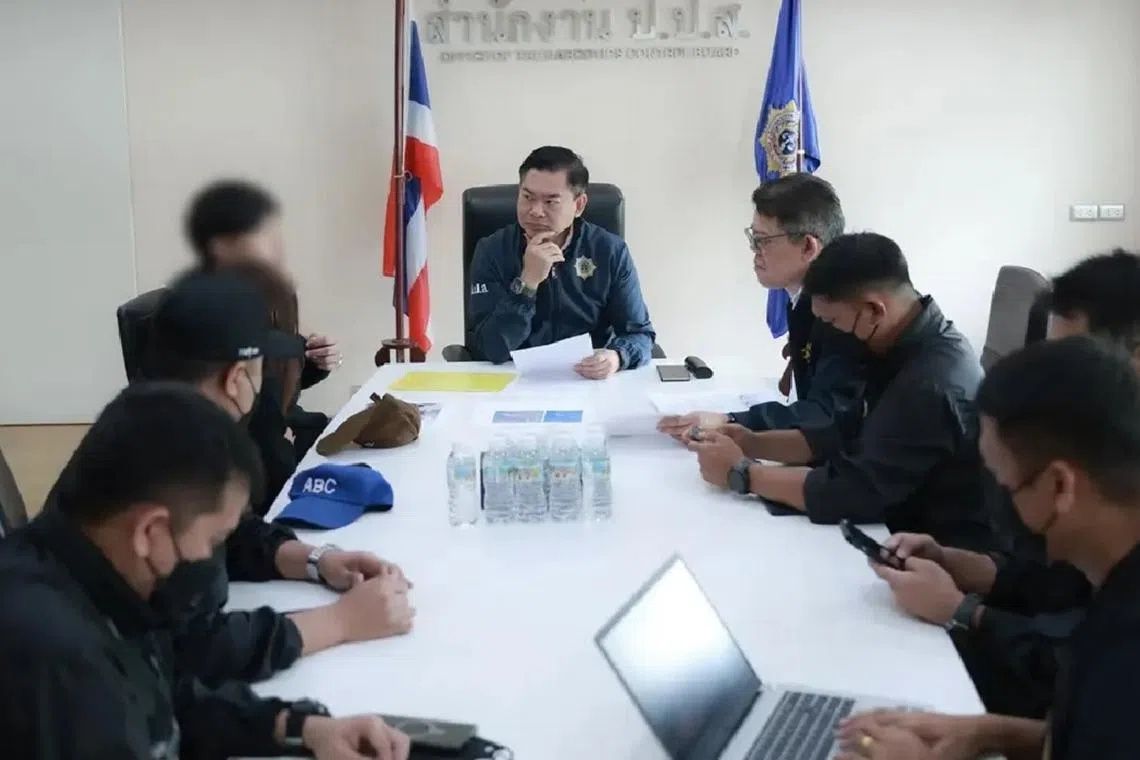
Thai narcotics authorities have provided fresh details of a major drug trafficking case involving a female airline crew member arrested by Australian authorities, revealing a complex concealment method and mounting evidence of an international smuggling operation that spans Southeast Asia and beyond. Initial laboratory analysis by Australian officials has identified heroin in only two of twelve bags contained within a single parcel, with one bag alone holding approximately 900 grams of the suspected narcotic—a discovery that underscores the deliberate, calculated nature of the trafficking attempt.
Police Major Suriya Singhakamol, who heads Thailand's Office of the Narcotics Control Board, disclosed these findings on Wednesday following coordination between Thai and Australian law enforcement. The meticulous concealment strategy employed by the trafficking network demonstrates sophisticated knowledge of customs procedures and detection methods: rather than distributing contraband across all twelve bags to reduce individual risk, the smugglers embedded heroin directly into the fabric of just two bags, effectively hiding drugs in plain sight within a larger decoy shipment. This approach suggests the operation was orchestrated by individuals with experience in international parcel logistics and border controls.
Though Thai authorities initially estimated the total haul at no more than 2 kilograms, Suriya cautioned that official laboratory confirmation from Australian agencies is still pending. This distinction matters considerably for assessing the scale of the operation and potential sentences under both Australian and Thai drug laws. The investigation has now broadened significantly beyond the apprehended crew member, with Thai and Australian authorities establishing Task Force Storm—a joint operational unit also incorporating Thailand's Customs Department and Department of Special Investigation—to dismantle what officials describe as a transnational trafficking network.
The investigation's second critical phase centres on identifying the delivery courier who transported the parcel within Thailand prior to its international shipment. Initial progress came when an individual voluntarily presented himself to the ONCB to establish his innocence. Through meticulous analysis of closed-circuit television footage and documentary evidence, investigators confirmed this rider was indeed uninvolved: the self-reporting delivery person transported a different parcel the following day using a black plastic container, whereas the suspicious shipment arrived in a large brown cardboard box on June 22 shortly after midday. Additionally, the innocent rider wore a yellow shirt and white helmet, contrasting sharply with CCTV images of the actual courier sporting a black helmet.
This distinction proved crucial not merely for exonerating an innocent party but for sharpening investigators' focus on identifying the genuine courier. The meticulous differences documented between the two delivery scenarios highlight a hallmark of modern narcotics investigations: video surveillance has become as important as chemical analysis in building transnational cases. Authorities have recorded the innocent rider's full statement and commended his cooperation, a gesture that may encourage additional witnesses or delivery personnel to come forward with information about suspicious parcels or unusual instructions they may have received.
A parallel investigative strand focuses on tracing the individual responsible for orchestrating the parcel delivery through online channels. Investigators have identified a Facebook profile operating under the pseudonym "Rose" as the probable contact point through which the courier received instructions and compensation. However, Suriya emphasized that the ONCB recognises the Facebook account represents merely a digital mask obscuring the true organizer's identity. Thai authorities are deploying sophisticated digital forensics and cross-referencing techniques with Australian and regional partners to penetrate this layer of anonymity and identify the actual person manipulating recruitment and logistics from behind the screen.
The investigation's scope extends far beyond Thailand's borders into the broader Golden Triangle region, the sprawling area encompassing portions of Thailand, Laos, and Myanmar notorious as a major narcotics production zone. Suriya clarified a commonly held misconception about Thai drug enforcement: heroin, crystal methamphetamine, and methamphetamine pills found in Thailand are not manufactured domestically but rather smuggled in from neighbouring countries where production infrastructure and precursor chemical supplies concentrate. However, the sophisticated packaging methods employed in this case—particularly the technique of embedding contraband within fabric—could have been executed at any point along the smuggling route, whether in source countries, transit nations, or Thailand itself.
The task force has initiated detailed forensic tracing of the parcel's complete journey, examining customs manifests, courier company records, and digital transactions to construct a timeline that may ultimately lead to higher-level network members. This meticulous approach reflects evolving international narcotics enforcement methodology, where disrupting trafficking networks requires identifying not merely street-level participants but the organisational infrastructure managing recruitment, logistics, concealment, and financial flows. For Malaysia and other Southeast Asian nations, this case illustrates how international drug networks exploit porous borders and integrated logistics systems designed for legitimate commerce.
The involvement of an airline crew member carries particular significance for aviation security across the region. Flight personnel enjoy legitimate access to restricted areas and can transport luggage across borders with minimal scrutiny, making them attractive recruitment targets for trafficking networks. This vulnerability has prompted enhanced screening and vetting procedures at major regional aviation hubs. The ONCB's decision to integrate its investigation with international partners through Task Force Storm reflects growing recognition that transnational criminal networks cannot be effectively combated through isolated national efforts; instead, coordinated intelligence sharing and joint operations have become essential components of modern drug law enforcement.
Looking forward, the investigation will likely yield significant implications for regional security protocols and international cooperation frameworks. If authorities successfully trace the operation to its highest organisational levels and supply sources, the case could reveal important intelligence about Golden Triangle production networks and their distribution channels into Southeast Asia and beyond. For Malaysian readers, the case underscores both the penetration of international narcotics trafficking into regional logistics systems and the capacity of collaborative enforcement mechanisms to disrupt sophisticated criminal enterprises. The determination to identify the Facebook recruiter and actual courier suggests authorities understand that dismantling networks requires systematic, patient investigation that follows each thread of evidence methodically toward the masterminds orchestrating these operations.

