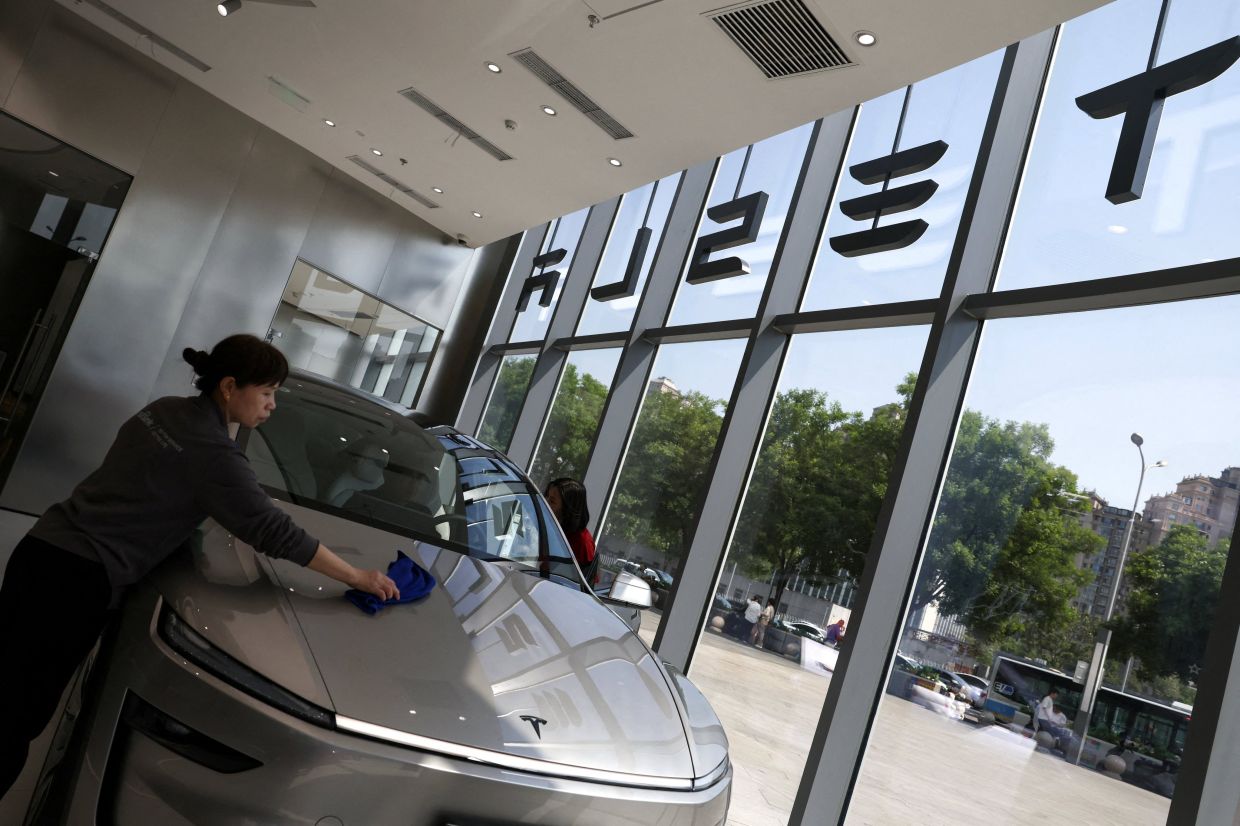
Tesla has announced the largest product recall ever recorded in mainland China's electric vehicle sector, involving nearly three million vehicles as the company grapples with mounting safety concerns around retractable door handles. The unprecedented scale of the recall underscores escalating regulatory pressure and consumer anxiety surrounding vehicle safety features in one of the world's most competitive automotive markets. This action by Elon Musk's company represents a watershed moment for China's domestic EV industry, which has grown explosively over the past decade but now faces its most serious design-safety reckoning to date.
The recall encompasses 2.98 million vehicles and marks an intensification of regulatory action targeting the retractable door-handle technology that has become standard across numerous EV manufacturers seeking sleeker, more aerodynamic designs. While Tesla is not the sole company affected by China's evolving safety stance, it has borne the brunt of regulatory action so far, reflecting both its dominant market position and the scale of its Chinese manufacturing footprint. The company's Shanghai factory alone produced more than 851,000 vehicles in 2025, representing over half of Tesla's global annual output of 1.63 million units—a figure that declined 8.6 per cent compared to the previous year.
The catalyst for this regulatory intervention traces to a tragic October incident in Sichuan province involving a Xiaomi SU7 Ultra electric vehicle. A 31-year-old driver became trapped inside the burning car after losing consciousness, and despite desperate attempts by bystanders to pry open the doors, they remained sealed. The incident crystallized public fear about retractable door handles and their vulnerability during emergencies, particularly in scenarios involving power loss or collision damage. This single tragedy exposed a fundamental design vulnerability that regulators and consumers could no longer ignore, prompting swift governmental response.
China's Ministry of Industry and Information Technology formalized its response in February by announcing plans to ban retractable door-handle technology entirely. Beginning next year, all vehicles must incorporate both internal and external door handles capable of mechanical operation at all times, regardless of whether the vehicle has suffered an accident or experienced complete electrical failure. This regulatory mandate represents a direct challenge to the minimalist design philosophy that many EV manufacturers, including Tesla, have embraced as a competitive differentiator in a crowded marketplace.
Tesla's remediation strategy involves multiple technical interventions scheduled to commence from September 25. The company will affix warning labels to internal door handles across all recalled vehicles and deploy over-the-air software updates that automatically lower windows following a collision—a measure intended to provide occupants with an emergency egress route when conventional doors may be inoperable. A separate recall affecting 2.74 million Model 3 and Model Y vehicles manufactured at the Shanghai facility will implement additional OTA updates to strengthen assisted steering and driver-assistance engagement protocols during collision scenarios.
Industry observers view these recalls as a potentially transformative moment for China's automotive sector. Zhang Wenjie, who operates a vehicle maintenance workshop in Shanghai, suggests that the large-scale recalls involving Tesla and domestic manufacturers will ultimately elevate industry-wide consciousness regarding product design and safety protocols. The incident reveals how quickly safety concerns can cascade through interconnected EV ecosystems, particularly when regulatory frameworks remain nascent and design standards lack comprehensive standardization across manufacturers.
For Malaysian readers and broader Southeast Asian automotive stakeholders, this development carries significant implications. As regional governments consider their own EV safety standards and regulatory frameworks, China's experience provides instructive lessons about the dangers of allowing manufacturers excessive latitude in design innovation at the expense of fundamental safety redundancies. Malaysia, which has positioned itself as an emerging EV manufacturing hub through companies like Proton and battery producers, should closely monitor how Beijing's stricter safety protocols reshape supply chains and design requirements across the region.
Tesla's position as China's second-largest market globally, trailing only the United States, means the company cannot simply absorb these regulatory costs—they ripple throughout its manufacturing operations and product portfolios worldwide. The Shanghai factory's contribution of over half of Tesla's total global production means that any efficiency losses or design modifications mandated by Chinese regulators have cascading effects on the company's international operations and competitiveness. This dynamic illustrates how regulatory decisions in major markets increasingly influence global automotive architecture.
The recall also reflects broader tensions between aesthetics-driven design trends favored by EV manufacturers and safety-first regulatory philosophies gaining traction among governments. The retractable door handle represented a symbolic marker of technological modernity and premium positioning in China's hyper-competitive EV marketplace. Yet the fatal Sichuan incident exposed how aspirational design choices can create dangerous vulnerabilities when systems fail or during emergencies. Chinese regulators have determined that this particular design trade-off is unacceptable, signaling a potential inflection point in how safety considerations weigh against design innovation across the industry.
The timing of this regulatory intervention also matters geopolitically. China's automotive sector, including its dominant EV manufacturers, has become increasingly nationalist in messaging and competitive toward foreign entrants. Yet Tesla, despite being American-owned, retains substantial political and economic influence within China. The fact that Tesla faces the largest recall suggests either that regulators view the company as holding sufficient market share to justify focused enforcement or that Chinese manufacturers were simultaneously addressed but without equivalent public attention. This asymmetry may reflect Beijing's desire to demonstrate equitable regulatory application while simultaneously managing its relationship with a strategically important foreign investor.
Moving forward, the recall will reshape how manufacturers globally approach door-handle design, particularly those serving Chinese markets. The precedent established by Beijing's retractable door-handle ban signals that regulators increasingly prioritize fail-safe mechanical systems over purely electronic solutions, regardless of aesthetic or aerodynamic benefits. This represents a fundamental reassertion of regulatory authority over design philosophy in an industry long accustomed to manufacturer-led innovation cycles. For Tesla and competitors, compliance will require significant engineering rethinking and potentially substantial cost implications that could influence global vehicle pricing and feature availability.
The broader context suggests that China's EV market, having achieved explosive growth through minimalist regulation and manufacturer freedom, is entering a maturation phase characterized by stricter safety oversight and standardized requirements. This shift mirrors the trajectory of earlier automotive revolutions, where rapid innovation eventually prompts regulatory retrenchment focused on consumer protection. As Southeast Asian nations develop their own EV sectors and regulatory frameworks, they would be wise to observe how this transition unfolds in China and consider whether earlier, more comprehensive safety standards might prove more economical than managing large-scale recalls after serious incidents occur.

