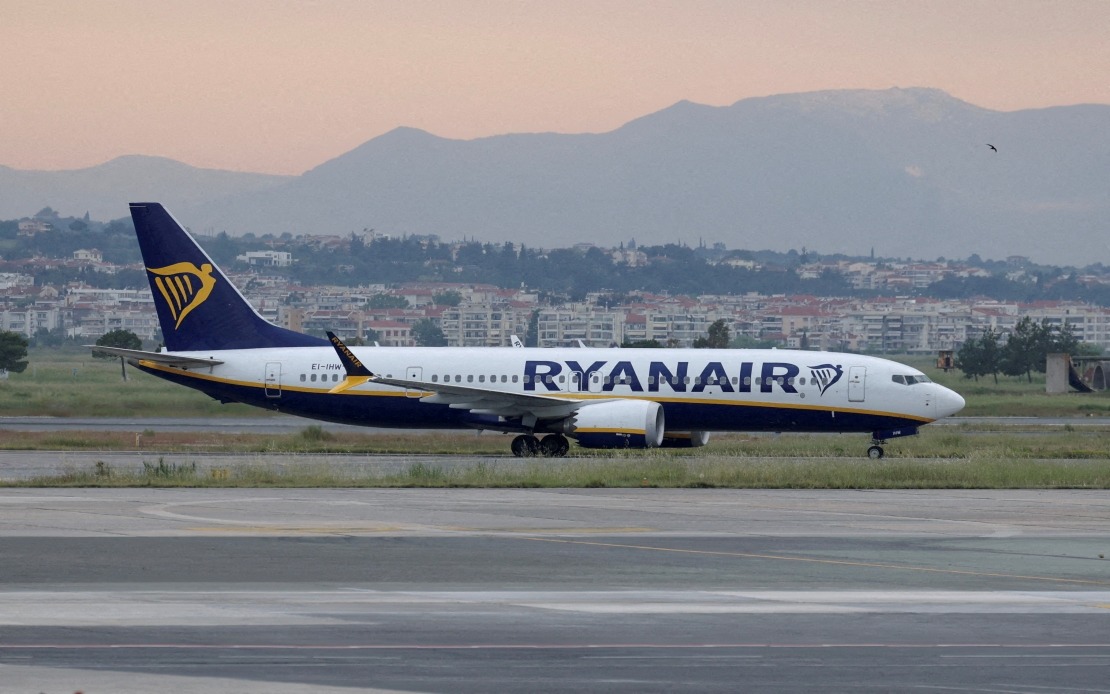
A routine flight turned into a harrowing ordeal on Friday when a Ryanair aircraft departing from Thessaloniki in northern Greece experienced catastrophic window failure whilst en route to Memmingen in Bavaria. The incident unfolded shortly after the aircraft became airborne, forcing the pilot to abort the journey and return to Thessaloniki Airport within approximately 20 minutes. The event sparked widespread concern among passengers and has prompted aviation authorities to initiate a formal investigation into what caused the structural failure.
According to eyewitness accounts gathered by news agencies, the drama began when a loud bang reverberated through the cabin, immediately followed by the violent shattering of a window pane. The passenger seated nearest to the affected window sustained injuries from the incident, though the exact nature and severity of these injuries remain unclear. What made the situation particularly alarming was that the impact and decompression were severe enough to create a dangerous situation where, as one witness recounted to Greek broadcaster ERT, the injured man's "head and shoulders were sticking out of the broken window."
The rapid response of nearby passengers likely prevented a far worse tragedy. Fellow travellers managed to pull the injured man back inside the aircraft, demonstrating the kind of swift collective action that can mitigate disaster at altitude. The incident immediately triggered standard emergency protocols, with oxygen masks automatically deploying throughout the cabin. The sudden appearance of these masks, combined with the violent nature of the window failure and the screams of frightened passengers, created scenes of considerable panic in the aircraft.
The Serbian national who was injured in the incident was transferred to hospital care in Thessaloniki once the aircraft landed safely. Emergency services were standing by at the airport to receive him. The quick diversion to Thessaloniki prevented what could have been a prolonged emergency with the aircraft forced to remain at altitude with a compromised fuselage.
For Southeast Asian travellers and aviation safety advocates, incidents such as this underscore the importance of robust maintenance protocols and manufacturing standards in commercial aviation. Modern aircraft undergo rigorous testing before entering service, yet structural failures can still occur due to manufacturing defects, maintenance oversights, or unforeseen material stress. The window failure on this Ryanair service raises questions about inspection procedures and whether the affected window had shown any signs of weakness before the catastrophic rupture.
Ryanair, Europe's largest low-cost carrier, operates hundreds of flights daily across the continent and beyond. The airline carries millions of passengers annually, making incidents like this rare but significant when they occur. The company has not yet released an official statement regarding the incident, leaving many questions unanswered about the specific cause and any previous maintenance concerns with the aircraft.
Greek aviation authorities have initiated a comprehensive investigation into the window failure. This investigation will likely examine maintenance records for the specific aircraft, the manufacture and certification history of the window assembly, inspection reports from recent servicing, and the precise conditions the aircraft was subject to at the moment of failure. Such investigations typically take weeks or months to complete and involve multiple regulatory bodies.
The incident comes at a time when European aviation safety regulators maintain some of the world's most stringent standards. The European Union Aviation Safety Agency works closely with national authorities to maintain safety records across the continent's airspace. Window failures, whilst rare, are taken with utmost seriousness as they pose direct threats to cabin pressurization and passenger safety.
For passengers and crew aboard commercial flights, events like the Thessaloniki incident serve as stark reminders of the potential hazards that aviation professionals train extensively to manage. The swift actions of the pilot in deciding to return immediately to the nearest airport, combined with the composed response of cabin crew and the assistance of fellow passengers, all contributed to ensuring that what could have been a catastrophic event was contained and managed effectively.
The investigation will likely focus on whether this was an isolated manufacturing defect, a result of inadequate maintenance, or possibly damage incurred during previous operations that was not properly documented or addressed. Every detail will be scrutinized to prevent similar occurrences in the future. Until authorities release their findings, the exact cause of the window failure remains unknown, leaving the aviation community awaiting further clarity on what transpired aboard the flight from Thessaloniki to Memmingen.

