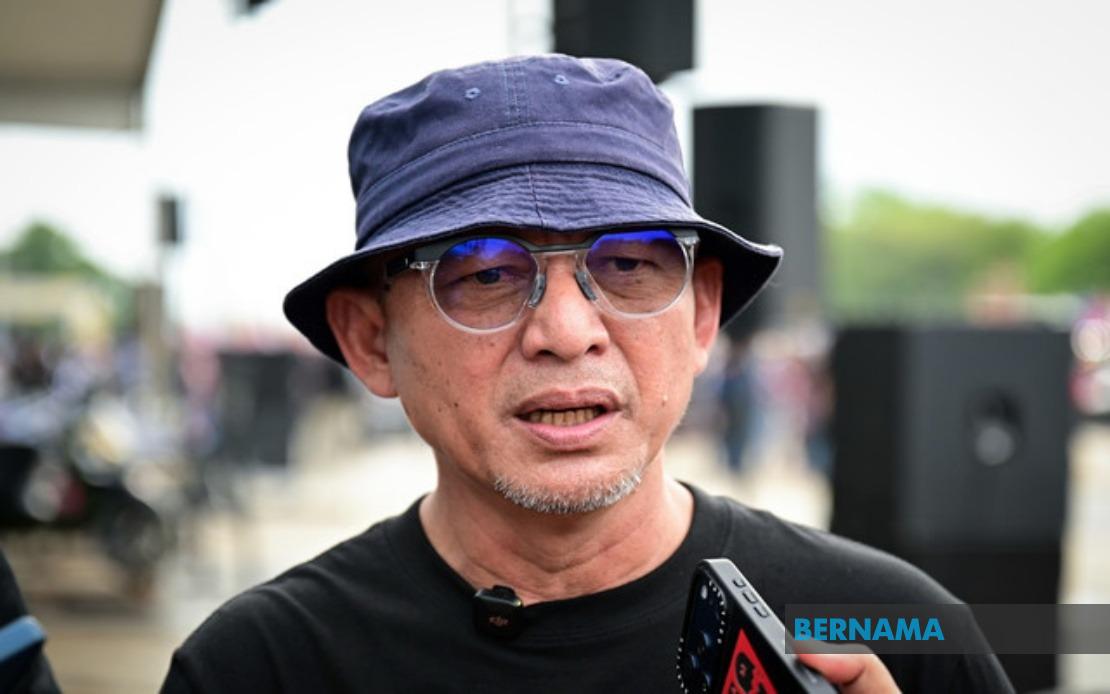
The Terengganu state government has moved to clarify that its new Visit Truly Terengganu 2027 branding was developed with careful attention to Islamic principles, responding to concerns about religious compliance in the state's tourism identity. Datuk Razali Idris, chairman of the State Tourism Committee, stressed that the redesigned logo represents a thoughtful modernisation that respects both contemporary design sensibilities and Shariah standards, drawing these remarks at the conclusion of the Terengganu Classic Festival 2026 held at Dataran Shahbandar.
The turtle, which has served as Terengganu's distinctive emblem for years and remains emblematic of the state's maritime heritage and natural assets, continues as the centrepiece of the updated logo. Rather than abandoning this recognisable symbol, state authorities opted to stylise the image in ways that address potential religious sensitivities surrounding animal depictions in Islamic tradition. This approach reflects an ongoing tension in Muslim-majority regions between preserving cultural icons and adhering to conservative interpretations of Islamic imagery guidelines.
Razali explained that the 2027 design represents a substantial departure from the 2007 version, which he characterised as rigid and lacking visual dynamism. The refreshed iteration incorporates vibrant colour palettes and flowing geometric forms intended to convey movement and energy, modernising the turtle imagery whilst simultaneously reducing anatomical specificity. By rendering the creature in a more abstract and simplified manner, designers aimed to navigate Islamic sensitivities regarding realistic animal representation, a concern that extends into practical application across merchandise and apparel.
One particular consideration driving the design modifications relates to Islamic practice surrounding prayer attire. Razali noted that Islamic jurisprudence discourages wearing garments bearing detailed animal figures during prayer, a principle that becomes relevant when tourism logos appear on clothing, uniforms, and merchandise distributed widely across the state. By reducing anatomical detail and adopting a more stylised approach, the logo can appear on apparel without triggering religious objections from observant Muslims. This reflects how secular commercial tourism activities must navigate religious frameworks in states where Islam carries substantial cultural and legal authority.
The redesign process demonstrates how Malaysian states, particularly those in the east coast with stronger Islamic governance structures, balance economic development through tourism promotion with religious and cultural conservatism. Terengganu, governed by Parti Islam Se-Malaysia (PAS), has increasingly applied Islamic principles to state administration, and tourism branding provides a visible arena where such considerations become tangible. The decision to retain the turtle while modifying its presentation suggests state authorities recognise that completely abandoning established symbols risks damaging brand recognition and tourist familiarity, yet understand the political necessity of demonstrating religious sensitivity.
Beyond the logo discussion, Razali conveyed optimism regarding Terengganu's tourism trajectory, targeting nine million visitor arrivals by year's end. Preliminary data from the first quarter of 2024 indicated the state attracted 2.45 million tourists, encompassing both domestic and international visitors to its resort islands and coastal attractions. This figure suggests the state remains on track to meet ambitious growth targets, though officials acknowledged the need to finalise and reconcile data collected through various monitoring systems.
Vehicle entry statistics, tracked through toll plaza counts and cross-referenced with the state's own counting methodology, provide supplementary indicators of tourist flow. March and April combined recorded over 600,000 vehicle entries, climbing to 829,000 in May before moderating to 608,000 in June. Razali indicated that these figures would undergo further reconciliation and verification before presentation to the state legislative assembly, suggesting ongoing refinement of tourism measurement techniques. The variation across months likely reflects seasonal patterns in domestic travel and school holidays, though official analysis of these trends remains pending.
The Terengganu Classic Festival 2026, which concluded on the date of Razali's remarks, showcased over 500 vintage vehicles spanning the 1960s era, encompassing automobiles and motorcycles that attract enthusiasts and casual visitors alike. The event drew nearly 10,000 participants, demonstrating sustained interest in niche tourism offerings beyond conventional beach and island attractions. Such festivals represent efforts to diversify Terengganu's tourism portfolio and extend visitor seasons through thematic programming that appeals to specific demographic segments.
For Malaysian tourism stakeholders and competing destinations, Terengganu's approach to balancing religious compliance with commercial branding holds broader implications. As states increasingly consider Islamic principles in economic development decisions, managing the interface between contemporary global marketing practices and local religious frameworks becomes central to destination positioning. The turtle logo controversy—if it constituted controversy—illustrates how tourism authorities must navigate sensitivities that may not register significantly in secular contexts but carry weight in Islamic governance environments.
Terengganu's tourism development strategy reflects the state's geographic advantages encompassing pristine beaches, marine biodiversity, and cultural heritage, yet also reveals the complex regulatory environment within which eastern Malaysian states operate. Balancing growth ambitions with religious governance frameworks requires creative solutions that neither compromise commercial viability nor appear dismissive of Islamic principles. The redesigned logo, in this light, represents practical compromise rather than substantive capitulation, maintaining recognisable branding whilst demonstrating institutional respect for religious sensitivities that define the state's identity and governance.

