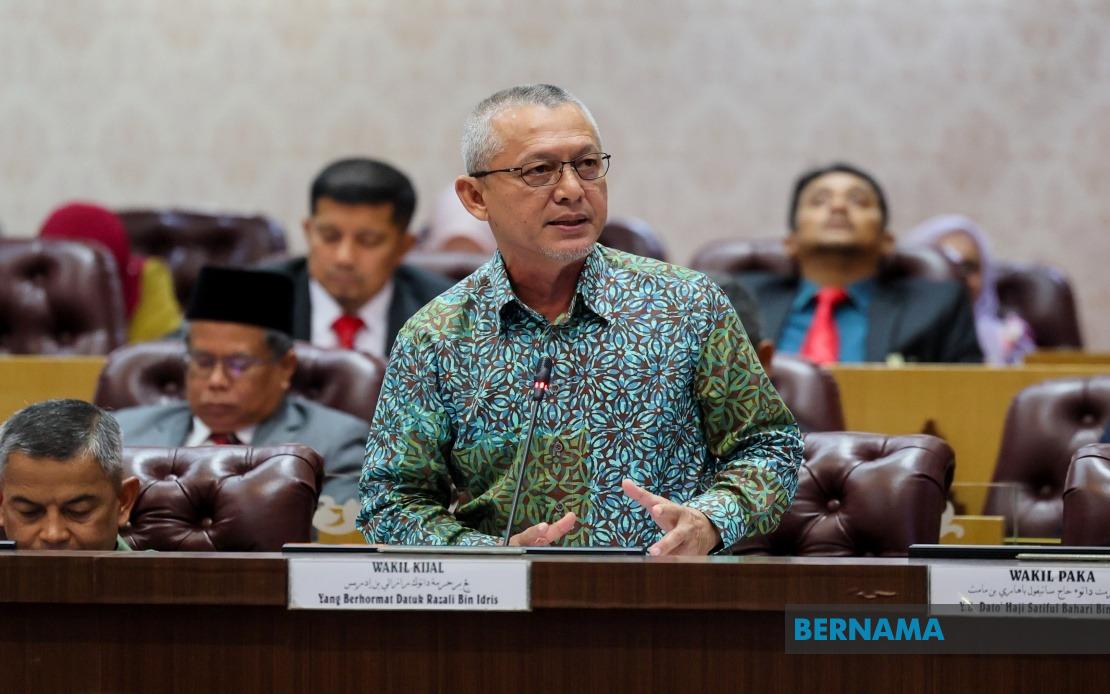
Terengganu is investing RM3.78 million in comprehensive development initiatives at Kenyir Geopark, channelling funds through the Hulu Terengganu District Office to strengthen the site's geological and tourism infrastructure. State Tourism, Culture, Environment and Climate Change Committee chairman Datuk Razali Idris outlined the investment during legislative assembly proceedings, emphasising the importance of securing the geopark's existing National Geopark status while working towards UNESCO Global Geopark recognition—a designation that would elevate the site's international profile and unlock enhanced funding opportunities for sustainable management.
The allocation is deliberately structured to address multiple conservation and development priorities simultaneously. Geoheritage protection forms a cornerstone of the strategy, with designated resources devoted to safeguarding critical geological formations and archaeological features that define the region's scientific significance. Complementing this are targeted initiatives to develop commercially viable geotourism products that leverage the area's natural assets, coupled with substantial investment in physical infrastructure that enables visitors to access and appreciate geopark features safely and responsibly. Educational programming represents another essential component, designed both to build awareness among the general population about the geopark's importance and to equip local communities with skills necessary for sustainable tourism management.
Kenyir Geopark encompasses approximately 244,900 hectares across Hulu Terengganu, making it one of Malaysia's most significant geological preserves. The site contains a carefully catalogued network of 15 geosites of varying scientific importance, 10 biosites reflecting the area's ecological diversity, 11 distinct cultural heritage locations, and a single geo-archaeological site. This multi-faceted composition means the geopark serves simultaneously as a geological classroom, a biodiversity refuge, and a repository of cultural memory—a complexity that demands nuanced management approaches and justifies the breadth of the investment announcement.
Specific conservation efforts already underway demonstrate the government's commitment to protecting irreplaceable heritage assets. Gua Bewah, Gua Taat, and Batu Bersurat—all significant geological and cultural landmarks—are receiving dedicated protection measures designed to preserve their scientific value for future research and education. These sites represent the intersection of geological processes and human history, making them particularly valuable for understanding both the region's natural evolution and its cultural development over centuries. Their conservation reflects a recognition that geoparks serve purposes extending far beyond tourism revenue generation.
Visitor engagement data provides compelling evidence of mounting public interest in the geopark's attractions. Annual visitor numbers surged dramatically, rising from 218,157 in 2023 to 454,765 in 2024—a leap of 108.5 percent that represents one of the most substantial tourism growth rates in the state's experience. This explosive increase reflects both improved accessibility and rising regional awareness of Kenyir's distinctive offerings, though it simultaneously presents management challenges around carrying capacity, infrastructure maintenance, and ensuring visitor experiences do not compromise conservation objectives. The growth trajectory underscores the urgency of strategic investment before popularity exceeds the area's sustainable capacity.
For Malaysian and Southeast Asian tourism markets, Kenyir Geopark represents a distinctive offering positioned between mainstream beach and cultural tourism experiences. UNESCO Global Geopark designation would provide international credibility that extends market reach beyond domestic visitors to international researchers, educational groups, and specialist geotourism enthusiasts. The designation also creates linkages with other globally recognized geopark sites, facilitating knowledge exchange and potentially enabling comparative research programs. For Terengganu specifically, diversifying tourism appeal beyond maritime attractions reduces seasonal volatility and economic vulnerability to external shocks affecting beach-dependent tourism sectors.
The community capacity-building component of the investment strategy deserves particular attention, as it signals recognition that sustainable geopark management depends on local stakeholder buy-in and skills development. Training programmes directed at residents in hospitality, guiding, interpretation, and conservation stewardship generate employment opportunities while distributing economic benefits throughout Hulu Terengganu communities rather than concentrating gains among external operators. This approach aligns with contemporary best practices in sustainable tourism, which emphasizes community participation as essential for long-term project viability. Success requires transforming local residents from passive landscape inhabitants into active stakeholders invested in the geopark's success.
Terengganu's geopark strategy reflects broader Southeast Asian trends toward diversifying tourism portfolios and elevating environmental conservation through economic incentives. Countries across the region increasingly recognize that geological heritage and ecological preservation need not compete with economic development when tourism frameworks are thoughtfully designed. The RM3.78 million allocation represents a calculated investment in a higher-value, lower-volume tourism model that attracts visitors seeking educational and experiential content rather than mass-market attractions. This positioning offers greater resilience against tourism market disruptions while potentially generating superior per-visitor spending.
The timeline for UNESCO Global Geopark designation remains undefined, though the sustained investment indicates serious commitment to meeting the organization's exacting standards for geological significance, management infrastructure, and community engagement. UNESCO designations typically require demonstrated excellence across multiple evaluation criteria and may demand several years of preparation and documentation. Terengganu's phased approach—first consolidating National Geopark status while simultaneously preparing international designation pathways—reflects pragmatic understanding that institutional recognition occurs incrementally through cumulative achievement rather than sudden transformation.
For Malaysian policymakers and regional tourism authorities, Kenyir Geopark demonstrates the viability of geological tourism as a development catalyst for rural interior regions that lack coastal attractions. The visitor surge and investment commitment suggest demand for this tourism category extends beyond niche specialist markets. The model potentially offers replicable lessons for other states with significant but underutilized geological heritage, though success ultimately depends on site-specific factors including geological significance, accessibility, and community support. Terengganu's willingness to commit substantial public resources reflects confidence in the sector's growth potential and the government's broader vision for economic diversification within the state.

