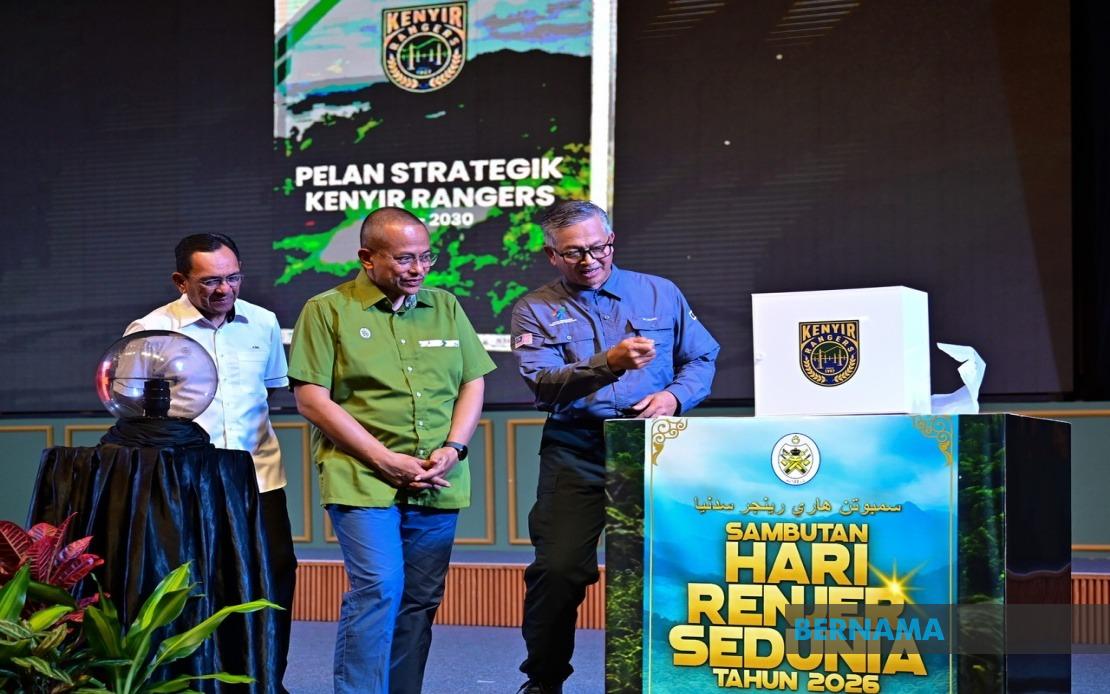
Terengganu Menteri Besar Datuk Seri Dr Ahmad Samsuri Mokhtar has emphasized that tackling the escalating threat of human-wildlife encounters requires a coordinated, multi-agency response rather than isolated departmental efforts. Speaking during the state-level World Ranger Day 2026 celebration at Wisma Darul Iman in Kuala Terengganu, he underscored that the recurring collisions between vehicles and wildlife on highways represent a challenge demanding immediate structural solutions across government bodies.
The menteri besar's call for stronger cooperation signals growing concern within Terengganu's administration about the frequency and severity of incidents where elephants and other animals venture onto major transportation corridors. These encounters have escalated from isolated occurrences to a pattern requiring systemic intervention, prompting state leadership to reconsider how different agencies approach wildlife management and road safety simultaneously. Ahmad Samsuri specifically identified the Wildlife and National Parks Department and the Malaysian Highway Authority as critical partners whose collaboration could yield tangible results in preventing future tragedies.
A particularly harrowing incident on August 5 underscored the human cost of inadequate conflict mitigation. A couple sustained injuries when their Toyota Estima collided with a herd of elephants at Kilometre 274.6 on the East Coast Expressway 2, immediately after the Cheneh Toll Plaza towards Kuala Terengganu. This accident, occurring on one of Malaysia's busiest commercial arteries, illustrated the dual vulnerability facing both motorists and displaced wildlife navigating contested landscapes where human infrastructure intersects animal territories.
The menteri besar's proposed measures reflect a layered approach acknowledging both immediate and long-term dimensions of the problem. Enhanced patrol presence at identified collision hotspots represents the most straightforward intervention, requiring primarily logistical coordination and resource reallocation rather than capital investment. However, Ahmad Samsuri recognized that prevention through physical barriers offers greater promise, suggesting electric fencing around wildlife habitats and established animal corridors as a viable deterrent mechanism. Such installations would signal animals to avoid routes leading toward highways while minimizing harm through non-lethal deterrence.
The feasibility of widespread electric fencing presents genuine fiscal and practical challenges that the menteri besar acknowledged candidly. Installing such systems across the entire length of expressways covering significant distances would consume substantial state and federal budgets, making comprehensive coverage economically unfeasible. Consequently, state authorities are exploring a more targeted approach, concentrating protective measures on the most vulnerable stretches immediately adjacent to known wildlife habitats and established animal movement routes. This selective deployment maximizes protective impact while managing installation and maintenance costs more realistically.
Ahmad Samsuri identified emerging technologies as holding considerable promise for medium to long-term solutions addressing this persistent challenge. Early warning systems capable of detecting wildlife movement and alerting highway authorities and motorists in real time could significantly reduce collision incidents without requiring permanent infrastructure modifications. Such technological solutions would harness innovation to create dynamic protective barriers, allowing roads to function normally while remaining responsive to animal presence. Investment in these systems represents forward-thinking policy that acknowledges both human economic interests and wildlife conservation imperatives.
Seasonal patterns exacerbate human-wildlife conflict, with the menteri besar specifically highlighting the rainy season as a period of elevated risk. During monsoon months, wildlife ventures away from their natural habitats seeking shelter, shelter, and resources, bringing them into closer proximity with human settlements and transportation networks. Highway patrol operations would require intensification during these predictable high-risk periods, allowing authorities to concentrate limited resources where they will generate maximum protective benefit. Seasonal adjustment of security protocols represents cost-effective adaptive management, responding to ecological realities rather than maintaining static approaches year-round.
The tragic August 5 collision prompted the menteri besar to reframe the conflict in human terms beyond infrastructure damage and traffic disruption. Recognizing the legitimate tragedy affecting the injured couple while simultaneously acknowledging wildlife welfare stakes reflected a balanced perspective increasingly rare in public discourse. Ahmad Samsuri's explicit statement that both animal and human lives possess moral weight signaled compassionate governance committed to solutions serving multiple constituencies rather than viewing wildlife management purely as an obstacle to human convenience.
Effective implementation of Ahmad Samsuri's vision will depend significantly on institutional coordination mechanisms currently underdeveloped within Malaysia's governance structure. The Wildlife and National Parks Department and Malaysian Highway Authority typically operate within separate regulatory frameworks and budget allocations, creating institutional friction around shared problems. Formalizing regular coordination meetings, establishing joint funding mechanisms, and developing integrated protocols for responding to wildlife incidents would transform abstract calls for cooperation into operational reality. Without such institutional restructuring, ambitious proposals risk remaining aspirational rather than generating concrete outcomes.
For Malaysian travelers and regional observers, this situation reflects broader tensions between rapid transportation infrastructure development and wildlife conservation that many Southeast Asian nations confront simultaneously. Malaysia's position as both an economically developed country with extensive highway networks and a repository of significant remaining tropical biodiversity creates unique pressure at this intersection. How Terengganu and other affected states resolve human-wildlife conflict through policy innovation may offer lessons for neighboring countries facing similar challenges as their own highway expansion programs accelerate.
The menteri besar's framing of this issue as requiring greater cooperation moves beyond assigning blame to individual departments and instead positions conflict reduction as a shared governmental responsibility. This philosophical shift toward collaborative problem-solving sets a foundation for sustainable solutions transcending the typical reactive pattern where incidents trigger temporary responses before attention lapses. By anchoring the discussion in systematic coordination frameworks and technological innovation, Ahmad Samsuri articulated an approach capable of delivering meaningful long-term reduction in human-wildlife encounters on Malaysia's highways.

