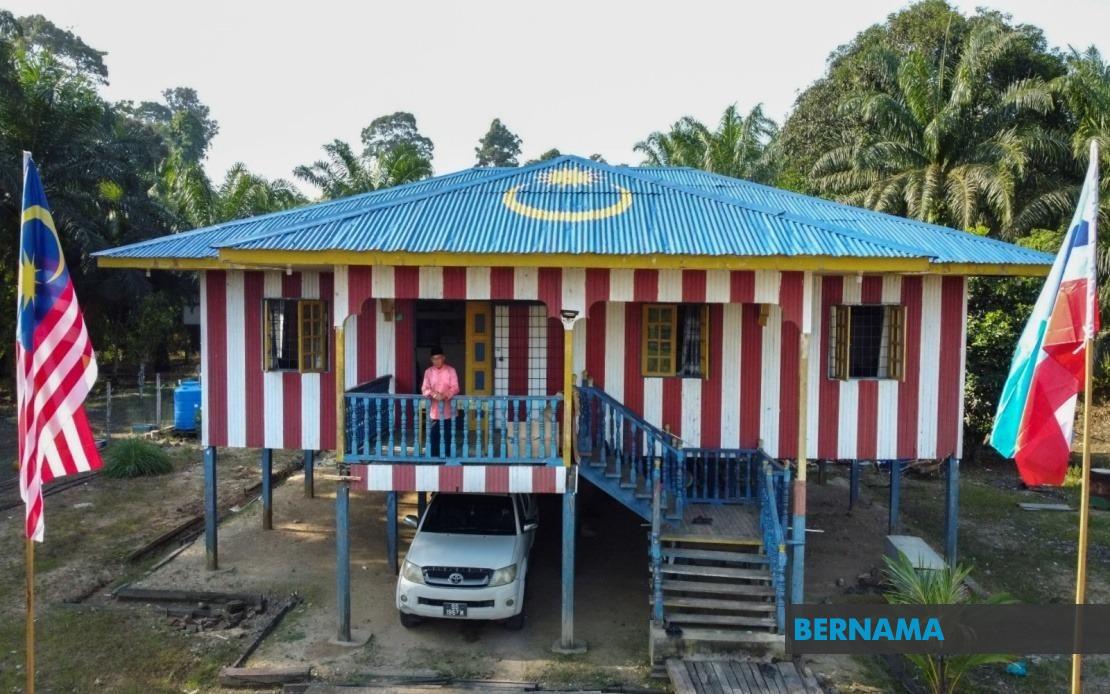
A modest wooden house at Batu 15, Jalan Labuk in Sandakan has evolved into something far beyond shelter—it has become a living monument to Malaysian patriotism. Named Teratak Gemilang, the residence of 68-year-old entrepreneur Mohd Halikin Angga stands out dramatically against its surroundings, its walls ablaze with the bold red and white stripes of the national flag, complemented by a deep-blue roof crowned with a golden-yellow crescent moon and 14-pointed star. For over two decades, this vibrant structure has served as a quiet yet powerful statement of love for the nation, drawing admiring glances from passers-by and becoming a popular photography spot, particularly during the festive National Month celebrations.
Mohd Halikin's journey to creating this patriotic landmark began in 2004, sparked by a deeply personal reflection on national pride and historical remembrance. The inspiration ran deeper than mere aesthetic preference—it was rooted in his reverence for his parents, who had endured the complexities of the colonial era and lived to see Malaysia's independence. What troubled him most was witnessing the inevitable decline of patriotic symbolism after National Day festivities concluded. He observed with dismay how Malaysian flags, once proudly displayed, would be hastily removed from homes and vehicles, only to be blown away by wind or trampled underfoot. This sight moved him to action, transforming his home into a permanent, colourful expression of the patriotic sentiments that he believed should persist throughout the year, not merely during designated celebrations.
The physical transformation of Teratak Gemilang required considerable personal investment and effort. Working with his own resources and armed with paintbrushes and determination, Mohd Halikin meticulously applied layer after layer of paint in the national colours, creating a visual symphony that speaks to anyone who passes. The home has evolved into far more than a painted structure—it functions as an open-air gallery and repository of Malaysian historical memory. Visitors stepping through its doors encounter a carefully curated mini-gallery displaying portraits of the nation's paramount leaders, arranged chronologically to trace the nation's journey from independence to the present day.
The interior walls of Teratak Gemilang bear witness to Malaysia's leadership legacy. The living room has been transformed into a hall of recognition, featuring formal portraits of the Yang di-Pertuan Agong and the Yang di-Pertua Negeri Sabah, alongside photographs of every prime minister from Tunku Abdul Rahman Putra Al-Haj to the incumbent. This deliberate curation reflects Mohd Halikin's belief that younger generations must understand and appreciate the contributions of those who shaped the nation's trajectory. Among his most cherished possessions is a historic photograph documenting a pivotal moment in Malaysian history—Tunku Abdul Rahman meeting with 20 North Borneo leaders in 1961 to discuss the formation of Malaysia. He discovered this image during a 2005 flight to perform Umrah, when he noticed it in a newspaper. Moved by its historical significance, he sought permission from the cabin crew to retain and subsequently frame the photograph, integrating it into his growing collection.
Mohd Halikin's patriotism extends beyond the walls of his home and into the fabric of his family life. His approach to naming his children reflects a philosophy that names carry profound meaning and purpose beyond mere identification. Among his seven children, three have been named after prominent national figures and statesmen, serving as daily reminders of Malaysia's leadership heritage. His eldest child carries the name of Tun Dr Mahathir Mohamad, the nation's longest-serving premier. His second child was named after Tun Abdullah Ahmad Badawi, another former prime minister who guided the nation through significant periods. His sixth child, Nur Zahirah, bears a name inspired by the 13th Raja Permaisuri Agong, honouring the royal institution's importance to Malaysian identity. This naming practice, he explains, is far more than a nostalgic gesture—it represents his fervent hope that each new generation will internalize and honour the legacies of those who sacrificed for the nation's wellbeing and development.
The broader significance of Teratak Gemilang within Sandakan's social fabric cannot be overlooked. Located in a city that has undergone considerable transformation and holds particular historical importance to Malaysia's formation, the house has become an unofficial landmark that attracts local residents, tourists, and students alike. During National Day and Malaysia Day periods, the property invariably becomes a focal point for those seeking to commemorate national milestones. Mohd Halikin recognizes this role and has consciously maintained the house's patriotic appearance as a permanent installation, deliberately rejecting the temporary nature of seasonal patriotic displays that characterise most Malaysian homes.
Mohd Halikin's vision for Teratak Gemilang extends beyond personal expression into the realm of community cohesion and unity-building. He explicitly hopes that the house will continue to inspire and strengthen bonds of unity among Sabah's richly diverse multicultural and multi-religious populations. In a nation where unity among different ethnic and religious communities remains an ongoing project requiring constant attention and reinforcement, symbolic spaces like Teratak Gemilang serve important psychological and social functions. The house communicates a message accessible to all visitors regardless of their background: that patriotism, national pride, and love for Malaysia transcend individual or community boundaries and form a shared foundation for coexistence.
Looking toward the future, Sabah faces significant commemorative occasions that will undoubtedly draw renewed attention to such patriotic landmarks. The 2026 National Day and Malaysia Day celebrations will mark important milestones in Malaysia's post-independence journey, and structures like Teratak Gemilang will likely serve as gathering points and symbols of national identity. Mohd Halikin has explicitly committed to maintaining the house in its current patriotic colours and condition, ensuring that the physical manifestation of his philosophy endures and continues to communicate its message to successive generations of Malaysians who encounter it.
The phenomenon of Teratak Gemilang also reflects broader questions about how Malaysians choose to express patriotism in the contemporary era. Unlike abstract pledges or rhetorical commitments to national unity, Mohd Halikin's approach is tangible, visible, and unambiguous—a permanent declaration painted across the walls of his home. This raises important considerations for policymakers and community leaders about how to foster and sustain patriotic sentiment beyond ceremonial occasions. In an age where national identity faces challenges from competing loyalties and globalization, individual acts of deliberate patriotic expression such as this serve both symbolic and practical purposes, reminding society of the importance of maintaining connection to foundational national values and historical memory. Teratak Gemilang stands as testament to one individual's conviction that such remembrance and celebration should never be confined to specific months or occasions, but rather woven into the permanent texture of community life.

