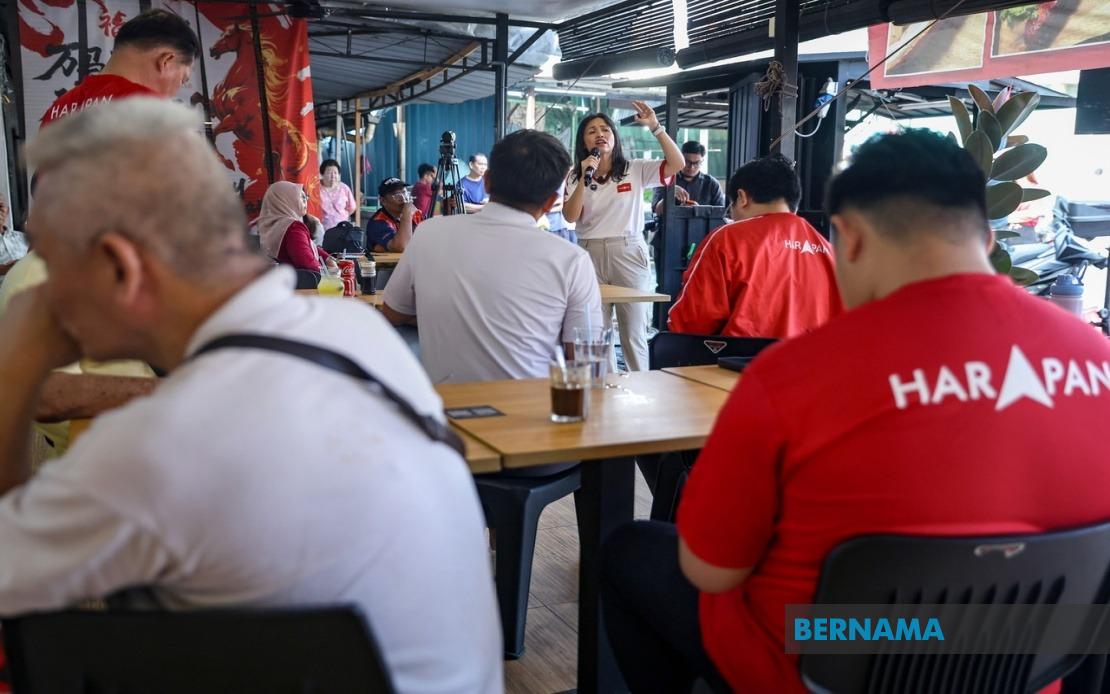
The integrity of government institutions has come under scrutiny in Johor following allegations that a technical education programme was repurposed for electoral campaigning. Johor DAP chairman Teo Nie Ching has called on Menteri Besar Datuk Onn Hafiz Ghazi to provide a public explanation regarding claims that TVET students were compelled to attend the Johor MARA TVET Roadshow at an inland revenue office in Kluang on July 4, only to find themselves at what appeared to be a Barisan Nasional campaign rally.
According to Teo, who serves as Deputy Communications Minister, the party received multiple complaints from parents and students indicating they had been instructed to participate in the event under threat of recording unauthorised absences. The venue—the Inland Revenue Board Hall in Kluang—raises particular concerns about whether state facilities were appropriately used. Teo emphasised that whilst there is no objection to the Menteri Besar attending government-organised programmes, the substance of the allegations touches on a more troubling issue: the potential blurring of lines between legitimate government activities and partisan political campaigning.
The crux of the controversy rests on what transpired during the programme itself. Teo indicated that DAP possesses documentary evidence, including the official programme itinerary, written correspondence mandating attendance, and video footage purporting to show the Menteri Besar explicitly encouraging students to support the Barisan Nasional candidate by publicly referencing the candidate's ballot number. This form of direct campaigning directed at a captive audience of young people, particularly when attendance was framed as mandatory, represents a significant departure from how government events should function in a democratic electoral context.
The distinction between government programmes and party events carries constitutional weight in Malaysian electoral law. If the Johor MARA TVET Roadshow was genuinely conceived as a government initiative to promote technical and vocational education, it ought to have remained apolitical regardless of which political leader attended. Conversely, if it was always intended as a campaign platform, questions arise about the appropriateness of deploying a government institution's facilities and compelling the attendance of students who might otherwise choose not to participate in party-political activity. Teo's framing of her concern—not as a politician but as a mother concerned about her child's autonomy—seeks to transcend partisan divisions and appeal to universal parental anxieties about coercion and institutional overreach.
The timing of these allegations is significant given that the Johor state election is underway, with polling scheduled for July 11. The state contest involves 172 candidates competing across 56 seats, making Johor a crucial battleground for both Barisan Nasional and Pakatan Harapan. Early voting was already taking place when these allegations emerged, meaning voters are making electoral decisions whilst questions about campaign conduct remain unresolved. For voters concerned about ethical governance, such allegations—whether ultimately substantiated or not—can influence perceptions of state leadership integrity during a critical moment.
Teo also disclosed that Pakatan Harapan candidates are considering formal complaints to the Election Commission, though she indicated that the decision rests with individual candidates rather than being coordinated party strategy. This approach suggests a calculated reluctance to appear overly aggressive whilst simultaneously keeping the pressure on the Menteri Besar to respond. The Election Commission will likely face pressure to investigate, and any findings could become material to post-election discourse about campaign fairness, regardless of which coalition ultimately wins the state government.
Beyond the immediate allegations, Teo used the opportunity to criticise what she characterised as opportunistic governance by Onn Hafiz. The Menteri Besar has recently called for several federal policies to be reviewed on grounds that they burden the people. Teo countered this narrative by noting that major government policies require Cabinet approval and cannot be unilaterally blamed on the federal government or opposition parties. She suggested that the state leadership was selectively claiming credit for popular initiatives whilst deflecting responsibility for unpopular ones onto Prime Minister Anwar Ibrahim, DAP, or PKR.
This counter-attack reveals the substantive policy disagreements underlying the electoral competition. Voters in Johor are being presented with competing narratives: one portraying the state government as a defender of the people against federal overreach, another portraying it as fiscally irresponsible and unwilling to acknowledge the challenges inherent in implementing cabinet-approved national policies. Both narratives seek to define the fundamental character of governance, with the TVET event allegations serving as a microcosm of broader concerns about institutional autonomy and political ethics.
Lim Kit Siang, the veteran DAP leader present at the forum in Kulai, sought to elevate the discourse beyond immediate electoral tactics by invoking the concept of the Malaysian Dream—a vision founded on equality, freedom, prosperity, and human rights respect. His intervention represents an attempt to reframe the Johor election not merely as a contest between coalitions competing for state power, but as a referendum on the kind of Malaysia voters wish to build. By urging voters to reject racial politics and consolidate rather than split their votes, Lim suggested that coherent mandate and ethical governance are prerequisites for achieving this broader vision.
The allegations carry implications beyond Johor itself. If substantiated, they would demonstrate how state institutions can be subordinated to electoral interests, setting a problematic precedent for other states and potentially informing federal governance standards. Conversely, if the allegations prove overblown or factually baseless, they may be dismissed as opposition rhetoric designed to distract from the substantive record of state administration. Either way, the incident highlights enduring tensions in Malaysian democracy between the legitimate use of state resources and the constitutional limits on partisan political activity during election periods.
For Malaysian voters observing this situation, the broader lesson concerns institutional accountability during elections. The willingness of opposition parties to lodge formal complaints, coupled with the election commission's capacity to investigate such matters, will test whether Malaysia's democratic institutions can maintain standards of fairness even when political tensions run high. The Johor election thus becomes not merely a contest for state power, but an examination of whether electoral norms and institutional integrity can withstand the pressures of partisan competition.

