The funeral proceedings for Tengku Puteri Seri Kemala Tengku Datuk Seri Aishah concluded on Wednesday with her interment at the Royal Mausoleum in Pekan, marking the end of a solemn day of remembrance for the Pahang royal household. The 69-year-old passed away at 9.25 pm on Tuesday at a private hospital in Kuala Lumpur, leaving behind a significant place in the state's royal lineage as the elder sister of the reigning Sultan of Pahang, Al-Sultan Abdullah Ri'ayatuddin Al-Mustafa Billah Shah.
The funeral rites adhered to Islamic tradition and royal protocol, beginning with prayers conducted at the Khalid bin Al-Walid Mosque located on Jalan Padang Tembak in Kuala Lumpur. Following the initial ceremony, the remains were transported to Pahang via the Subang Air Base, reflecting the customary procedures observed for members of the royal family. This logistical arrangement underscores the significance accorded to senior members of the sultanate, even in their final journey.
Upon arrival in Pekan, the cortège proceeded to the Sultan Ahmad 1 Mosque, reaching there at 1.25 pm for a second round of funeral prayers after the zuhur prayer time. The timing and location of these rituals demonstrate the integration of religious observance with royal ceremony, a practice that remains central to Islamic monarchy in Malaysia. The mosque's proximity to the Royal Mausoleum facilitated the transition from prayer to burial with appropriate solemnity.
The burial ceremony itself was conducted with full state honours befitting her status within the royal family. Pahang Mufti Datuk Dr Asmadi Mohamed Naim led the recitation of Yasin, an important chapter of the Quran often recited during Islamic funeral rites, and subsequently oversaw the tahlil and prayers that form essential components of Muslim burial traditions. These religious observances provide spiritual solace while honouring the deceased's place within both the faith and the state.
Sultan Al-Sultan Abdullah and Tengku Ampuan of Pahang Tunku Azizah Aminah Maimunah Iskandariah both attended the burial service, demonstrating the family's collective engagement with this period of mourning. Their presence was complemented by that of Tengku Mahkota of Pahang Tengku Hassanal Ibrahim Alam Shah, ensuring representation across the generational hierarchy of the royal house. This multi-generational attendance reflects customary practices within Malaysia's royal structures, where significant life events are observed by family members across different age groups and positions.
Beyond the immediate royal family, the funeral drew participation from senior government officials, including Melaka Yang Dipertua Negeri Tun Mohd Ali Rustam and Pahang Menteri Besar Datuk Seri Wan Rosdy Wan Ismail. Their attendance underscores the broader ceremonial significance of funerals involving members of the royal families that constitute Malaysia's constitutional monarchy. Such events serve to reinforce the state's connections between the sultanate and the broader governmental apparatus.
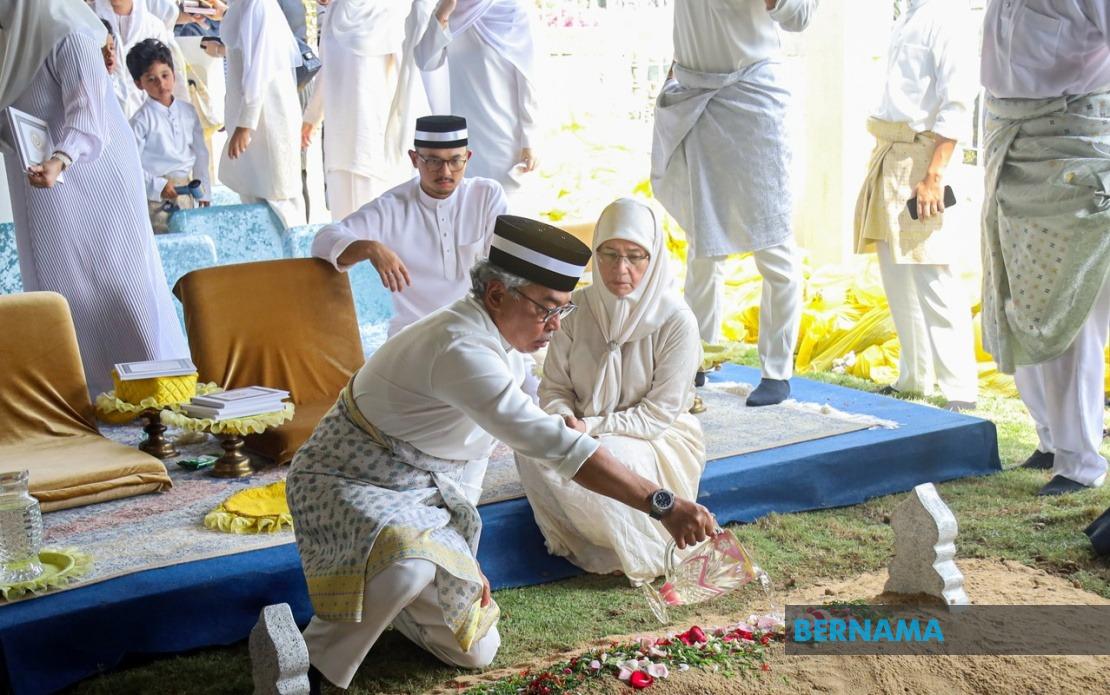
A particularly poignant moment in the ceremony came when Al-Sultan Abdullah and Tunku Azizah sprinkled rose water and scattered flowers upon the grave, a tender gesture that combined Islamic custom with personal expression of grief. This ritual action, while solemn in nature, provides a visual and symbolic moment of closure for bereaved family members and witnesses. The use of flowers and rose water carries both spiritual and emotional dimensions, marking a transition from earthly life to the hereafter according to Islamic belief.
The Royal Mausoleum at Pekan serves as the final resting place for members of the Pahang royal family, and Tengku Puteri Seri Kemala's interment there places her within a continuum of family history and dynastic memory. This cemetery, situated beside the Sultan Ahmad 1 Mosque, functions as both a sacred space and a repository of royal genealogy, preserving the stories and legacies of those who shaped the state's governance and identity. Her burial completes a ceremonial arc that began with her death and reflects the respect accorded to her by Malaysia's royal and political establishment.
The death and subsequent funeral of Tengku Puteri Seri Kemala represents a moment of reflection within Pahang's royal household, which has navigated various constitutional and ceremonial responsibilities as part of Malaysia's unique system of rotating constitutional monarchy. Such occasions, while marking loss, also serve to reinforce the institutional continuity and the enduring bonds that characterise the Malaysian royalty system, where death becomes an occasion for the broader state to acknowledge and honour its senior members.

