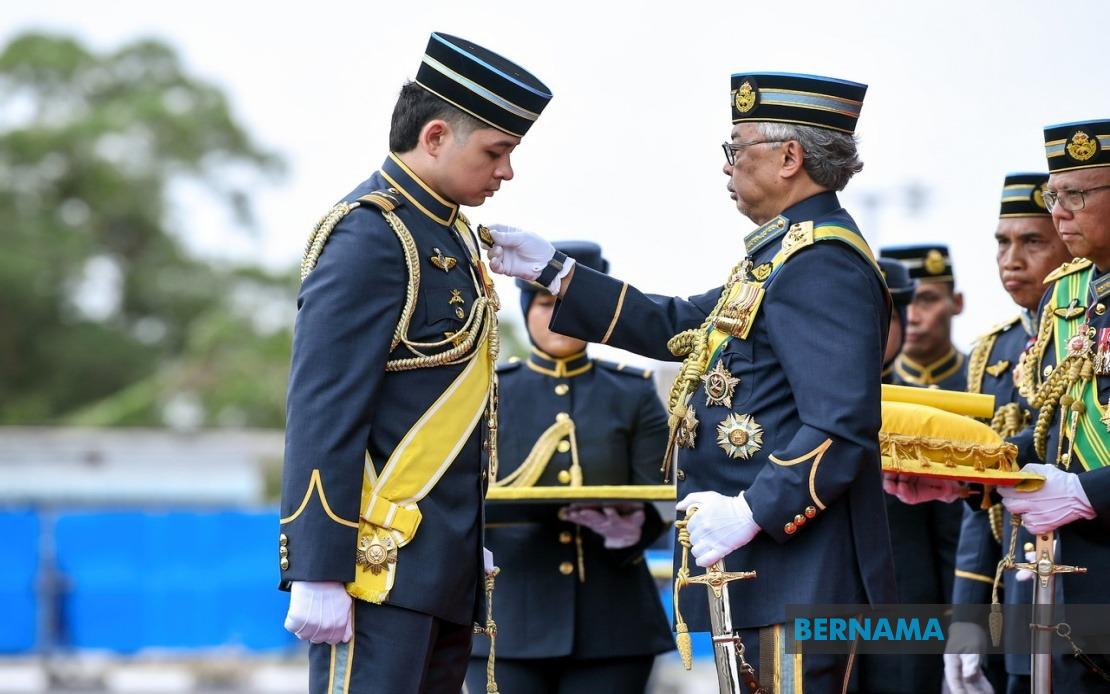
Tengku Hassanal Ibrahim Alam Shah, the Tengku Mahkota of Pahang, has achieved a historic milestone by becoming the first member of Malaysia's royal family to successfully complete the Basic Helicopter Flying Course and receive his RMAF Flying Wings. The significant moment occurred on August 15 at the Royal Malaysian Air Force Air College in Alor Setar, when the Sultan of Pahang, Al-Sultan Abdullah Ri'ayatuddin Al-Mustafa Billah Shah, presided over the 2026 Flying Wings Presentation Parade and personally conferred the honour on his son alongside 39 other military personnel.
The Tengku Mahkota's participation in this prestigious training programme underscores the continued involvement of Malaysia's royal institutions in the nation's defence and military operations. His completion of the course demonstrates a commitment that extends beyond ceremonial duties into active engagement with the armed forces' operational structure. The distinction of being the first royal family member to undertake and finish this particular course reflects the significance of the Malaysian monarchy's integration with the nation's military systems, a tradition that has long characterised the constitutional role of the Yang di-Pertuan Agong and state rulers.
Tengku Hassanal underwent the 67(A)/26 Basic Helicopter Flying Course between June 2 and July 31, where he trained on the EC120B Colibri helicopter. The curriculum demanded substantial technical proficiency and mental fortitude, requiring participants to master complex flying procedures and situational awareness under varying conditions. His achievement was not merely a symbolic completion but involved demonstrating genuine competency through rigorous assessments, including the Basic Handling Test, Instrument Flying Test, Final Navigation Test, and Final Handling Test. The fact that he excelled across these multiple evaluative components confirms that his qualification represents genuine operational capability rather than honorary status.
The broader context of this Flying Wings presentation ceremony involved 40 graduates in total, spanning four distinct flying courses conducted by the Royal Malaysian Air Force. Beyond the Tengku Mahkota, the group included 37 young pilots and two weapon systems officers drawn from all three Malaysian Armed Forces services—the Air Force, Army, and Navy. This integrated approach to military aviation training reflects the modern structure of Malaysia's defence establishment, where multi-service coordination and specialisation in roles such as weapons systems operation have become increasingly critical to operational effectiveness. The diversity of backgrounds among the graduates highlights the RMAF's role as a cross-service training institution.
Air Force Chief General Tan Sri Muhamad Norazlan Aris delivered remarks that framed the achievement not as a conclusion but as a commencement of greater responsibility. He attributed the graduates' success to perseverance, fighting spirit, mental resilience, and the high standards of discipline maintained throughout the training period. The Chief's emphasis on family support and prayer underscores the holistic nature of military training in Malaysia's cultural context, where family encouragement is recognised as a crucial component of an individual's performance under demanding conditions. His observation that the presentation ceremony marked the beginning of a greater journey rather than its end carries particular weight when considering the Tengku Mahkota's future role and the expectations that will accompany his enhanced qualification in aviation operations.
The six awards presented during the ceremony to the most outstanding graduates recognised achievement across multiple dimensions: flying ability, academic performance, discipline, and leadership qualities. This multi-faceted evaluation system ensures that the military's recognition of excellence extends beyond pure technical flying skills to encompass the broader competencies required of officers in supervisory and command positions. The emphasis on leadership and discipline within the formal award structure reflects institutional priorities that have long characterised military training philosophies across the region and within Malaysia's defence establishment specifically.
For Malaysian and Southeast Asian observers, the participation and success of a royal family member in a formal military training course carries symbolic significance beyond the individual achievement. It reinforces the constitutional monarchy's active engagement with national defence infrastructure and sends a message regarding the seriousness with which royal institutions view their defence-related responsibilities. In the Malaysian context, where the Yang di-Pertuan Agong holds the title of Supreme Commander of the Armed Forces, visible participation of royal family members in substantive military training strengthens the institution's credibility and connection to operational realities.
The EC120B Colibri helicopter employed in the training course is a French-manufactured light helicopter that has seen service in military operations across multiple countries. Its selection for the RMAF's basic helicopter flying course reflects practical considerations regarding fuel efficiency, manoeuvrability, and safety characteristics suitable for training environments. The aircraft's widespread use in military training programmes internationally makes it a logical choice for standardised curriculum delivery, while its capabilities remain relevant to operational requirements that trained pilots might eventually encounter in service.
The historical significance of this event also extends to broader questions about succession planning and institutional continuity within Malaysia's defence framework. A royal family member with genuine operational flight training credentials represents an evolution in how the monarchy interfaces with military institutions. Should the Tengku Mahkota eventually assume higher constitutional roles within the state apparatus, his first-hand understanding of military operations and the demands placed on personnel will provide valuable perspective on defence-related policy matters and resource allocation decisions.
For the Malaysian military more broadly, the successful completion of this course by such a high-profile participant may serve to elevate the prestige associated with military training programmes and potentially enhance recruitment and retention efforts within the armed forces. The visibility of royal family engagement with substantive military training—as opposed to purely ceremonial military roles—can reinforce the message that serious dedication to defence is a valued aspect of national service and leadership.
Looking forward, the qualification obtained by the Tengku Mahkota opens questions about how this capability might be employed within existing military structures and command hierarchies. While formal flying roles would typically require progression through additional operational conversion courses and accumulation of flying hours under operational mentorship, his basic certification establishes the foundation for such advancement should circumstances permit. The pathway forward will likely depend on strategic decisions regarding how best to utilise his unique position within both the royal hierarchy and the military framework.

