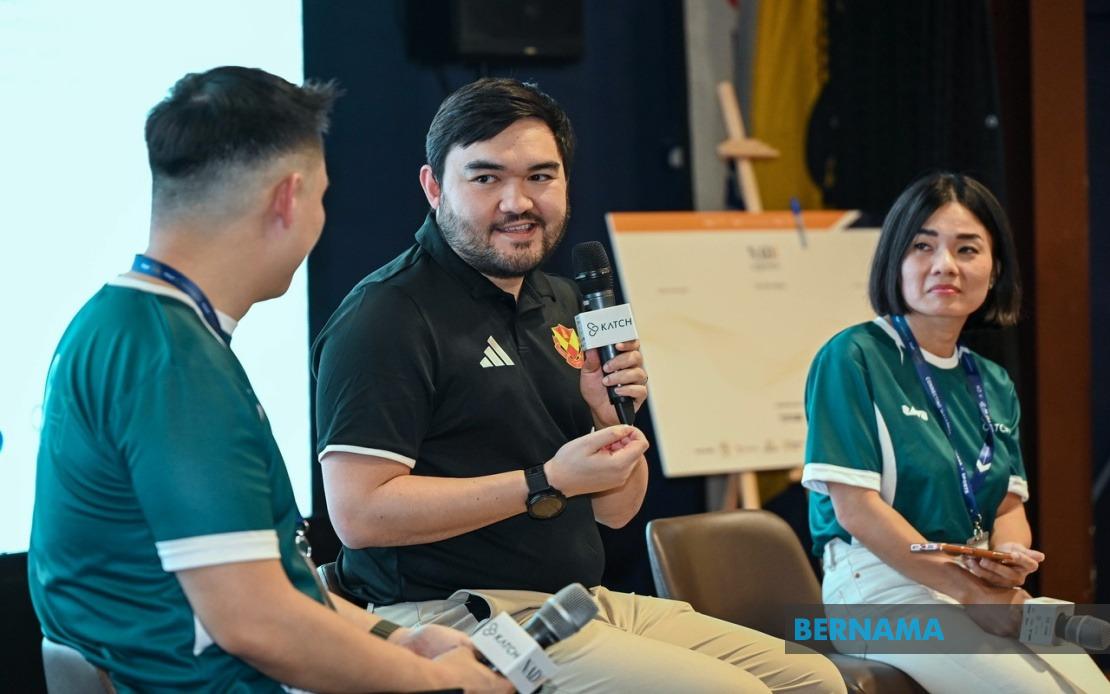
Selangor's dominant performance at the Malaysia Games 2026, where the state claimed overall championship honours with 101 gold medals, has prompted the Raja Muda of Selangor, Tengku Amir Shah Sultan Sharafuddin Idris Shah, to advocate for a broader push into grassroots sports infrastructure. Speaking at the NADI Connecting Wellness, Fitness and Sports With RMS event in Petaling Jaya on August 27, he stressed that competitive platforms must be significantly expanded and maintained at the community level to capitalise on the momentum generated by Selangor's medal haul of 101 gold, 73 silver and 71 bronze medals.
The Raja Muda's intervention reflects a strategic insight into the mechanics of sports development. He contended that consistent competitive opportunities remain fundamental to retaining young athletes' engagement and sharpening their performance trajectories. Without regular competition calendars, even naturally gifted individuals risk losing focus and motivation, he suggested. The emphasis on "every weekend" competitions signals his belief that sports culture requires institutional scaffolding—structured, recurring events that integrate training and competition into young people's routine.
Tengku Amir Shah highlighted the psychological dimension of competitive sports that often receives insufficient policy attention. Regular competitions, he argued, cultivate a competitive mindset that transcends individual disciplines and becomes embedded in athletes' approach to challenge and achievement. This mentality shift, he proposed, becomes contagious within sports ecosystems, driving development across multiple sports simultaneously. The implication is that grassroots investment yields returns beyond medal counts; it reshapes how communities value excellence and persistence.
His comments reveal longstanding personal investment in youth sports development. Before deepening his involvement with football and the Football Association of Selangor, Tengku Amir Shah's engagement with the Selangor Youth Community demonstrated sustained commitment to this portfolio. This background informs his current advocacy and lends credibility to his position that institutional structures, rather than talent alone, determine sporting outcomes.
A practical illustration of his philosophy emerged through his discussion of the Selangor Champions League. Created to unite social football teams across the state within a competitive framework, the league functioned as both an identification mechanism for emerging talent and a catalyst for raising overall competitive standards. The success of this model, he indicated, provides a template that might be adapted across sports gaining popularity in Malaysian communities. He specifically mentioned pickleball and chess as disciplines where similar grassroots league structures could flourish.
The selection of particular sports for Selangor's SUKMA 2026 portfolio represents another tactical consideration in his framework. By curating a diverse array of disciplines, Selangor created multiple pathways for young athletes to identify and develop their capabilities while representing their state. This approach maximises participation breadth whilst maintaining competitive rigour, addressing a perennial challenge in national sports development where resources and attention concentrate on traditional pursuits.
Tengku Amir Shah's emphasis on sportsmanship alongside competitiveness distinguishes his vision from purely results-driven approaches. By framing SUKMA participation as an opportunity to showcase quality conduct and sporting values in addition to athletic prowess, he positions competitive sports as vehicles for character development. This holistic perspective aligns with broader national priorities regarding youth formation and social cohesion.
The NADI event itself, which convened 50 wellness, fitness and sports leaders, reflected an attempt to galvanise collective action around shared sporting vision. Such sectoral convergence proves essential in Malaysia's complex sports governance landscape, where responsibilities fragment across government agencies, commercial entities, and non-governmental organisations. Assembling stakeholders behind coherent strategy amplifies implementation capacity and establishes accountability mechanisms.
For Southeast Asian readers, Tengku Amir Shah's advocacy carries regional resonance. Many nations across the region grapple with insufficient grassroots sports infrastructure despite occasional success at major games. The tension between sporadic medal triumphs and systemic athletic development plagues sports policymaking throughout the region. Selangor's example, if embedded through sustained grassroots competition architecture, could demonstrate a replicable model for other states and countries navigating similar challenges.
The expansion of league structures to emerging sports like pickleball and chess reflects recognition that contemporary youth engagement spans traditional athletic disciplines. Digital-native populations and changing recreational preferences necessitate flexible sports ecosystems capable of accommodating diverse activities. By positioning these sports within competitive frameworks parallel to established disciplines, Selangor could broaden its talent pipeline and capture participation from demographics traditionally underrepresented in conventional sports pathways.
Implementing Tengku Amir Shah's vision requires sustained funding, volunteer infrastructure, and administrative capacity beyond championship cycles. The difference between aspirational statements and durable systems lies in translating rhetorical commitment into annual budget allocations, trained competition administrators, and long-term institutional planning. Whether Selangor's state government and sports organisations possess the resources and political will to maintain weekly competitive calendars across multiple sports remains the crucial practical question.
The Raja Muda's intervention suggests recognition that Malaysia's sporting achievements depend less on occasional hosting of games and more on quotidian engagement with athletic development. Building competitive culture requires normalising competition as integral to youth experience rather than occasional spectacle. If Selangor successfully embeds grassroots competition infrastructure, the state's SUKMA 2026 victory could catalyse a shift toward more sustainable sporting development models benefiting entire generations of Malaysian athletes.

