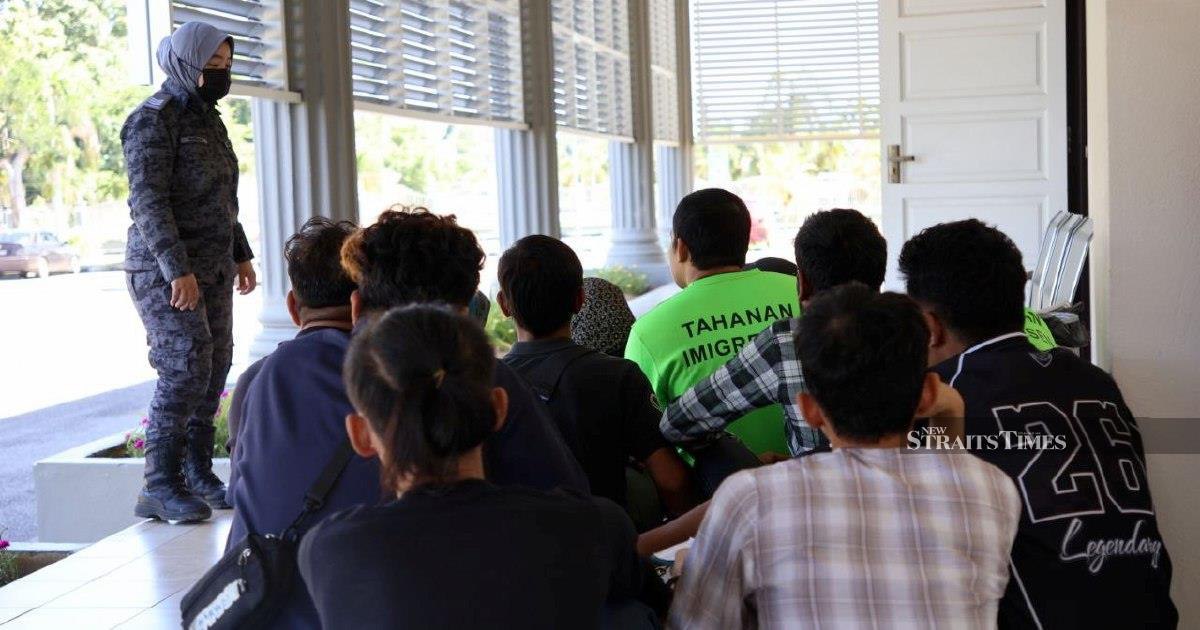
A coordinated enforcement operation in Pasir Mas has resulted in ten undocumented migrants being brought before the Sessions Court, with charges spanning illegal entry into Malaysia, unauthorised overstaying, and the improper use of social visit passes. Among those charged were three foreign women, highlighting the continued vulnerability of migrant populations to immigration violations across the country.
The case underscores Malaysia's persistent challenges with undocumented migration, a phenomenon that has grown increasingly complex in the decades following regional economic expansion. Immigration enforcement agencies have intensified operations in key locations along the northern border regions, where logistical ease of crossing and established migration networks continue to facilitate unlawful entries. Kelantan, the state where Pasir Mas is located, sits strategically close to Thailand and has historically experienced higher rates of cross-border movement than many other Malaysian jurisdictions.
Misuse of social visit passes represents a particularly concerning category of offence, as these permits are specifically designated for temporary tourism and business purposes. When individuals remaining in the country after their authorised period expires, they effectively transition into undocumented status, losing access to legal employment and healthcare. This creates a hidden population vulnerable to exploitation by unscrupulous employers who benefit from workers unable to seek recourse through official channels.
The enforcement action reflects Malaysia's dual approach to managing irregular migration: combining deterrent prosecution with systematic identification of violators. Immigration raids and court proceedings serve to signal the consequences of non-compliance, though the scale of such operations remains relatively modest compared to the estimated undocumented population residing throughout the country. Analysts suggest that visible prosecution cases, while important for establishing consequences, address only a fraction of the broader migration management challenge.
The prevalence of overstaying cases among charged migrants points to a structural gap between the accessible pathways for temporary entry and the complexity of obtaining legitimate long-term residency. Many individuals enter through standard channels such as social visit passes but face barriers to formal extension, creating inadvertent violation scenarios. Others deliberately overstay, betting that enforcement capacity proves insufficient to detect them among Malaysia's substantial migrant workforce.
Geographical proximity plays a significant role in Pasir Mas's prominence in such cases. Located in Kelantan's eastern regions, the area experiences considerable cross-border traffic from Thailand, where wage differentials and employment opportunities in Malaysian manufacturing, agriculture, and services sectors continue attracting workers. The relatively shorter distances to border crossing points compared to major urban centres create operational advantages for trafficking networks and informal migration arrangements.
Three female migrants among the accused suggests gendered dimensions to undocumented migration, with women frequently encountering particular vulnerabilities including exploitation in domestic work, informal services, or sex trafficking situations. Female overstayers may face additional barriers to voluntary compliance, including limited awareness of legal processes or fear of deportation consequences in home countries. Immigration enforcement agencies increasingly recognise the need for gender-sensitive approaches when identifying and processing female migrants in violation of entry conditions.
The Sessions Court proceedings in Pasir Mas contribute to a growing body of case law establishing precedent for migration violation sentences. Cumulative penalties for combined offences—illegal entry coupled with overstaying and social pass misuse—typically result in substantial fines and possible imprisonment, serving as theoretical deterrents against future violations. However, the effectiveness of such deterrence remains debatable when weighed against economic pressures driving migration decisions in source countries.
Malaysia's immigration framework distinguishes between legitimate migrant categories and unauthorised residents, though practical implementation of these distinctions requires sustained administrative and enforcement investment. The country's reliance on migrant labour across multiple sectors creates inherent tensions: economic demand for foreign workers often outpaces formal visa availability, inadvertently incentivising irregular pathways. This structural mismatch between labour market needs and official immigration quotas represents a fundamental policy challenge extending beyond enforcement operations.
The Pasir Mas case also reflects broader regional migration patterns affecting Southeast Asia. Thailand, from which many Malaysian-bound migrants originate, experiences its own outmigration pressures stemming from regional wage disparities and limited domestic employment in rural areas. Malaysian authorities' enforcement efforts thus participate in a transnational migration management ecosystem requiring coordination with neighbouring countries' immigration systems and development initiatives addressing root causes of displacement.
Looking forward, these prosecutions signal continued government commitment to immigration enforcement, yet questions persist regarding resource allocation and enforcement prioritisation. Limited detention facilities and court capacity mean significant numbers of detected migrants may face administrative rather than criminal processing. For Malaysian policymakers and employers, the underlying tension between labour market realities and formal immigration controls suggests that enforcement alone cannot resolve undocumented migration challenges without corresponding policy reforms addressing pathway accessibility and sector-specific labour needs.

