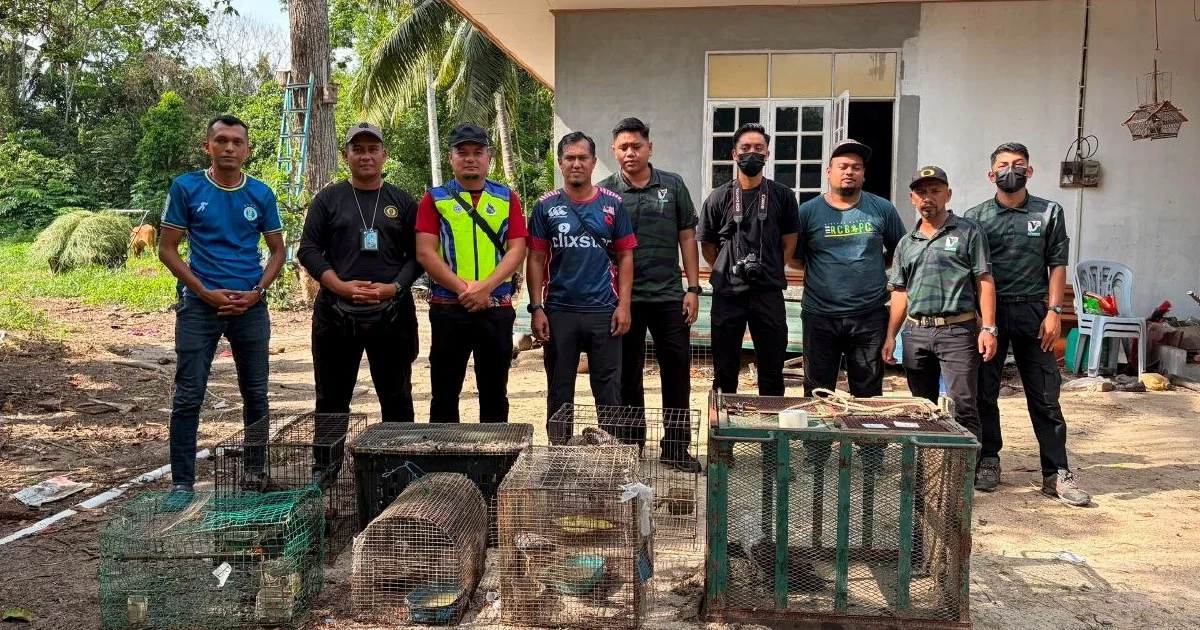
Enforcement operations targeting the illegal wildlife trade in Malaysia's northeastern reaches have led to the arrest of an 18-year-old teenager in Tumpat, who was found possessing protected animals valued at approximately RM48,500. The raid represents another intervention in what remains a persistent challenge for conservation authorities attempting to stem the flow of endangered species through domestic and regional trafficking networks.
The apprehension involved discovery of four distinct species classified under Malaysia's wildlife protection framework, each carrying significant penalties under the Wildlife Protection Act 2010. The specific identity and threatened status of these species underscore the breadth of illegal wildlife commerce operating within Malaysian borders, ranging from exotic reptiles and mammals to birds and other fauna sought for domestic consumption, pet trading, or export markets. The substantial monetary valuation attached to the haul indicates these were not incidental possessions but rather items with recognised commercial value within underground markets.
Tumpat, situated in Kelantan's maritime zone, occupies a strategically sensitive position within Malaysia's wildlife enforcement landscape. The district's location near state borders and coastal access points creates vulnerabilities that trafficking networks frequently exploit, using the region as a transit point for moving contraband between states or facilitating international smuggling routes. Previous enforcement successes in the area have similarly revealed the involvement of young individuals in handling wildlife contraband, suggesting either deliberate recruitment of minors by organised trafficking rings or opportunistic participation by local youth seeking quick financial returns.
The teenager's age raises questions about the recruitment and employment patterns within Malaysia's shadow economy of wildlife trafficking. Enforcement agencies have increasingly observed minors being utilised as couriers or handlers, partly because juvenile offenders face modified legal consequences and partly because younger individuals may attract less scrutiny during transportation or transfer activities. This demographic trend complicates enforcement efforts, as it indicates trafficking networks are sophisticated enough to exploit Malaysia's juvenile justice system while also expanding their operational personnel.
The Wildlife Protection Act 2010 establishes comprehensive legal mechanisms for prosecuting such violations, with potential sentences including substantial fines and custodial terms. The specific charges the teenager faces will depend on the species identity and his level of culpability—whether he functioned as a primary possessor, intermediary handler, or minor participant in a larger scheme. Prosecutorial decisions at this early stage will significantly influence the case's trajectory and any intelligence it might yield regarding upstream suppliers or downstream purchasers within the trafficking network.
Malaysia's protected wildlife represents irreplaceable components of the nation's extraordinary biodiversity, with many species existing nowhere else globally or confined to rapidly shrinking habitats across Southeast Asia. The illegal removal of breeding individuals from wild populations carries cascading ecological consequences, potentially accelerating species decline in protected areas that face already intense human pressures from habitat conversion and resource extraction. Each contraband seizure thus represents not merely a law enforcement success but also a conservation intervention of measurable ecological significance.
Regional trafficking patterns reflect broader Asian dynamics where demand centres—particularly in East and Southeast Asia—drive procurement networks that stretch across multiple countries. Malaysian fauna, prized for traditional medicine, culinary uses, exotic pet markets, and illegal zoos, generate substantial profits that motivate organised trafficking operations. The RM48,500 valuation suggests the haul comprised relatively high-value specimens rather than common species, indicating the teenager may have been involved in a more professional trafficking chain than purely casual trading.
Enforcement agencies including the Department of Wildlife and National Parks (PERHILITAN), customs authorities, and state wildlife departments maintain collaborative monitoring systems designed to intercept contraband at critical nodes. The raid's success reflects operational intelligence and field coordination, yet authorities acknowledge that apprehensions represent only a fraction of actual trafficking volumes. Sophisticated operators adjust tactics continuously, employing deception in documentation, fragmenting shipments across multiple couriers, and utilising corruption to circumvent checkpoint inspections.
For Malaysian policymakers and conservation stakeholders, this case exemplifies persistent systemic challenges requiring multifaceted responses beyond traditional enforcement alone. Supply-side interventions addressing habitat protection and anti-poaching efforts in wildlife reserves remain foundational, as does demand reduction through public education and international cooperation targeting consumer markets. The involvement of young offenders particularly suggests that employment opportunities and economic alternatives in rural communities warrant greater policy attention as structural factors influencing wildlife trafficking participation.
This arrest also highlights Malaysia's continued vulnerability within regional wildlife crime networks, with the nation functioning simultaneously as source territory for endemic species, transit hub for contraband moving between countries, and consumer market where illegal wildlife products retain cultural or commercial appeal. Addressing this multidimensional challenge requires sustained political commitment, adequate resourcing for enforcement personnel, advanced investigation capabilities targeting trafficking organisations rather than merely street-level offenders, and meaningful international cooperation with neighbouring states through ASEAN frameworks and bilateral arrangements.
The investigation's progression will determine whether this teenager is revealed as an isolated opportunist or as a link to broader trafficking infrastructure. Interrogation techniques emphasising relationship-mapping and supply-chain intelligence could yield valuable information regarding supplier sources, distribution networks, and downstream customer bases. Such intelligence becomes increasingly valuable as enforcement agencies develop comprehensive understandings of trafficking ecosystems rather than treating each seizure as an isolated incident.
Moving forward, the case underscores that Malaysia's wildlife protection regime, whilst legally comprehensive, confronts implementation challenges requiring sustained institutional capacity-building, technological investment in detection systems, and coordinated regional approaches that prevent traffickers from exploiting jurisdictional gaps and enforcement inconsistencies across borders.

