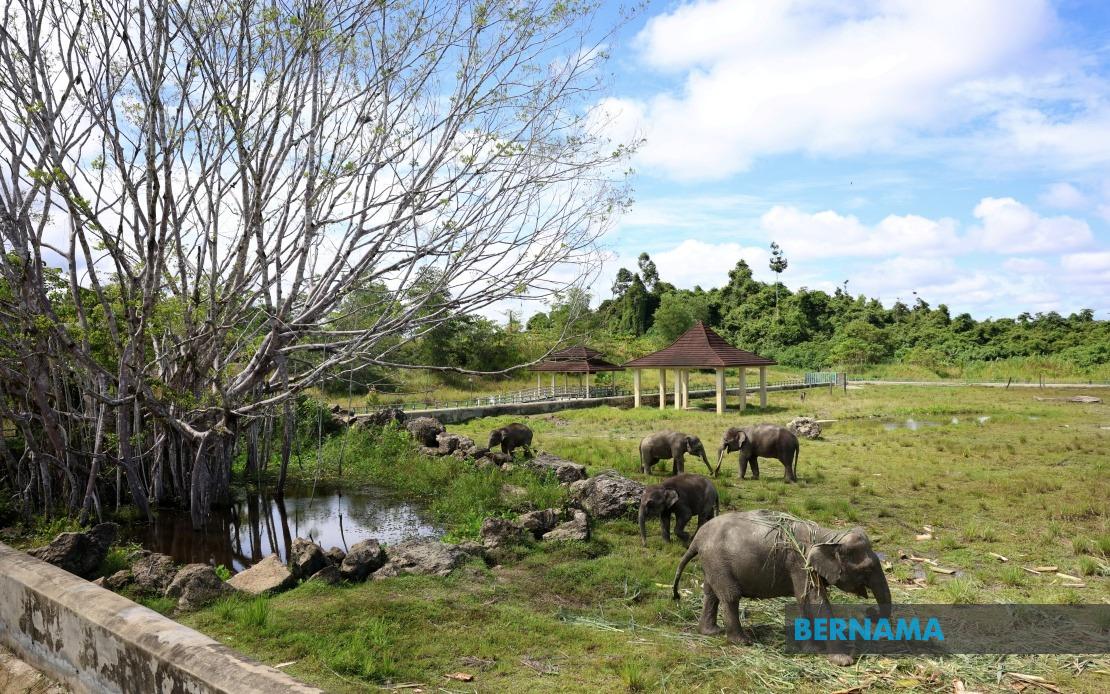
The Sabah government is exploring an elephant sanctuary concept in Tawau that could potentially be replicated throughout the state if initial trials demonstrate its effectiveness in mitigating human-wildlife conflict. Datuk Dr Andi Md Shamsureezal, the State's Assistant Minister of Tourism, Culture and Environment, revealed during today's session of the Sabah State Legislative Assembly that authorities are actively assessing this initiative in partnership with the Sabah Wildlife Department and other relevant agencies. The framework represents a strategic shift towards proactive environmental management, addressing one of the most pressing challenges facing rural communities and agricultural sectors across the Malaysian portion of Borneo.
The elephant sanctuary model emerged from legislative debate centred on finding sustainable solutions to escalating friction between wildlife populations and human settlements. Datuk Seri Mohd Shafie Apdal from Warisan party put forward the concept of designating protected wildlife zones that could simultaneously function as tourist attractions, creating economic incentives for conservation. This dual-purpose approach resonates with broader Southeast Asian efforts to generate alternative revenue streams through eco-tourism while protecting endangered species. The proposal gains particular relevance given Sabah's richness in biodiversity and the state's growing tourism sector, which could benefit substantially from responsible wildlife viewing experiences.
The scale of human-wildlife conflict in Sabah has intensified over recent years, with Bornean elephants, wild boars, monkeys and other species causing considerable agricultural damage across multiple districts. Farmers in affected regions face mounting economic losses, creating tension between conservation priorities and livelihood security. Andi acknowledged this complexity during parliamentary discussion, noting that the state government has been implementing immediate interventions through his ministry and the wildlife department. These multifaceted efforts reflect recognition that wildlife management demands both short-term damage control and comprehensive long-term ecological strategies tailored to specific species behaviour and local environmental conditions.
Crucially, the government has moved away from relying on capture-and-relocation approaches, which officials now acknowledge as fundamentally ineffective solutions. Relocating problematic animals merely displaces the conflict rather than resolving underlying causes, a reality increasingly understood by wildlife managers globally. Instead, Sabah's strategy emphasizes community engagement and technological monitoring. The establishment of elephant ranger teams comprising local residents in conflict zones represents a paradigm shift towards participatory conservation, empowering communities most affected by wildlife damage to become stakeholders in management solutions rather than passive victims of ecological pressures.
Satellite collar technology has become integral to this preventive approach, enabling real-time tracking of elephant movements and allowing authorities to issue early warnings to vulnerable communities. These systems provide crucial data about wildlife behaviour patterns, migration corridors and habitat usage, information essential for designing effective coexistence frameworks. The technology exemplifies how innovation can bridge traditional conservation methods with contemporary animal welfare standards. For Malaysian policymakers observing Sabah's implementation, these mechanisms offer valuable models for other states grappling with similar conflicts, particularly Peninsular Malaysia where human-elephant encounters have periodically triggered fatal incidents.
The Sabah Wildlife Department has also initiated targeted monkey population management in select localities, acknowledging that disease transmission risks to humans alongside habitat degradation warrant intervention. These controlled programmes operate within legal frameworks and depend on risk assessments rather than indiscriminate culling. Similarly, wild boar management follows evidence-based protocols accounting for legal requirements and local complaint patterns. This graduated, data-driven approach contrasts with reactive measures and suggests institutional maturation within Sabah's environmental agencies. The strategy demonstrates awareness that sustainable wildlife management requires differentiated responses based on each species' ecological characteristics and conflict manifestations.
The Tawau sanctuary proposal gains significance within Sabah's broader economic and conservation agenda. Tourism generation remains a strategic priority for the state, and wildlife-based attractions could diversify revenue beyond traditional sectors while simultaneously reducing poaching pressures through alternative economic models. Sanctuary infrastructure would require substantial capital investment and ongoing operational support, but successful implementation could demonstrate how conservation and economic development need not be opposing forces. This model aligns with Southeast Asian trends towards sustainable tourism frameworks that balance visitor access with animal welfare and habitat integrity.
Expanding this approach across other districts presents logistical and financial challenges that the government will need to address systematically. Each district possesses distinct ecological characteristics, wildlife populations and community demographics requiring customized sanctuary designs and management protocols. Some regions may require larger land allocations or different protective infrastructure depending on elephant distribution and agricultural patterns. The state government's commitment to observing results before scaling suggests a measured approach to policy implementation, contrasting with more rushed expansion strategies that often yield disappointing outcomes. Careful documentation of the Tawau pilot will prove essential for identifying replicable elements and district-specific adaptations necessary elsewhere.
For regional observers, Sabah's sanctuary initiative carries implications extending beyond state boundaries. Bornean elephants and other megafauna do not respect administrative borders, with populations ranging across Sabah, the Indonesian province of East Kalimantan and occasionally crossing into Brunei. Transnational wildlife management frameworks could amplify the effectiveness of individual sanctuary efforts, allowing coordinated responses to migratory patterns and habitat connectivity. Malaysia's ASEAN partners, particularly Indonesia, have developed complementary elephant conservation programmes that could be harmonized with Sabah's model. Cross-border cooperation remains underdeveloped despite shared species conservation challenges, presenting opportunities for regional diplomatic engagement centred on environmental stewardship.
The parliamentary discussion also highlighted the state government's recognition that lasting solutions demand community buy-in and culturally-appropriate intervention strategies. Elephant ranger teams involving local residents directly position communities as solution providers rather than conflict spectators, potentially shifting social attitudes towards wildlife conservation. This human-centred approach acknowledges that without addressing livelihood impacts on farmers and rural populations, even well-designed ecological programmes face resistance. The integration of traditional ecological knowledge with modern monitoring technology represents a balanced strategy likely to prove more sustainable than purely technical interventions.
The timeline for assessing the Tawau sanctuary's effectiveness remains unclear, though careful evaluation will be essential before statewide expansion decisions proceed. Success metrics should encompass both conflict reduction and community welfare improvements, ensuring that conservation gains do not exacerbate existing rural inequalities. Economic benefits from sanctuary-based tourism must reach affected communities through employment and revenue-sharing mechanisms. These considerations position the Tawau pilot as a significant test case for Malaysian environmental governance, with lessons applicable across multiple sectors facing human-wildlife interface challenges.

