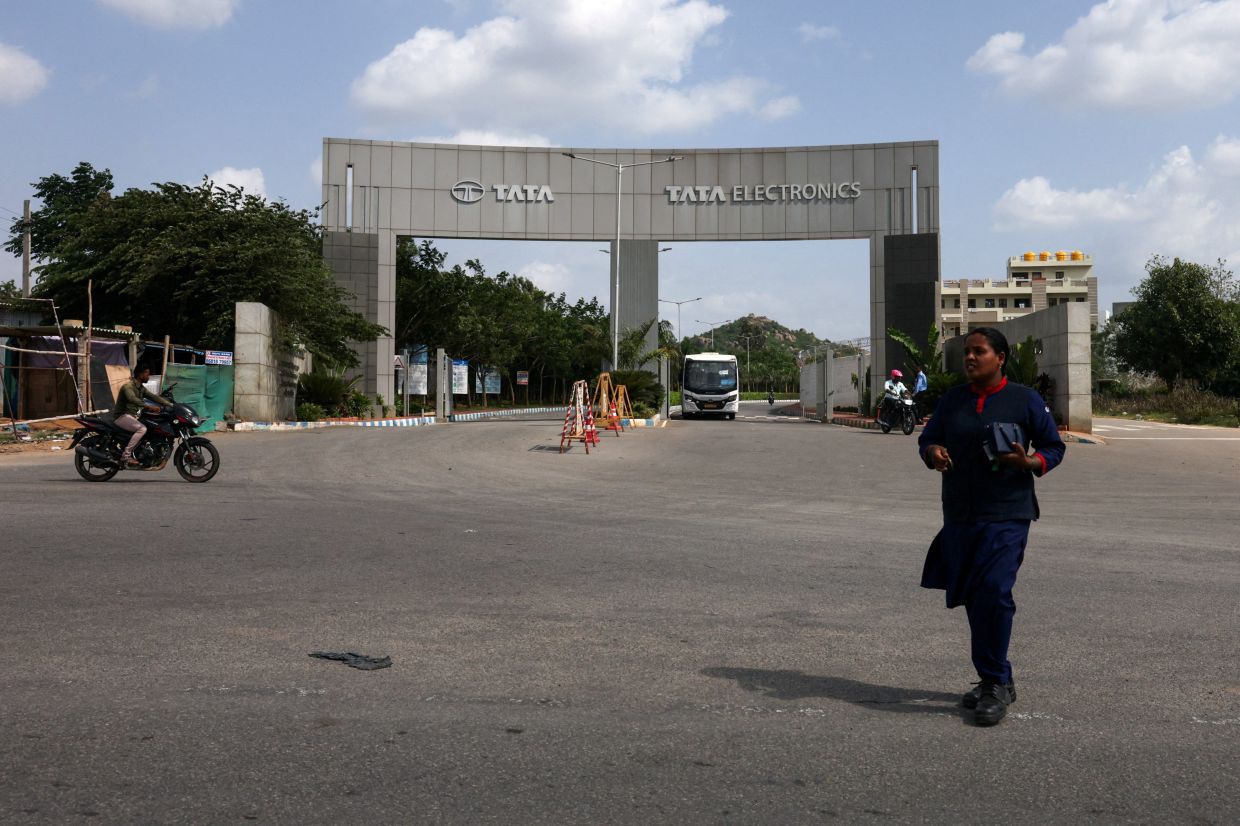
Tata Electronics disclosed a significant cybersecurity breach on Monday (June 22) after security researchers discovered that a ransomware group operating under the name World Leaks had published purported confidential materials belonging to two of its most prominent clients, Apple and Tesla. The incident marks a serious challenge to India's broader ambitions to establish itself as a critical electronics manufacturing hub, particularly as the country seeks to reduce global dependency on Chinese production capacity.
The Indian conglomerate stated that it had identified the cybersecurity incident weeks earlier and immediately activated its incident response procedures. According to the company's statement to Reuters, normal operations across all business units remained uninterrupted despite the breach. However, this reassurance came as security researchers confirmed that the World Leaks group had uploaded more than 200,000 files totalling over 630 gigabytes to the dark web, raising serious questions about the scope and sensitivity of compromised information.
The leaked data encompasses materials that appear directly tied to Apple's manufacturing operations in India. A search of the World Leaks database returned 181 files and folders containing Apple-related documents, including a 52-page file marked with Apple proprietary labels that purportedly details quality inspection standards for iPhone circuit board components. Additionally, 33 files and folders referenced Hosur, the location of Tata's principal iPhone assembly facility in Tamil Nadu state, suggesting that production-sensitive information may have been compromised. Apple initiated a full analysis of the breach and, according to sources familiar with the situation, Tata had received a ransom demand linked to the incident, though both companies declined to elaborate on such negotiations.
The exposure of Tesla-related materials represents equally significant risks. The database contains references to Tesla components manufactured at Tata facilities, including what researchers identified as documentation for the NV36 Chargeport Controller—parts designed for Tesla's upgraded Model Y SUV. More critically, the leaked materials include purported Tesla documents from 2023 marked as "TRADE SECRET" containing technical drawings for Project Highland, Tesla's internal codename for its comprehensively redesigned Model 3 sedan. Files bearing Tesla's confidential markings suggest that proprietary manufacturing and assembly specifications may have fallen into the hands of threat actors.
World Leaks, the ransomware group responsible for the posting, has previously claimed responsibility for breaches affecting major multinational corporations, including Nike. The group operates exclusively on the dark web, distributing stolen data beyond the reach of conventional search engines and law enforcement monitoring. Security researcher Rajshekhar Rajaharia, who examined the leaked files for Reuters, confirmed that the data cache extends far beyond design specifications, containing employee emails, event logs spanning multiple years, and passport copies belonging to workers, including foreign nationals. Such information typically serves as valuable leverage in extortion schemes and poses significant personal privacy risks.
Tata Electronics' role as a manufacturing partner has become increasingly central to Apple's supply chain diversification strategy. The company currently accounts for approximately one-third of Apple's iPhone production in India, complementing production handled by Foxconn. This expansion reflects the broader strategic initiative championed by Prime Minister Narendra Modi to develop India into a global electronics manufacturing centre capable of rivalling established Asian production hubs. The breach therefore carries implications that extend beyond individual corporate interests to India's national economic positioning and credibility as a manufacturing destination for sensitive, high-value products.
This incident is not Tata's first encounter with serious cyber threats. Last year, the conglomerate's British luxury automobile division, Jaguar Land Rover, suffered a cyberattack that forced a six-week production halt, demonstrating the group's prior vulnerability to sophisticated cyber operations. The sequential nature of these breaches raises concerns about whether Tata's information security infrastructure has adequately evolved to address emerging threats. For multinational companies considering India as an alternative to Chinese manufacturing—a priority for many Western corporations seeking supply chain resilience—such incidents carry profound implications for their risk assessments and investment decisions.
The timing and scope of the breach also underscores the heightened vulnerability of global manufacturing supply chains to increasingly sophisticated ransomware operations. The World Leaks group's documentation shows that stolen data was accessible on the dark web since at least June 10, meaning the materials remained exposed for an extended period before formal disclosure. Security researcher Rakesh Krishnan's analysis confirmed the persistence of the leaked information across multiple review points, suggesting limited prospects for recovery or containment once data enters dark web repositories. This reality confronts manufacturers and component suppliers with difficult decisions regarding disclosure, investigation scope, and negotiation strategies.
Apple and Tesla's relative silence on the breach—neither company provided substantive comment—reflects standard practice among major corporations facing data theft threats. However, the absence of public statements also means that affected customers and supply chain partners receive limited clarity regarding the investigation timeline, remediation efforts, or measures to prevent future incidents. For Tata, the breach's disclosure to some employees at its iPhone assembly operations last week suggests internal awareness was widening, complicating containment efforts and potentially accelerating public disclosure.
The Indian Computer Emergency Response Team, the government unit responsible for coordinating cyber incident responses under India's IT ministry, did not immediately respond to inquiries, highlighting potential capacity constraints within India's cyber response infrastructure. As India expands its role in global electronics manufacturing, the coordination between private sector security teams and government response mechanisms will become increasingly critical. The breach demonstrates that even as India pursues ambitious manufacturing growth targets, institutional capacity to support cybersecurity resilience must similarly advance.
Looking forward, this incident will likely prompt Apple, Tesla, and other multinational manufacturers to conduct comprehensive security audits of their Indian supply chain partners. Some companies may impose stricter information security requirements, additional monitoring provisions, or even temporarily reduce volume allocations to affected suppliers pending completion of remediation efforts. For Tata, rebuilding confidence among its most valuable clients will require demonstrable improvements in data protection capabilities, incident response protocols, and transparency. The broader question facing India's manufacturing ambitions is whether incidents such as this prove temporary setbacks correctable through targeted investment, or whether they reveal persistent structural vulnerabilities that constrain the country's ability to serve as a trusted location for sensitive production.