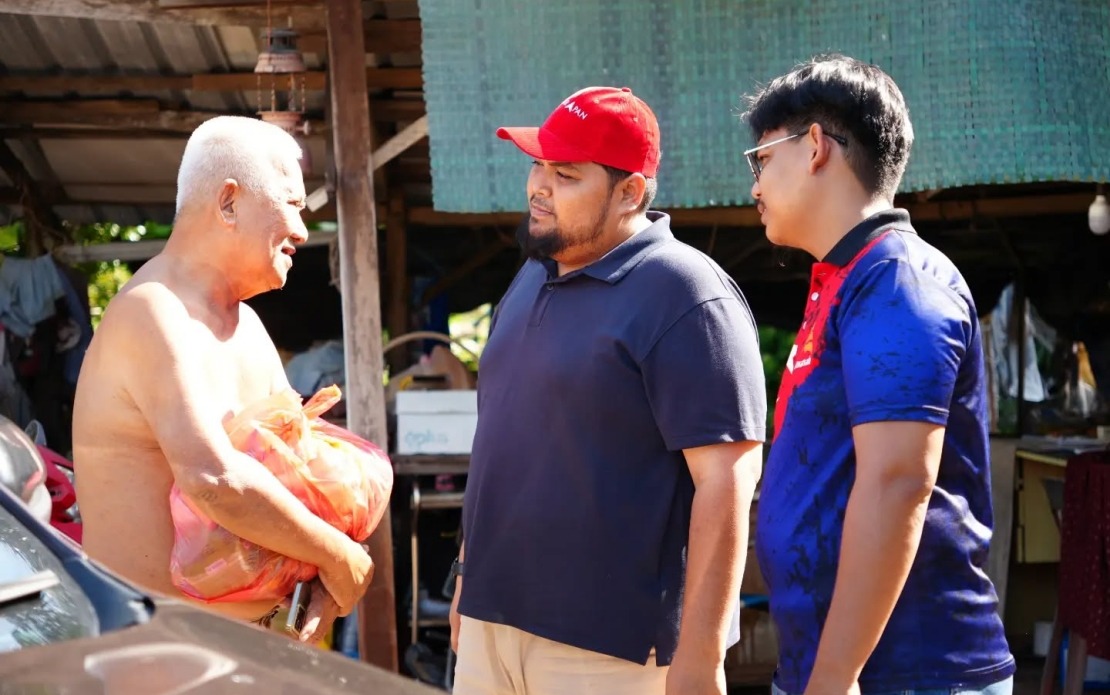
Muhammad Taqiuddin Cheman, the Pakatan Harapan candidate contesting the Maharani state seat in Johor, has sharpened his electoral strategy in the final stretch before polling day on July 11 by directing his messaging squarely at younger voters. With only days remaining in the campaign, the former Pulai Sebatang assemblyman is channelling his efforts into understanding and addressing the economic anxieties that define the youth demographic in the Muar district, prioritising conversations around employment pathways, business opportunities, and professional development.
The candidate, widely known as Taqi, is deploying a grassroots engagement model to connect with young people across Muar through structured dialogue sessions with youth groups and community organisations. This approach reflects a deliberate tactical choice to move beyond broad policy announcements and instead ground his campaign in the concrete, everyday concerns of a constituency that has experienced significant demographic shifts. By situating himself within these communities rather than addressing them from a distance, Taqi aims to build the credibility necessary to translate understanding into electoral support.
A persistent theme emerging from these engagement sessions centres on the scarcity of viable economic opportunities within the district itself. Young entrepreneurs and business hopefuls have repeatedly raised the challenge of finding suitable commercial spaces to establish or expand operations. The candidate cited a specific case involving District 84, where approximately 70 traders operate under severe spatial constraints, forced into a rotation system that limits each business owner's access to prime trading locations. These entrepreneurs have already undertaken their own site identification work, yet lack the institutional support and connections necessary to navigate the formal application processes required to secure alternative premises within Muar's commercial landscape.
The broader context illustrates why such granular economic concerns resonate powerfully with the local electorate. Muar has acquired an informal reputation as a "retirement town," a descriptor that carries significant undertones about demographic and economic vitality. The exodus of young professionals seeking employment opportunities elsewhere represents a structural challenge that transcends individual campaign cycles. Whether moving to established industrial clusters like those centred on semiconductor manufacturing or relocating to larger urban centres, young people are voting with their feet, suggesting that current conditions within the district fail to retain or attract talent.
To counter this narrative of decline and outmigration, Taqi points to Pakatan Harapan's broader electoral platform, specifically the "Johor For All" manifesto, which dedicates RM500 million toward supporting young entrepreneurs in expanding their enterprises. This financial commitment, if realised, would represent a material intervention in the capital constraints that often prevent promising business concepts from scaling beyond their initial stages. The allocation reflects recognition that youth unemployment and underemployment in Malaysia frequently stem not from lack of ambition or capacity, but from the absence of accessible financing mechanisms and institutional backing.
Compounding this employment-focused messaging is the anticipated completion of the Maharani Energy Gateway project, which Taqi identifies as a forthcoming catalyst for economic diversification within the constituency. Large-scale infrastructure projects of this type typically generate employment through both direct construction and permanent operational positions, and often trigger secondary economic activity as supplier networks and service providers establish themselves proximate to the main facility. The timing of this project's completion relative to the election allows Taqi to present a forward-looking vision of expanding opportunities rather than dwelling on current constraints.
Education and workforce preparation form another pillar of his youth-oriented strategy. The candidate advocates for establishing high-quality Technical and Vocational Education and Training institutions within the Maharani constituency itself, recognising that geographic accessibility to quality vocational pathways significantly influences whether young people remain in their home districts or migrate elsewhere. By anchoring skills development locally, such institutions could create virtuous cycles wherein a more capable workforce attracts employer investment, which in turn generates employment, thereby reducing the economic incentive for outmigration. This approach also addresses sectoral dimensions, as Taqi specifically mentions equipping second-generation fishermen with improved livelihoods pathways, acknowledging the traditional economic base that remains relevant despite broader economic transformation.
Beyond human capital development, Taqi has also identified infrastructure deficiencies that constrain economic activity in Muar's traditional sectors. Poor drainage systems affecting oil palm plantations and the shallow river mouth at Parit Raja Laut, which restricts fishing vessel movement, represent obstacles that prevent existing industries from operating at optimal capacity. These appear to be longstanding issues that have persisted across previous administrations, suggesting that addressing them would constitute tangible evidence of renewed political attention to local concerns.
The competitive landscape for Maharani has evolved into a four-way contest, with Taqi facing opponents from Perikatan Nasional, Barisan Nasional, and MUDA. Mohamad Anuar Hayan represents the Perikatan Nasional challenge, while Datuk Ashari Md Sarip carries the Barisan Nasional banner and Muhammad Amir Fiqri contests on behalf of MUDA. This fragmentation of the opposition creates both opportunities and complications for each camp. For Taqi, it means that consolidating the youth vote alone may prove insufficient if older demographics remain firmly attached to alternative political options. Conversely, if youth mobilisation occurs at the scale necessary to overcome the traditional voting patterns in this constituency, it could demonstrate the growing electoral influence of younger demographics in defining election outcomes across Johor.
The campaign period remaining until July 11 will likely prove decisive in determining whether Taqi's youth-centric messaging translates into actual voter support or remains confined to engagement sessions that generate positive sentiment without corresponding ballot-box conversion. His emphasis on concrete, locally-identified problems—from trader space constraints to fishermen's livelihoods—suggests a campaign rooted in specificity rather than abstractions, a quality that often resonates more powerfully with voters who perceive traditional politics as disconnected from their lived realities. The election will ultimately reveal whether this strategy of deep local engagement and youth-focused economic messaging proves sufficiently compelling to overcome Maharani's historical voting patterns and the structural challenges that continue to push young people away from Muar.

