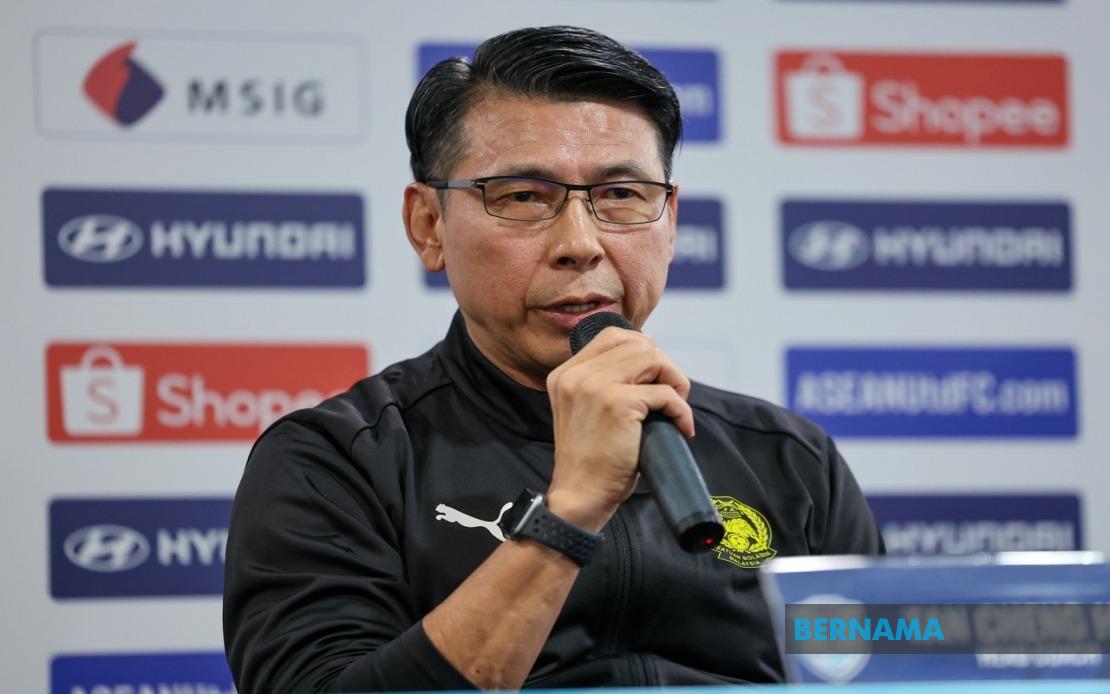
Malaysia's interim football coach Tan Cheng Hoe has sounded a note of caution ahead of tomorrow's ASEAN Cup encounter with Laos at the Kuala Lumpur Football Stadium in Cheras, urging his players to remain grounded and focused despite the side's encouraging start to the tournament. The warning comes after Harimau Malaya secured a 2-1 victory over Myanmar in their opening Group B fixture on Saturday, a result that has understandably generated optimism among supporters and raised expectations within the squad. However, Cheng Hoe recognises that momentum and early success can breed a dangerous complacency that might prove costly against an opponent with genuine motivation to recover from their recent stumble.
Laos enters the fixture as a fundamentally different proposition to the team Malaysia just overcome, despite their one-sided 0-5 defeat to Thailand, the competition's seven-time champions. The Laotian squad is predominantly composed of under-23 players, presenting an intriguing dynamic that could actually work against Malaysian assumptions of superiority. These younger competitors, though less experienced at international level, often bring hunger, desperation, and tactical flexibility that seasoned teams sometimes underestimate. Cheng Hoe has clearly spent time studying Laos's tactical approach and player profiles, recognising that any team entering a major tournament carries the psychological weight of wanting to prove themselves and recover quickly from initial setbacks.
The Malaysian coach emphasised during his pre-match media engagement that the growing external pressure and expectations on his team are understandable given their positive opening result, yet cannot be allowed to distract from the fundamental principles required to win matches at this level. He articulated his concerns plainly to reporters, noting that Laos's youth should not be mistaken for weakness or predictability. Rather, their relative inexperience at international tournaments might free them from inhibition and allow them to play with greater freedom than more established sides constrained by pressure and expectation. This perspective reflects mature tactical thinking rather than overconfidence, positioning the Malaysia camp as one taking their opposition seriously.
A critical element of Cheng Hoe's tactical focus centres on containing Laos's counter-attacking threat, an area where youthful, athletic teams often excel due to their physical capabilities and willingness to take calculated risks. He has instructed his players to maintain possession security in their own half, avoiding the careless turnovers that can immediately place defensive units under severe pressure. Additionally, Malaysia must be clinically efficient in the attacking third, converting the scoring opportunities they create rather than allowing matches to remain competitive through profligacy in front of goal. These are fundamental requirements for teams seeking to control matches and accumulate tournament points.
Reflecting on Saturday's performance against Myanmar, Cheng Hoe demonstrated satisfaction with how his team responded to early adversity, particularly their second-half resurgence after an unsettled opening period. Rather than maintaining dominance throughout, Malaysia showed character and resilience in fighting back when circumstances threatened to derail their campaign. He specifically highlighted the role of experienced players in maintaining squad morale and tactical discipline during challenging moments, attributing part of the team's ability to recover to the collective spirit demonstrated by the squad. This fighting mentality will likely prove invaluable against Laos, a team unlikely to surrender easily regardless of their tournament position.
Forward Syafiq Ahmad has reinforced Cheng Hoe's messaging, emphasising the importance of the squad's experienced contingent in supporting younger players through the demands of international competition. Players such as Paulo Josue and Mohamadou Sumareh provide not merely technical quality but also psychological stability and example-setting behaviour that helps emerging talents navigate the intensity of tournament football. Their presence establishes standards within the dressing room regarding professionalism, preparation, and mental approach to matches. Syafiq's perspective underscores how Malaysia's recent improvement has been built partly on integrating youth with established quality rather than pursuing wholesale generational change.
The forward also stressed that the squad's collective focus must remain fixed on the immediate challenge against Laos and their new coach Vladica Grujic, resisting the temptation to contemplate deeper tournament progression before securing the necessary results. This disciplined, present-focused mentality represents the antithesis of the complacency against which Cheng Hoe warned, suggesting the coaching message has resonated through the playing group. Tournament football rewards teams that attend to their immediate assignment without distraction by what might unfold later, concentrating energy on available opponents rather than hypothetical scenarios.
The current Group B standings place Malaysia in second position with three points, separated from leaders Thailand only by goal difference after both nations recorded opening victories. The Philippines occupy third place, while Myanmar and Laos languish at the bottom without points. Only the top two teams from each group progress to the semi-final stage, meaning Malaysia's second fixture is already consequential for their tournament survival. A victory against Laos would substantially strengthen their semi-final prospects, while a disappointing result could introduce genuine uncertainty into their advancement calculations, particularly if other group results go unfavourably.
The geographical and competitive proximity of Southeast Asian football adds additional context to Malaysia's Group B campaign. Nations within ASEAN have increasingly professionalised their football development systems and youth pathways, meaning even traditionally smaller footballing nations now field opponents of respectable capability. Laos's predominantly young squad may represent the future direction of their football programme, with this tournament experience serving as valuable development for players who could feature in ASEAN competitions for years to come. This evolution makes dismissing any opponent as automatic victims a misreading of regional football's competitive trajectory.
Cheng Hoe's tenure as interim coach has been marked by pragmatic assessment rather than excessive optimism or pessimism, a quality evident in his measured approach to the Laos fixture. His previous experience with Kedah and Selangor FC provided exposure to teams' varying capabilities and the unpredictability inherent in tournament football at the Asian level. This background likely informs his cautious perspective on Malaysia's position after one positive result, recognising that tournament campaigns are built cumulatively through multiple matches rather than determined by opening performances. The coaching philosophy extends beyond the immediate Laos encounter, establishing precedents for how Malaysia approaches remaining group fixtures and potential knockout stages.
Malaysia's path to achieving meaningful success at the ASEAN Cup 2026 will ultimately depend on consistency across multiple matches and the ability to maintain intensity regardless of opponent status or perceived threat level. Tomorrow's fixture provides an early indicator of whether Cheng Hoe's warnings about complacency have achieved their intended effect within the squad. The test will be how Malaysia translates coaching messages into performance on the pitch, particularly in moments when Laos's youthful energy and desperation might create uncomfortable periods that require the squad to draw upon the fighting spirit displayed against Myanmar. These intangible factors—focus, discipline, mental toughness—often determine tournament outcomes more than raw talent or perceived quality difference between opponents.
The encounter at Kuala Lumpur Football Stadium will also provide Malaysian supporters and observers with greater insight into the squad's tournament credentials and Cheng Hoe's capacity to forge a cohesive unit from players drawn from the domestic league and abroad. Two consecutive positive results would establish a foundation for genuine tournament ambitions, while anything less would introduce questions about Malaysia's semi-final prospects and the team's ability to perform when external expectations rise. For Laos, the opportunity to respond to Thailand's overwhelming victory presents motivation to demonstrate their youth squad's competitive worth against fellow Southeast Asian opposition.

