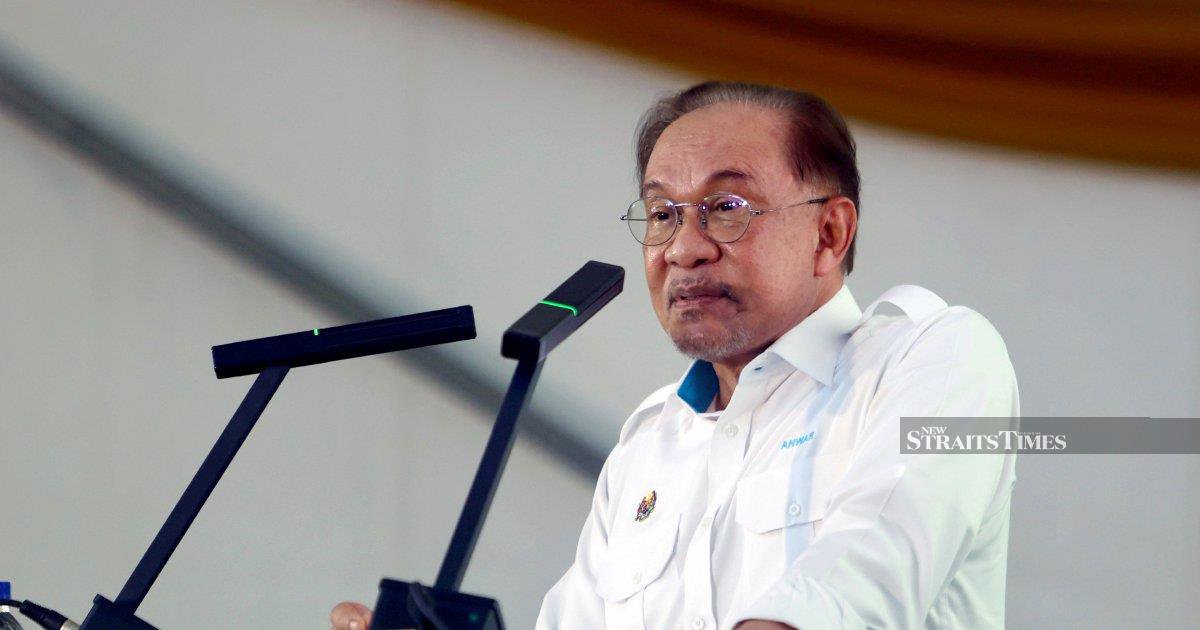
The Taiwan Chamber of Commerce & Industry in Malaysia has raised alarm bells over remarks made by Prime Minister Datuk Seri Anwar Ibrahim regarding Taiwan's political status, signalling that such statements risk deterring a significant pool of investment from Taiwan's thriving technology and semiconductor sectors. The chamber, which represents Taiwanese business interests operating in Malaysia, articulated its "deep concern" at the premier's description of Taiwan as "part of China", a characterisation that has prompted the business body to warn of consequences for Malaysia's attracting of high-value foreign direct investment.
The statement from TCCIM carries particular weight given Taiwan's outsized role in global semiconductor manufacturing and supply chains. Taiwan's technology firms and chipmakers represent some of the world's most advanced producers of critical components essential to modern electronics, artificial intelligence systems, and consumer devices. For Malaysia, which has positioned itself as a regional technology and manufacturing hub, access to Taiwanese investment capital and expertise remains strategically important as the nation seeks to develop domestic capabilities in semiconductor design, advanced manufacturing, and digital infrastructure.
The investor concerns flagged by the chamber reflect broader sensitivities within Taiwan's business community regarding political statements that appear to align Taiwan's status with Beijing's official position. The People's Republic of China claims Taiwan as a renegade province, while Taiwan's democratically elected government maintains distinct sovereignty and independence. Taiwanese companies operating overseas, particularly those in sensitive sectors like semiconductors, often calibrate their investment decisions based on the geopolitical climate and receptiveness of host governments to Taiwan's autonomous status.
For Malaysia, this dispute presents a delicate balancing act. The country maintains formal diplomatic relations with Beijing and not with Taipei, following the "One China" policy that most nations have adopted. However, Malaysia simultaneously hosts substantial Taiwanese business operations and has benefited considerably from technology transfer, employment creation, and industrial ecosystem development stemming from Taiwanese investment. The federal territory of Penang, in particular, has become a significant hub for Taiwanese electronics and semiconductor firms seeking to diversify their geographic footprint away from Taiwan itself and mitigate supply chain concentration risks.
Anwar Ibrahim's recent characterisation must be understood within Malaysia's broader diplomatic framework. As Prime Minister navigating relations with Beijing while maintaining economic partnerships with Taiwan, Anwar faces considerable pressure to articulate positions that satisfy China's political sensitivities whilst not alienating a major source of technology investment. Previous Malaysian administrations have similarly walked this tightrope, attempting to maintain cordial relations with both without explicitly endorsing either's political claims about Taiwan's status.
The semiconductor industry carries particular strategic importance for Southeast Asia and Malaysia specifically. Following geopolitical tensions and supply chain disruptions over recent years, countries across the region have sought to attract chipmakers and technology manufacturers to reduce dependence on any single production location. Taiwan's manufacturing prowess and the concentration of advanced semiconductor production on the island have made Taiwanese firms sought-after partners for nations attempting to build resilient, distributed production networks. Malaysia's existing strength in electronics manufacturing positions it advantageously to attract these investments, provided the business environment remains welcoming.
Taiwan's Chamber of Commerce warning likely signals deeper anxieties within Taipei's policy circles about Malaysia's trajectory on cross-strait issues. While Malaysian governments have consistently maintained their formal "One China" position, pragmatic engagement with Taiwanese businesses has proceeded largely on separate tracks from official diplomatic messaging. Should political rhetoric begin explicitly highlighting Taiwan as part of China with increasing regularity, it could reshape how Taiwanese boardrooms perceive Malaysia's long-term stability and commitment to business-friendly policies.
The chamber's intervention also reflects how business associations have become influential voices in geopolitical matters affecting investment flows. Rather than waiting for formal government-to-government diplomatic channels to address concerns, the business community has chosen to speak directly, signalling to Malaysia's leadership that economic consequences may follow from political statements viewed as unfriendly by investors. This approach has proven effective in other contexts, where business chambers and investor groups have successfully shaped government positioning on investment-relevant issues.
For Malaysian policymakers, the chamber's statement represents a concrete expression of investor sentiment that cannot easily be dismissed as mere political posturing. Technology and semiconductor firms considering multimillion-dollar capital commitments to new facilities or expansion projects will undoubtedly monitor the political climate closely. Investment decisions of this magnitude typically factor in perceptions of political stability, regulatory predictability, and the overall receptiveness of the government to the investor's home country and industrial interests.
The remarks attributed to Anwar also arrive at a particularly sensitive moment for Taiwan and the region. Elevated tensions across the Taiwan Strait, combined with ongoing supply chain reorganisation in the technology sector, mean that Taiwanese firms are making strategic location decisions with heightened attention to geopolitical considerations. Malaysia's appeal as a diversification destination could be diminished if political messaging from senior leadership creates uncertainty about the government's stance toward Taiwan and Taiwanese business interests.
Looking ahead, this episode underscores the interconnections between Malaysia's diplomatic posture, its economic development strategy, and investor confidence. While maintaining formal diplomatic alignment with Beijing remains a cornerstone of Malaysian foreign policy, the practical operation of cross-strait trade and investment relationships requires consistency and a degree of political neutrality that reassures investors their interests will not become collateral damage in broader geopolitical disputes. The Taiwan Chamber's warning serves as a timely reminder of these dynamics and their material consequences for Malaysia's competitiveness in attracting high-value technology sector investment.

