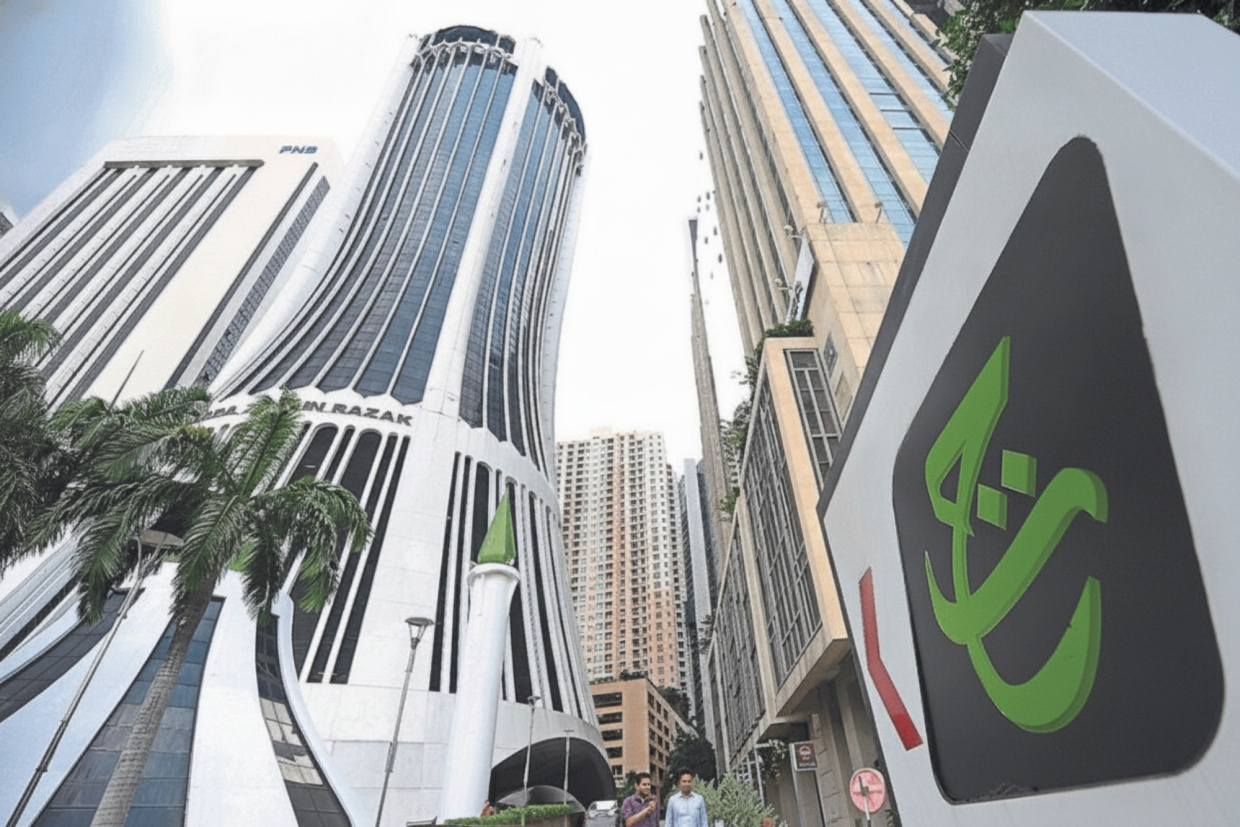
The Tabung Haji (TH) pilgrimage fund faced damaging revelations about financial mismanagement when a Royal Commission of Inquiry report exposed how the institution manipulated its accounting policies not once but twice within a single day in 2017 to artificially inflate reported profits and meet depositor expectations. The impairment threshold jumped from 70 per cent to 85 per cent and then to 90 per cent, fundamentally altering how the fund's assets were valued and directly enabling it to announce distributions when the organisation should have been reporting substantial losses. Minister in the Prime Minister's Department (Religious Affairs) Dr Zulkifli Hasan presented these findings to Parliament, emphasising that such manoeuvres violated fundamental accounting standards and misrepresented TH's true financial condition to millions of depositors who had entrusted their savings to the institution.
The RCI's investigation uncovered a deliberate deviation from Malaysian Financial Reporting Standards that went far beyond technical adjustments. When the impairment policies were properly applied, TH should have declared a net loss of RM1.4 billion for 2017, yet the institution instead reported profits of RM3.4 billion—a swing of nearly RM2.8 billion that directly resulted from the accounting manipulations. This extraordinary discrepancy reveals not a difference of opinion over accounting methodology but rather a systematic effort to present a false picture of financial health. The changes were designed specifically to justify continuing profit distributions at rates of 4.50 per cent plus 1.75 per cent, distributions that the institution could not legitimately afford given its actual financial position.
Central to the RCI's criticism was the decision to adopt what the inquiry termed an unrealistic impairment threshold that bore no relationship to market realities. Under the revised approach, TH would only recognise asset impairment when share values plummeted to one-tenth their original cost—meaning an investment worth RM1,000 would remain on the books at that full value until its market price fell to merely RM100. This accounting fiction meant TH's balance sheet bore little resemblance to what would actually occur if the fund attempted to liquidate those assets in real market conditions. Dr Zulkifli explained that had TH attempted to sell such depreciated shares, the institution would realise only RM100, not the RM1,000 listed in official statements, making the financial reports fundamentally misleading to anyone relying on them to assess TH's stability.
The problem intensified because the institution simultaneously altered its profit calculation methodology during the same period, shifting from an average monthly deposit balance approach to an average annual lowest balance method for determining distributions. This secondary change compounded the distortion created by the impairment policy revisions. When depositors responded negatively to these initial changes, TH management performed another about-face, reverting to the monthly lowest balance calculation method to justify distributing an additional RM600 million in benefits. The sequence of these policy reversals demonstrates that the driving force behind accounting decisions was not prudent financial management or adherence to standards, but rather the political and reputational imperative to meet depositor expectations regardless of economic reality.
According to the RCI's investigation, internal documentation including a statutory declaration from the then chief financial officer revealed the explicit motivation behind these decisions. The CFO stated that the impairment policy changes were implemented specifically to enable TH to distribute profits in line with what depositors anticipated receiving, rather than to ensure that asset valuations reflected genuine fair value as required by international accounting standards. This admission is particularly significant because it demonstrates that the policy changes were not driven by any legitimate disagreement about accounting interpretation, but rather by a conscious choice to prioritise short-term customer satisfaction over financial transparency and long-term institutional viability.
The RCI further criticised TH's reliance on a metric called realisable asset value (RAV) beginning in 2014, when the institution's liabilities first exceeded its assets. This approach, which formed the basis for profit distributions from 2014 through 2017, did not comply with generally accepted accounting standards and violated Section 22 of the Tabung Haji Act 1995. The adoption of RAV represented an accounting framework designed specifically to enable profit payments despite the institution technically being insolvent—a situation that should have triggered immediate corrective action rather than continued distributions. The fact that this problematic approach remained in place for four consecutive years underscores how deeply the accounting irregularities were embedded in TH's institutional practices.
These findings carry profound implications for Malaysia's religious trust system and depositor protection frameworks. Tabung Haji manages billions in savings from millions of Malaysian Muslims who contribute to their hajj funds with the reasonable expectation that their money is being managed according to proper governance standards and truthful financial reporting. The RCI's discoveries reveal that depositors were essentially deceived, receiving distributions that the institution could not actually afford based on its real financial position. This breach of trust strikes at the legitimacy of religious financial institutions and raises questions about regulatory oversight mechanisms that failed to detect or prevent such systematic manipulation.
The political dimension of these revelations cannot be overlooked, as the RCI's investigation confirmed that the then minister in charge approved the accounting policy changes. This ministerial involvement suggests that the pressure to maintain the appearance of financial health and continue distributions was not merely an internal management failure but involved political decision-making at the highest levels. The minister's approval effectively placed political considerations—maintaining public confidence and meeting expectations—ahead of fiduciary duty to depositors and compliance with accounting standards. This intersection of political pressure and financial irregularity represents a governance failure that extends well beyond the institution itself.
When the 211-page RCI report was publicly released on July 29 following its presentation to the King on August 30, 2022, it included 25 recommendations aimed at restructuring TH's management and operations to prevent recurrence of such violations. As of late July, TH had implemented 75 per cent of these recommendations, suggesting some remedial action was underway. However, implementation of recommendations cannot erase the fundamental breach of trust that occurred or the unjustified distributions that were made during 2014 to 2017. The scale of the accounting distortions—with the true loss being RM1.4 billion rather than the reported profit of RM3.4 billion—raises questions about whether current corrective measures are adequate to restore the institution to financial viability.
For Malaysian depositors and policymakers alike, these revelations underscore the critical importance of independent financial oversight and the dangers of allowing political or reputational concerns to override accounting integrity. The RCI's work demonstrates that systematic accounting manipulation, once embedded in an institution's practices, can persist across multiple years and multiple reporting cycles without detection if adequate checks and balances are absent. TH's experience suggests that Malaysia's financial regulatory framework may require strengthening, particularly for government-linked institutions managing public trust funds where political pressures might otherwise compromise accounting standards. The restoration of depositor confidence will require not only correcting past errors but establishing credible systems to prevent their recurrence.

