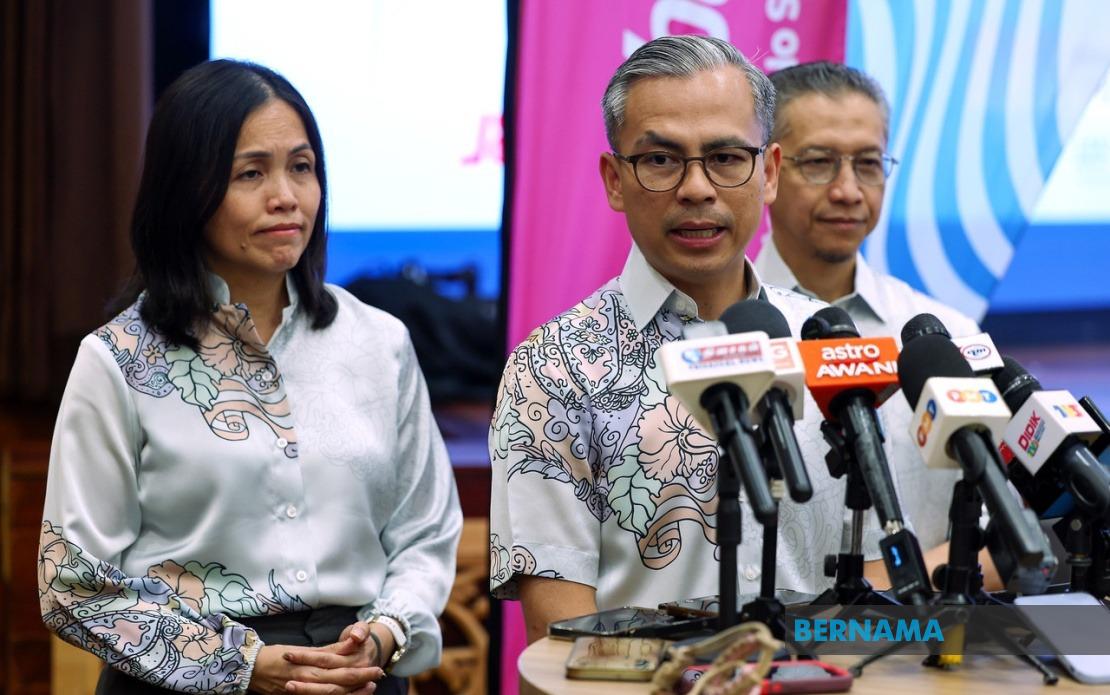
The long-awaited Royal Commission of Inquiry report on Lembaga Tabung Haji has now been referred to law enforcement and regulatory authorities for comprehensive investigation, Communications Minister Datuk Seri Fahmi Fadzil confirmed on Tuesday. The decision to distribute the report across multiple agencies marks the next phase in addressing governance lapses uncovered at the Islamic pilgrimage fund, with the government moving beyond the commission's findings toward potential prosecutorial action.
As announced by Prime Minister Datuk Seri Anwar Ibrahim, the report will be examined by a coordinated effort spanning several institutions. The Royal Malaysia Police and the Malaysian Anti-Corruption Commission will lead investigative efforts, while additional scrutiny will come from agencies responsible for enforcing the Anti-Money Laundering, Anti-Terrorism Financing and Proceeds of Unlawful Activities Act, Bank Negara Malaysia, and the Inland Revenue Board. This multi-agency approach reflects the complexity of the governance issues identified within Tabung Haji's operations.
The RCI report, released publicly on 29 July, chronicled management and operational deficiencies spanning the 2014-2020 period and contained 25 specific recommendations for institutional reform. By the time of publication, Tabung Haji had already implemented three-quarters of these recommendations, demonstrating some momentum toward remediation. However, the forwarding to investigative authorities signals that the government views certain findings as potentially involving criminal conduct requiring law enforcement attention, rather than being purely administrative matters.
During yesterday's special parliamentary sitting where the RCI report was debated, both Finance Minister II Datuk Seri Amir Hamzah Azizan and Minister in the Prime Minister's Department (Religious Affairs) Dr Zulkifli Hasan provided additional information to lawmakers. This supplementary material has also been included in the submissions to investigating agencies, expanding the evidentiary foundation upon which authorities will conduct their inquiries. The government's layering of information sources suggests an effort to ensure investigators have access to the most comprehensive picture possible.
Fahmi's remarks came following the special parliamentary session, which saw 39 MPs participate in debate on the RCI findings. However, the sitting was marked by significant opposition boycotts, with lawmakers from the Perikatan Nasional coalition staging a walkout in protest against Speaker Tan Sri Johari Abdul's decision to proceed without the physical presence of Prime Minister Anwar Ibrahim. The parliamentary discord underscores the politically sensitive nature of the Tabung Haji investigation and its implications for various political actors.
Regarding calls from both Barisan Nasional and Pakatan Harapan members for a second RCI to examine the 2021-2025 period, Fahmi indicated that such a decision would require Cabinet approval and, critically, the consent of the Yang di-Pertuan Agong. The constitutional requirement for royal assent in establishing royal commissions creates a procedural hurdle that any such proposal would need to surmount. The question of whether a subsequent inquiry is warranted remains unresolved, though the pattern of calls suggests concern that post-2020 developments may warrant similar scrutiny.
Fahmi's commentary on opposition participation proved politically pointed, singling out Parti Pribumi Bersatu Malaysia MPs for attending the debate while criticising Perikatan Nasional partners, particularly PAS, for their absence. His remarks highlighted the historical irony that the RCI was established in 2021 when PAS members and Opposition Leader Datuk Seri Hamzah Zainudin held Cabinet positions, yet these same figures refused to participate in parliamentary examination of the completed investigation. Fahmi framed their non-attendance as a missed opportunity and questioned their motives for declining engagement with the proceedings.
For Malaysian stakeholders, the referral of the RCI report to multiple agencies creates an extended investigative timeline that will likely extend well beyond the parliamentary debate. Tabung Haji, which manages pilgrimage funds for approximately 8.5 million members, remains operationally critical to Malaysian Muslims preparing for the Hajj. The concurrent progress of regulatory remediation and criminal investigation must balance the need for institutional accountability with continuity of essential services.
The coordination between MACC, police, Bank Negara, and the IRB will be crucial in determining whether identified governance failures involved deliberate misconduct or stemmed from systemic weaknesses. The anti-money laundering agency's involvement particularly suggests that concerns about fund flows and potential illicit activities form part of the investigative mandate. Bank Negara's role indicates interest in regulatory compliance matters within Islamic financial institutions more broadly.
For the broader Southeast Asian context, the Tabung Haji investigation demonstrates how Islamic institutions managing communal savings face heightened scrutiny. As regional Islamic finance continues expanding, governance standards and transparency mechanisms at major institutions influence investor confidence across Muslim-majority economies. Malaysia's visible willingness to investigate governance lapses at a high-profile religious fund may set precedents affecting institutional expectations elsewhere in the region.
The parliamentary debate itself revealed fissures within the opposition coalition, with Bersatu's decision to attend contrasting with Perikatan partners' boycott strategy. This split potentially weakens coordinated opposition oversight of government accountability mechanisms. For the Anwar administration, successfully prosecuting any cases emerging from the RCI findings would demonstrate tangible delivery on governance reform commitments, though conviction standards in complex financial cases typically require sustained investigative effort spanning months or years.
The government's willingness to publicise and distribute the RCI report across enforcement agencies represents a departure from historically opaque handling of high-level institutional failures in Malaysia. Whether this transparency translates into substantive prosecutions and institutional change will depend substantially on the evidence authorities uncover during investigation phases ahead. The involvement of international standards-setting bodies through AMLA enforcement suggests Malaysia is aligning its Tabung Haji investigation with global financial integrity expectations.

