Tabung Haji (TH) has escalated its recovery campaign against Saudi Arabia-based property firm Al-Rawda Real Estates Development & Project Management Co Ltd, deploying asset tracing expertise to pursue outstanding funds from a multi-hundred-million-riyal arbitration award. The pilgrimage fund has managed to collect just 14.9 million Saudi riyal out of the 899 million riyal that a tribunal ordered the developer to pay, leaving a shortfall of approximately 884 million Saudi riyal—equivalent to roughly RM964 million at current exchange rates.
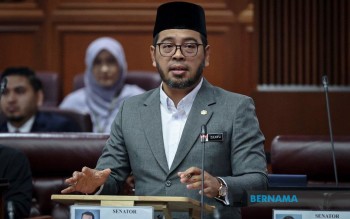
According to Minister in the Prime Minister's Department (Religious Affairs) Dr Zulkifli Hasan, TH initiated enforcement procedures against Al-Rawda but discovered the company lacked sufficient financial resources to satisfy the judgment. To address this impasse, the two parties negotiated a settlement framework in November 2024, though the arrangement unravelled when Al-Rawda delivered only a fraction of the agreed settlement amount before defaulting on further obligations. TH subsequently terminated the settlement agreement and has now engaged specialised asset-tracing consultants to identify and pursue available company assets.
The Al-Rawda situation represents a cautionary tale in institutional investment management and forms part of a broader pattern of financial mismanagement identified by the Royal Commission of Inquiry into TH's operations. The RCI flagged Al-Rawda alongside 13 other problematic investments responsible for cumulative losses measured in billions of ringgit. This particular venture originated from an extraordinarily structured transaction executed across 2015, 2016, and 2017, wherein TH leased four hotels located in the Islamic holy cities of Makkah and Madinah. The fund disbursed approximately RM1.55 billion as an upfront lease payment to Al-Rawda in exchange for operational rights spanning ten to eighteen years—a financial commitment that Dr Zulkifli characterised as extraordinary rather than conventional.
The arrangement became more complex through a parallel Management and Operation Agreement establishing Al-Rawda as the hotel operator, with TH entitled to receive lease rental income totalling 2.49 billion Saudi riyal. In lieu of standard contractual protections, TH accepted a promissory note personally guaranteed by Al-Rawda's proprietor, Dr Mashhoor Ali Omar Almadoodi. This reliance on personal guarantees instead of corporate assets or collateral proved problematic when the developer encountered financial difficulties. Al-Rawda ceased rental payments to TH from March 2019 onwards, forcing the pilgrimage fund to pursue formal enforcement action through the Saudi Arabian legal system.
The dispute ultimately reached arbitration, with Al-Rawda initiating proceedings against TH. The arbitration tribunal issued its Final Award on April 16, 2023, favouring TH and mandating payment of the 899 million Saudi riyal. However, translating an arbitration victory into actual cash recovery has proven considerably more challenging. The limited payment of 14.9 million riyal suggests Al-Rawda possesses minimal liquidity, prompting TH's decision to engage professional asset tracers capable of pursuing non-obvious holdings, offshore accounts, or concealed property interests. This approach reflects heightened sophistication in debt recovery, moving beyond traditional enforcement mechanisms toward investigative financial techniques commonly deployed in complex commercial disputes.
The broader context underscores significant governance failures within TH during the 2014-2020 period, as documented in the comprehensive RCI report released publicly on July 29. The 211-page inquiry identified systemic weaknesses spanning institutional management and operational oversight, directly enabling the series of problematic investments that generated multi-billion-ringgit losses. The Al-Rawda case exemplifies a pattern wherein TH invested enormous sums with inadequate due diligence, accepted unconventional payment structures, and failed to implement robust monitoring mechanisms. The initial RM1.55 billion lease commitment appears particularly concerning given that subsequent developments proved the developer fundamentally unable to honour its obligations.
TH has demonstrated responsiveness to the RCI's findings by implementing 75 per cent of the inquiry's 25 recommendations as of late July. This restoration programme addresses critical gaps in investment appraisal, financial controls, and risk management infrastructure. Nevertheless, the Al-Rawda recovery effort demonstrates that institutional rehabilitation requires not merely implementing prospective reforms but also resolving legacy problems accumulated during periods of weaker governance. The asset-tracing initiative represents a pragmatic acknowledgment that TH cannot simply write off substantial losses but must pursue all available legal remedies to recover funds belonging to Malaysia's pilgrimage contributors.
The government established the RCI in 2021, with formal member appointments following in January 2022 and the report presentation to His Majesty occurring on August 30, 2022. The subsequent public release enabled detailed scrutiny of institutional failings and remedial actions. The Al-Rawda dispute underscores why such comprehensive inquiries serve essential institutional functions, documenting how investment weaknesses accumulate when proper governance structures remain absent and exposing the considerable financial consequences that Malaysian institutions and their stakeholders ultimately bear.
For Malaysian investors and the broader public, the Al-Rawda episode carries significant lessons regarding institutional accountability, investment safeguards, and the long-term implications of inadequate due diligence. The approximately RM964 million shortfall represents funds that might otherwise have supported Islamic pilgrimage services or been returned to contributors. The successful recovery of additional amounts through asset tracing would represent partial mitigation of losses incurred through earlier administrative failures. TH's engagement of specialised consultants signals determination to maximise recovery prospects, though the underlying lesson remains sobering: prevention through robust governance and rigorous investment appraisal substantially outperforms remediation through post-loss enforcement proceedings.

