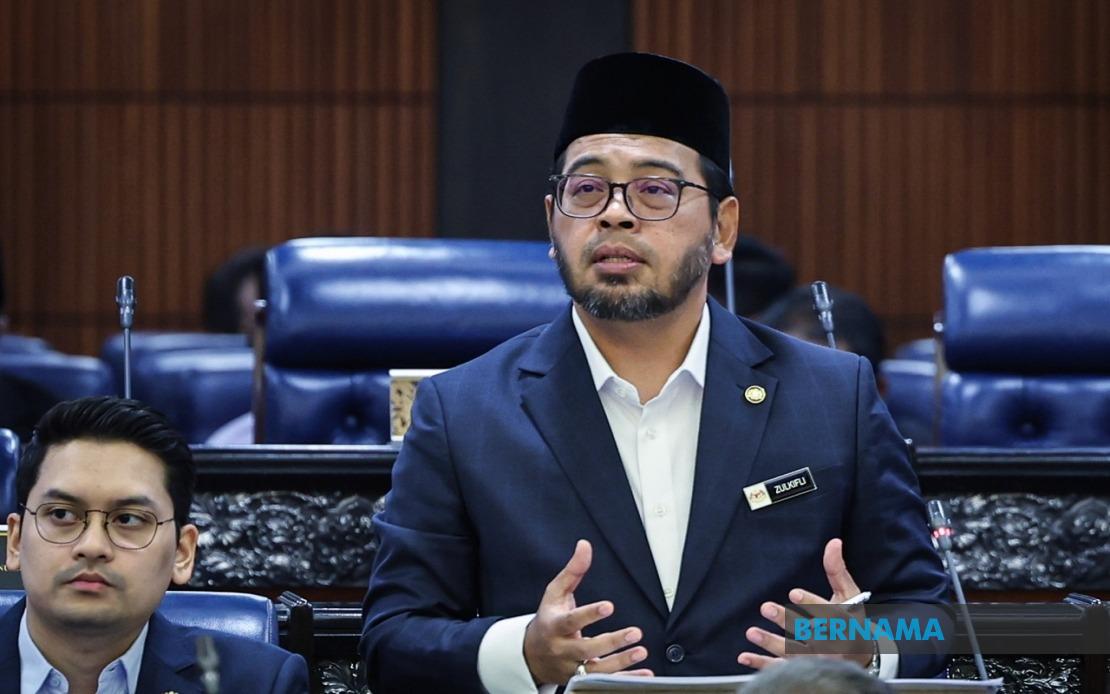
The financial collapse of Tabung Haji, which forced the government to rescue the pilgrimage savings fund with a substantial bailout, could have been entirely prevented through timely action, according to Minister in the Prime Minister's Department (Religious Affairs) Dr. Zulkifli Hasan. Speaking during parliamentary debate on the Royal Commission of Inquiry report into TH's affairs, he underscored a troubling pattern of institutional neglect: Bank Negara Malaysia had issued five formal warning letters to TH leadership between August 2014 and September 2016, each flagging deteriorating financial health, inadequate reserves, and liquidity management concerns that went largely unheeded.
The gravity of this oversight cannot be overstated for Malaysian depositors and the broader financial ecosystem. Had TH's management and the responsible ministry taken appropriate corrective measures immediately upon receiving the first alert in 2014, the cascading financial deterioration might have been contained within manageable bounds. Instead, the institution's deficit ballooned to approximately RM10 billion by end-2018, a figure that reflects not merely accounting mismanagement but a systemic failure of governance and regulatory responsiveness. This represents a profound breach of fiduciary responsibility toward millions of depositors whose savings were entrusted to an institution bearing a religious and patriotic mandate.
Zulkifli's analysis aligns with the RCI's critical finding that TH should never have received an unqualified audit certificate. The auditors, instead of issuing a clean bill of health, should have flagged the serious concerns as "non-compliance" through a qualified opinion. This audit failure compounded the regulatory warnings, creating a dangerous information vacuum where decision-makers at the ministerial level apparently remained unaware of the severity of TH's predicament—or worse, chose to disregard mounting evidence of institutional decay. The timeline is particularly damning: BNM, acting within its mandate to safeguard financial stability, conducted continuous monitoring and issued reminders, yet internal TH responses suggest these interventions were treated with indifference rather than urgency.
The minister identified specific breaches that underscore the recklessness of TH's financial management during this period. The institution declared dividends to depositors even when liabilities exceeded assets—a direct violation of Section 22 of the Tabung Haji Act. More troubling still, TH distributed hibah (religious grants) in amounts unmoored from actual financial capacity, continuing this imprudent practice through 2017 despite mounting losses. These decisions were not made in a vacuum; they occurred after BNM's warnings, suggesting either that internal communications within the TH organisation were fractured, or that commercial and political pressures to maintain investor confidence overrode prudent financial stewardship.
For Malaysian savers and the Southeast Asian region watching financial governance closely, this case study reveals critical vulnerabilities in institutional oversight and inter-agency coordination. While BNM functioned as intended—monitoring, warning, and escalating concerns—the absence of enforcement mechanisms or mandatory remedial action allowed TH to continue degrading for years. The RCI's recommendation for a Multi-Agency Task Force to investigate high-risk investments reflects recognition that fragmented responses are insufficient when systemic institutional failure threatens public confidence in financial institutions, particularly those with religious and national significance.
The government's response, as articulated by Zulkifli, encompasses several corrective measures intended to restore institutional credibility. Amendments to the Tabung Haji Act 1995 are slated for immediate implementation to strengthen governance architecture. Forensic auditing of investments flagged in the RCI report is already underway, suggesting efforts to recover value and identify culpability. The proposed Multi-Agency Task Force, once operationalised, will provide ongoing scrutiny of investment portfolios and risk management practices. These interventions represent belated but necessary course corrections for an institution that had veered dangerously off track.
The parliamentary debate itself consumed more than ten hours, with 39 MPs participating across two ministers' winding-up speeches, reflecting the political and public salience of TH's collapse. This extended scrutiny underscores broader concerns about institutional accountability, particularly for bodies managing public deposits and serving a constituency of religious significance. The depth of parliamentary engagement signals recognition that TH's failure was not a private commercial mishap but a public governance failure requiring transparent examination and robust corrective action.
Zulkifli's framing of the government's response emphasises four sequential elements: investigation, enforcement action, asset recovery, and law-and-governance strengthening. This framework acknowledges that restoring depositor confidence requires not merely fixing balance sheets but demonstrating institutional consequences for failures of management and oversight. The forensic audits underway represent the investigative phase, while asset recovery efforts—connected to the Multi-Agency Task Force—address financial restoration. The legal amendments represent the longest-term commitment: embedding safeguards in statute to prevent recurrence of the vulnerabilities that permitted TH's deterioration.
For Southeast Asian regulators and policymakers, TH's experience offers cautionary lessons about the limitations of warning mechanisms divorced from enforcement authority. BNM issued timely alerts; yet absent clear escalation procedures or regulatory tools to mandate remedial action, those warnings became historical record rather than circuit-breakers preventing disaster. The implicit recommendation is that central banks and financial regulators require explicit authority to enforce corrective action plans when institutions disregard formal warnings, particularly institutions managing public deposits or possessing systemic significance.
The parliamentary proceedings will continue into October with a third scheduled meeting, indicating that this inquiry remains live and that MPs retain opportunity to press ministers and officials for further detail. This phased approach to accountability—combining RCI investigation with ongoing parliamentary scrutiny and task force oversight—reflects a deliberate commitment to sustained transparency. For Malaysian stakeholders in TH and depositors nationwide, it signals that institutional recovery is being pursued not through bureaucratic silence but through mechanisms designed to maintain public visibility and parliamentary accountability throughout the remediation process.

