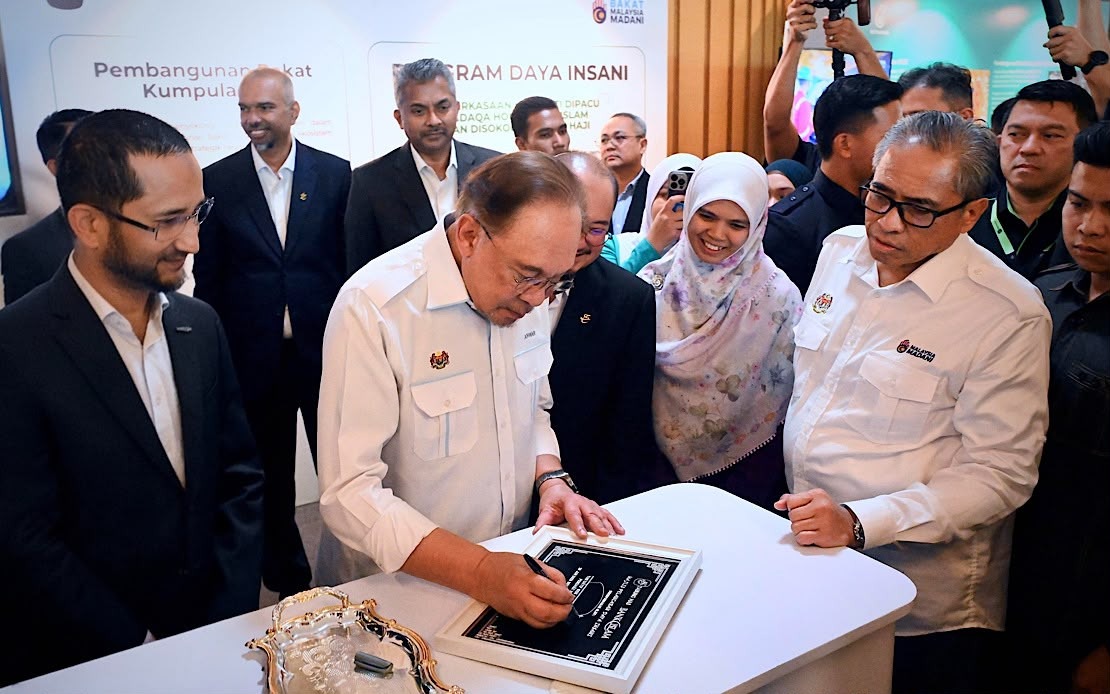
Tabung Haji and Bank Islam Malaysia Berhad have unveiled an ambitious initiative aimed at transforming the prospects of underprivileged young Malaysians. The Asnaf Youth Development Programme for Inclusive and Sustainable Empowerment, known as DAYA INSANI, marks a significant collaborative effort between the pilgrimage fund manager and the Islamic banking institution, backed by an initial RM1 million investment. The programme was launched in conjunction with Prime Minister Datuk Seri Anwar Ibrahim's MADANI Talent initiative at Sendayan in Negeri Sembilan, signalling high-level government endorsement for this social enterprise.
The initiative addresses a critical gap in Malaysia's talent development landscape by focusing specifically on asnaf youth—those from low-income households—and orphans who face structural barriers to accessing quality training and meaningful employment. Rather than offering generic skills programmes, DAYA INSANI takes a comprehensive approach that weaves together technical instruction, real-world industry exposure, and direct job placement through established corporate partners. This three-pronged methodology reflects a growing recognition among financial institutions that sustainable poverty alleviation requires more than classroom learning; it demands tangible pathways into the formal economy.
The programme's infrastructure reveals the depth of planning behind this initiative. Tabung Haji has cultivated partnerships with specialised training providers across multiple sectors, each selected for their expertise and commitment to quality outcomes. The Kulim Hi-Tech Park Skills Centre will develop the next generation of technical workers equipped for advanced manufacturing and technology sectors, while Kolej Universiti Bestari and Kumpulan Medic Iman Sdn Bhd collaborate to produce qualified nurses for Malaysia's expanding healthcare industry. Meanwhile, the Malaysian Professional Accountancy Centre will mentor aspiring chartered accountants, and Showme Education will train therapists, reflecting demand across professional services.
What distinguishes DAYA INSANI from typical welfare programmes is its emphasis on skills that command market value and labour shortages. Malaysia faces persistent talent gaps in nursing, technical trades, and accounting—sectors where skilled workers command decent wages and job security. By channelling underprivileged youth into these high-demand fields, the programme addresses both individual aspiration and national economic needs. The targeting of these particular sectors suggests strategic thinking about where asnaf participants can secure sustainable middle-income livelihoods rather than entry-level positions with limited advancement.
Early results provide encouraging signs of feasibility. The nursing diploma pathway, which commenced in 2024, already counts 19 active students with one graduate successfully employed—a meaningful indication that the model works in practice. Similarly, the technical training cohort at Kulim Hi-Tech Park launched in June with 13 participants, with organisers confident of scaling to 100 participants in the near term. These concrete figures demonstrate that the programme is not merely aspirational but operationally sound, with real people already benefiting from the training and support infrastructure.
The RM1 million initial commitment represents Tabung Haji's positioning within Malaysia's broader social finance ecosystem. Rather than viewing its accumulated pilgrimage funds purely as investment vehicles, Tabung Haji is increasingly leveraging its financial capacity for community development aligned with Islamic values of mutual care and social responsibility. This reflects a shift in thinking among Malaysian Islamic institutions toward instrumentalising their balance sheets for tangible social impact, not merely distributing zakat or donating to established charities.
Bank Islam's involvement through its Sadaqa House platform underscores how commercial Islamic banks are embedding social purpose into their corporate strategy. Sadaqa House functions as Bank Islam's dedicated social finance arm, signalling institutional commitment to blending profit with purpose. By channelling resources toward youth development for the asnaf, Bank Islam positions itself as more than a retail banking competitor; it becomes a stakeholder in national human capital development, enhancing brand reputation while generating measurable community benefit.
The programme's openness to additional funding from corporate companies, institutions and individuals creates a potentially expanding financial base. This crowdfunding dimension could mobilise private-sector resources that might otherwise remain untapped for social purposes. Malaysian businesses increasingly face pressure from investors and customers to demonstrate environmental, social and governance commitments; DAYA INSANI provides a concrete vehicle for such corporate social responsibility spending with transparent outcomes and sector-specific focus.
From a policy perspective, DAYA INSANI aligns seamlessly with the government's MADANI Talent framework, which emphasises human-centred economic development and inclusive growth. Prime Minister Anwar Ibrahim's presence at the launch signals official endorsement and potential pathway for scaled replication across other Islamic financial institutions and government agencies. Should this model prove successful, it could become a template for other regions in Southeast Asia grappling with youth unemployment and underemployment among disadvantaged populations.
The programme also reflects evolving thinking about addressing inequality in Malaysia. Rather than viewing asnaf support through a welfare lens of mere income transfers, DAYA INSANI adopts a capabilities approach—equipping individuals with marketable skills that enhance their agency and earning potential. This distinction matters profoundly for dignity and long-term outcomes. Participants graduate not as beneficiaries of charity but as qualified professionals with industry-recognised credentials, fundamentally reshaping their relationship with economic participation.
For Southeast Asia more broadly, DAYA INSANI demonstrates how Islamic financial institutions can leverage their distinctive values and accumulated capital to address shared regional challenges. Youth unemployment and skills mismatches plague developing economies across the region; Malaysian models that successfully match disadvantaged youth with quality training and employment offer valuable lessons. The programme's emphasis on collaboration between financial institutions, educational providers, and industry partners suggests a replicable framework adaptable to different national contexts.
Telemetry from programme outcomes will prove crucial as this initiative matures. Success metrics beyond raw participant numbers—such as employment retention rates, wage progression, and skill certification completion—will determine whether DAYA INSANI genuinely transforms lives or merely cycles disadvantaged youth through training programmes without durable impact. The involvement of experienced partners like Kolej Universiti Bestari and Kumpulan Medic Iman Sdn Bhd suggests serious institutional commitment to quality, though rigorous independent evaluation should accompany programme expansion.
Ultimately, DAYA INSANI represents a notable inflection point in how Malaysian financial institutions approach their social mandate. By committing substantial resources to skills development for the most marginalised, Tabung Haji and Bank Islam signal that inclusive growth is not peripheral to their mission but central to it. As the programme expands and demonstrates tangible outcomes across multiple cohorts, it may catalyse broader institutional shifts toward treating human capital development among disadvantaged populations as both moral imperative and strategic investment.

