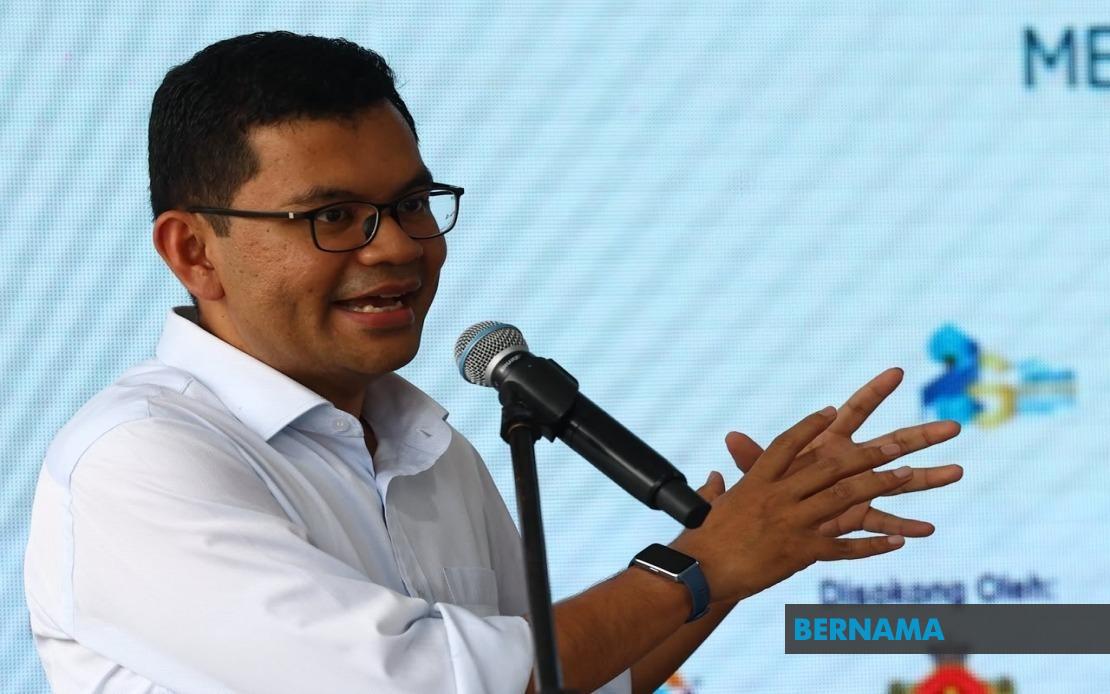
Economy Minister Akmal Nasrullah Mohd Nasir has drawn attention to a troubling pattern in Malaysia's governance: the persistent misuse of public funds through poorly managed government infrastructure projects. Speaking in Alor Setar on August 6, Akmal Nasrullah underscored how complacency and a breakdown in accountability mechanisms have allowed wasteful practices to entrench themselves across successive governments, despite the nation approaching seven decades of independence. The underlying problem, he suggests, transcends individual projects or political cycles, reflecting instead a fundamental institutional failure that demands urgent reform.
The minister's comments were prompted by difficulties encountered in the Kedah water treatment plant project, a government-funded initiative that has encountered significant problems. Rather than directing blame at particular individuals or administrations, Akmal Nasrullah framed his intervention as an effort to expose and remedy the structural weaknesses that allow such failures to occur repeatedly. His willingness to publicly critique a project within his ministerial purview signals a departure from the conventional approach of insulating government operations from external scrutiny, though it has drawn criticism from those questioning whether such public commentary falls within his remit.
According to Akmal Nasrullah, the root cause of these ongoing problems lies not in deficient policies alone, but in the attitudes and mindsets that permeate the public sector. He argued that while government policies naturally evolve to meet shifting public needs, the institutional culture surrounding project execution has remained largely static. This distinction is crucial for understanding why Malaysia continues to experience project overruns, cost escalations, and functional inadequacies that undermine public trust and drain resources that might otherwise benefit citizens directly. The minister's assertion that "we can no longer continue with business as usual" signals recognition that incremental adjustments will prove insufficient without deeper cultural change.
Akmal Nasrullah disclosed that he has closely monitored the Kedah water treatment plant project across multiple ministerial jurisdictions. The initiative was initially overseen by the Energy Transition and Water Transformation Ministry, known as PETRA, before responsibility shifted to the Economy Ministry's coordination. Throughout this period, the minister indicated that he had raised multiple concerns regarding project execution and outcomes. Despite these interventions, he observed that tangible improvements failed to materialise, and the specific problems he had warned about subsequently came to pass. This pattern of unheeded warnings followed by eventual failure illustrates how accountability gaps allow predictable problems to develop unchecked.
The broader significance of Akmal Nasrullah's intervention extends beyond a single infrastructure project to encompass Malaysia's entire government procurement and project management ecosystem. Public works contracts represent substantial allocations of national resources, with billions of ringgit channelled annually into infrastructure development, water provision, transportation networks, and utilities. When projects miscarry due to inadequate oversight, the consequences ripple through the economy: public services suffer from underperformance or incompletion, opportunity costs accumulate as capital sits in ineffective projects, and citizen confidence in government institutions erodes. For Malaysian taxpayers already bearing significant tax burdens, such wastage represents a direct diminution of their contributions' value.
The persistence of these problems despite nearly seven decades of institutional development raises uncomfortable questions about Malaysia's governance maturity. While the nation has constructed sophisticated policy frameworks and administrative hierarchies, the practical implementation of these systems appears compromised by elements Akmal Nasrullah identifies as attitudinal failures. The distinction between having sound policies on paper and executing them effectively in practice represents a critical governance challenge that many developing and middle-income nations struggle to overcome. Malaysia's struggle to translate administrative intent into consistent project delivery suggests that technical expertise and formal procedures alone cannot guarantee accountability without corresponding changes in professional culture and incentive structures.
The minister's decision to air these concerns publicly, despite acknowledging that some quarters view such transparency as exceeding his ministerial scope, reflects a calculated choice to prioritise institutional reform over collegial discretion. In addressing critics who contend that ministers should restrict themselves to policy formulation, Akmal Nasrullah implicitly argues that modern ministerial responsibility encompasses ensuring that public resources are deployed effectively. This expanded conception of ministerial accountability, should it gain traction across the government, could catalyse broader changes in how Malaysia's public sector approaches project management and resource stewardship. However, sustaining such reform will require not merely individual ministerial initiative but systemic changes in recruitment, training, performance evaluation, and consequences for officials overseeing failed projects.
Regional context lends weight to Akmal Nasrullah's concerns. Throughout Southeast Asia, government infrastructure projects have repeatedly encountered cost overruns, timeline extensions, and performance deficits that suggest endemic challenges in the region's capacity to execute complex projects efficiently. Malaysia, with its relatively developed institutions and technical expertise, might reasonably be expected to perform better than regional peers, yet evidence suggests comparable or sometimes worse outcomes. This disparity points toward institutional and cultural factors rather than purely technical limitations, supporting the minister's diagnosis that attitudinal change must accompany any reforms. Neighbouring countries grappling with similar issues might find instructive lessons in Malaysia's attempts to address these systemic weaknesses.
The implications for Malaysian taxpayers are both immediate and long-term. In the short term, current project inefficiencies mean reduced service quality or delayed infrastructure delivery across water, energy, transportation, and other sectors affecting daily life. Over longer horizons, compounding wastage erodes the fiscal space available for new initiatives and constrains the government's capacity to address emerging infrastructure deficits. For a middle-income nation aspiring to advanced economy status, the continuation of these patterns represents a significant competitive disadvantage. Other rapidly developing economies that have successfully instituted rigorous project management disciplines have leveraged such efficiency to accelerate development and improve living standards. Malaysia risks falling behind if accountability gaps persist.
Moving forward, Akmal Nasrullah's public intervention should be viewed as an opening rather than a resolution. Identifying problems is necessary but insufficient without corresponding mechanisms to enforce accountability, restructure incentives, and cultivate professional standards that prioritise public interest over complacency. The minister has effectively challenged the prevailing culture of discretion that often shields poor project execution from scrutiny. Whether his intervention catalyses systemic change or remains an isolated act of transparency will depend on whether other government figures, legislators, and civil society actors amplify and sustain pressure for institutional reform. The trajectory of Malaysia's governance effectiveness, and by extension its economic competitiveness, may hinge on whether this moment of acknowledged institutional failure translates into genuine, durable change.

