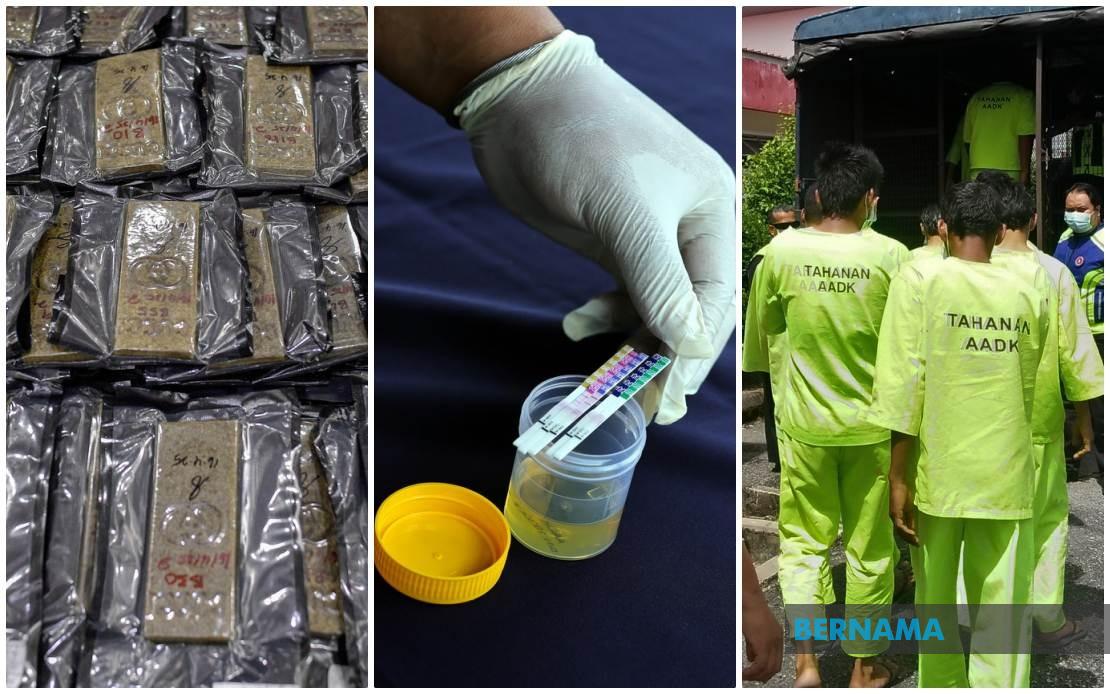
Malaysia's synthetic drug problem has reached alarming proportions, with Home Minister Datuk Seri Saifuddin Nasution Ismail revealing that 141,817 cases were documented last year—a troubling escalation in a crisis that has shown no signs of abating. Speaking during Ministers' Question Time in Parliament, Saifuddin Nasution presented figures that underscore the growing severity of substance abuse across the nation, painting a picture of a problem that continues to intensify despite sustained government intervention and enforcement efforts.
The trajectory of the crisis is particularly sobering when viewed across recent years. The data revealed that cases numbered 145,526 in 2023, then jumped sharply to 192,852 in 2024—suggesting that the problem is not merely persistent but accelerating at a concerning rate. This upward trend indicates that current strategies, while multifaceted, may be insufficient to stem the tide of synthetic drug proliferation throughout Malaysian society. The leap from one year to the next reflects both the increasing availability of these substances and their growing appeal among potential users seeking new psychoactive experiences.
Synthetic drugs have become the predominant form of substance abuse in Malaysia, comprising approximately 70 per cent of all drug-related cases nationwide. Within this category, Amphetamine-Type Stimulants (ATS), commonly known as syabu or methamphetamine, dominate the landscape. This concentration represents a significant departure from historical patterns of drug abuse in the country, where traditional narcotics such as heroin and cannabis once formed the backbone of addiction epidemiology. The shift towards synthetic substances reflects evolving market dynamics, easier manufacturing processes, and potentially greater potency and addictive properties that attract users seeking more intense effects.
Geographic analysis of the drug problem reveals a deeply uneven distribution, with the east coast emerging as a particular hotspot. Drawing on data compiled from the Ministry of Health, the National Anti-Drugs Agency (AADK), Narcotic Addiction Rehabilitation Centres (Puspen), and the Royal Malaysia Police (PDRM), authorities have identified specific districts as particularly vulnerable. Pendang recorded the highest incidence rate, followed closely by Kuala Krai, while Bachok, Besut, and Mersing also ranked among the most affected areas. This concentration suggests that targeted intervention in these regions could yield meaningful results, though it also indicates systemic vulnerabilities in these communities that facilitate drug distribution and consumption.
The demographic profile of drug abuse has shifted markedly, with nearly 75 per cent of cases involving individuals aged between 15 and 39. This youth-centric pattern reflects a troubling reality: synthetic drugs have penetrated educational environments and young adult social networks with considerable success. The prevalence among younger populations carries profound implications for Malaysia's future productivity, public health systems, and social stability. Early intervention at school and community levels has thus become critically important, though current prevention programmes appear insufficient in scale or effectiveness.
One particularly alarming development is the emergence of fentanyl as a new threat within Malaysia's drug ecosystem. Fentanyl, a synthetic opioid dozens of times more potent than morphine, has begun appearing in adulterated vape products and other delivery mechanisms. Although the government has not yet classified fentanyl use as reaching serious epidemic proportions, its discovery in multiple settings suggests an evolving market where traffickers are experimenting with increasingly dangerous substances. The lethality profile of fentanyl—even minuscule quantities can prove fatal—marks a qualitative shift in the nature of the risk facing users and the broader community. The government has responded by amending both the Drug Dependants (Treatment and Rehabilitation) Act and the Dangerous Drugs Act 1952 to include fentanyl among scheduled substances, enabling law enforcement to pursue prosecutions and deterrence strategies.
The prison system reflects the scale of the broader drug crisis, with approximately 70 out of every 100 inmates linked to drug-related offences, whether through conviction or remand status. In facilities such as Machang prison, the proportion approaches near-universal levels, approaching 100 per cent. This concentration reveals how thoroughly drug abuse has infiltrated the criminal justice system and creates a vicious cycle where incarcerated individuals may be exposed to further substance abuse networks within correctional facilities themselves. The prison data also suggests that existing community rehabilitation and prevention efforts are failing to divert sufficient numbers of individuals away from criminal pathways.
The proliferation of online drug markets represents a significant enforcement challenge that traditional law enforcement mechanisms have struggled to address effectively. Digital platforms facilitating drug transactions operate largely outside regulatory frameworks, offering anonymity to buyers and sellers while creating logistical difficulties for interdiction efforts. Saifuddin Nasution acknowledged that technological advancement has lowered barriers to drug acquisition, enabling individuals to procure substances with minimal risk of detection or social stigma. This online dimension of the drug trade suggests that enforcement strategies focused primarily on street-level operations are becoming increasingly inadequate for addressing contemporary patterns of distribution and consumption.
The government's response encompasses multiple strategic pillars beyond enforcement alone. The AADK has implemented community-based prevention initiatives, educational programmes within schools and tertiary institutions, and intervention strategies targeting families and workplaces. Collaborative efforts involving the PDRM, Customs Department, and health authorities attempt to create a comprehensive approach addressing supply reduction, demand reduction, and treatment. However, the escalating case numbers suggest these initiatives, while conceptually sound, require either significant intensification or fundamental reimagining to achieve meaningful impact.
The challenge of distinguishing between Malaysia's role as a transit country versus a primary consumption market remains somewhat ambiguous in official statements. While authorities have identified domestic demand as substantial, the strategic location of Malaysia within regional trafficking networks and the evidence of fentanyl appearing in adulterated products suggest involvement in transnational drug flows. Understanding Malaysia's precise position within these networks is essential for calibrating international cooperation and resource allocation between supply and demand reduction efforts.
For Malaysian policymakers and civil society, the synthetic drug crisis represents one of the most pressing public health and security challenges of the current decade. The concentration of cases among youth, the geographic clustering in specific regions, the rising sophistication of distribution networks, and the emergence of lethal new substances all demand urgent attention and resources. Without substantial intervention, the trajectory evident in recent years suggests the problem will continue expanding, imposing mounting costs on health systems, families, communities, and the criminal justice apparatus. The window for effective preventive action, particularly among younger cohorts, remains open but is rapidly closing.