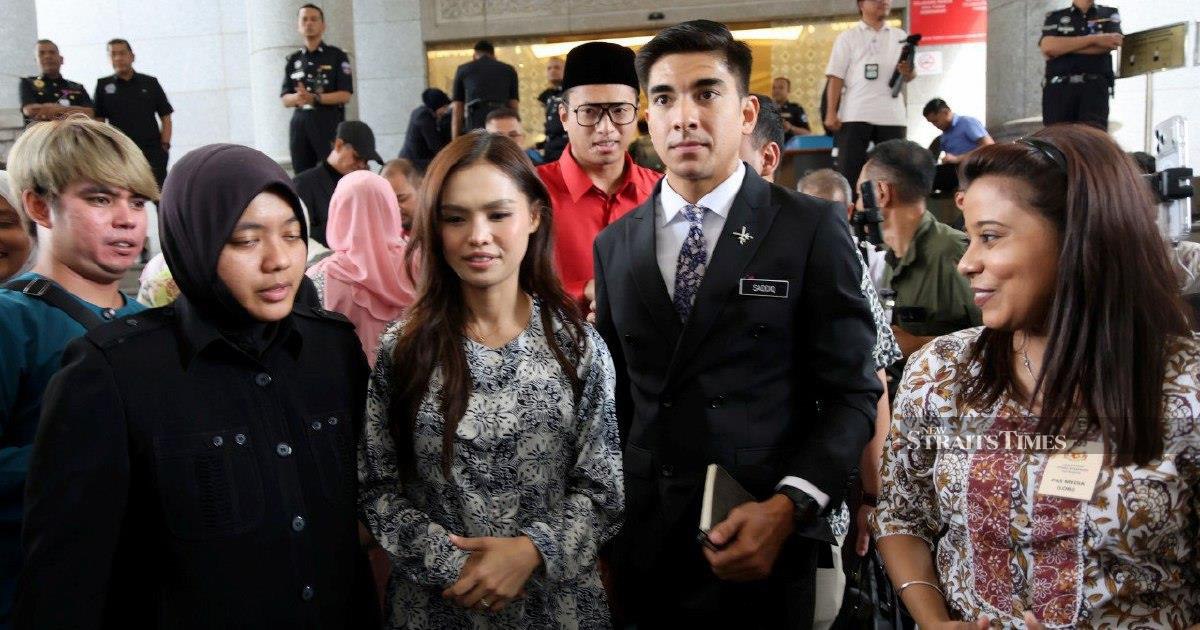
The political landscape in Johor remains in flux as Muar member of parliament Syed Saddiq Syed Abdul Rahman signals he will not immediately pursue a return to leadership of his party, Muda, despite being cleared of criminal charges in recent court proceedings. The young politician's decision to prioritize matrimonial arrangements over party politics underscores a shift in personal priorities, leaving the future direction of the reformist party uncertain as it navigates internal deliberations and external political pressures.
Syed Saddiq's legal vindication in court marks a pivotal moment that could theoretically have positioned him to reclaim the helm of Muda, from which he had stepped back during legal proceedings. His acquittal removes the primary barrier that observers believed was restraining him from re-engaging in high-profile party roles. However, the Muar MP has chosen a markedly different trajectory, indicating that consolidating his personal life takes precedence over organizational politics during this particular juncture.
The decision reveals important dimensions about how Malaysian political figures navigate the complex interplay between public responsibility and private affairs. Syed Saddiq's willingness to announce his deprioritization of party leadership before marriage suggests a conscious choice to compartmentalize his life, rather than allowing the demands of political office to subsume personal milestones. This approach contrasts with the historical pattern of many Malaysian politicians who have pursued simultaneous advancement across both spheres.
Muda, the party founded on a platform of democratic renewal and younger-generation leadership, finds itself in a holding pattern regarding its directorial structure. The party has grown incrementally since its formation, capturing parliamentary representation and establishing itself as a distinct voice advocating for reform-minded governance. Without clarity on whether Syed Saddiq intends to assume leadership responsibilities, party stakeholders must navigate succession questions and strategic planning with considerable uncertainty.
For Syed Saddiq personally, the timing reflects a reassessment of what constitutes success and fulfillment at this stage of his life. Having weathered legal challenges that consumed considerable time and resources, choosing to focus on marriage signifies a return to normalcy and a deliberate disconnection from the pressures of high-stakes institutional politics, at least temporarily. This decision may also allow him to rebuild personal relationships and family connections that are often strained by intensive political engagement.
The broader implications for Malaysian politics are noteworthy. The hesitation of a young, reformist-minded politician to immediately capitalize on legal vindication through renewed activism suggests deeper questions about political sustainability and burnout among emerging leaders. Many younger politicians face unprecedented scrutiny, resource constraints, and personal toll from adversarial politics. Syed Saddiq's choice to step back voluntarily, even temporarily, may resonate with a generation evaluating whether traditional political ambition aligns with their values and wellbeing.
Within Johor's parliamentary politics, Syed Saddiq's Muar seat remains a significant asset for Muda's electoral positioning. His parliamentary work and constituent service can proceed independently of whether he holds formal party leadership positions. This separation allows him to maintain political influence and effectiveness while genuinely deprioritizing the administrative burden and public-facing demands of top party office.
For the broader Muda organization, Syed Saddiq's non-committal stance creates space for alternative leadership structures to crystallize or for a longer deliberation process regarding succession. The party has developed institutional capacity beyond any single personality, though his prominence and parliamentary seat give him outsized symbolic significance. Other party functionaries may use this window to advance their own profiles and credentials.
The political ecology of Southeast Asia, particularly Malaysia, often rewards those who demonstrate adaptability and nuance in managing competing demands. Syed Saddiq's willingness to articulate personal priorities publicly, rather than performing the conventional politician's balancing act, represents a departure from scripted narratives. Whether this authenticity strengthens or complicates his political future remains to be seen, but it undeniably signals a different approach to reconciling public service with private life.
As Syed Saddiq prepares for marriage, observers across the Malaysian political spectrum will watch closely for signals about his longer-term intentions. The Muar MP has left the door open to eventual leadership consideration, neither foreclosing the option nor committing to it. This ambiguity, while frustrating to those seeking clarity about Muda's direction, may ultimately serve him well by preserving flexibility as personal and political circumstances continue to evolve. For now, the focus remains on marriage, with the party leadership question deferred to an indeterminate future moment.

