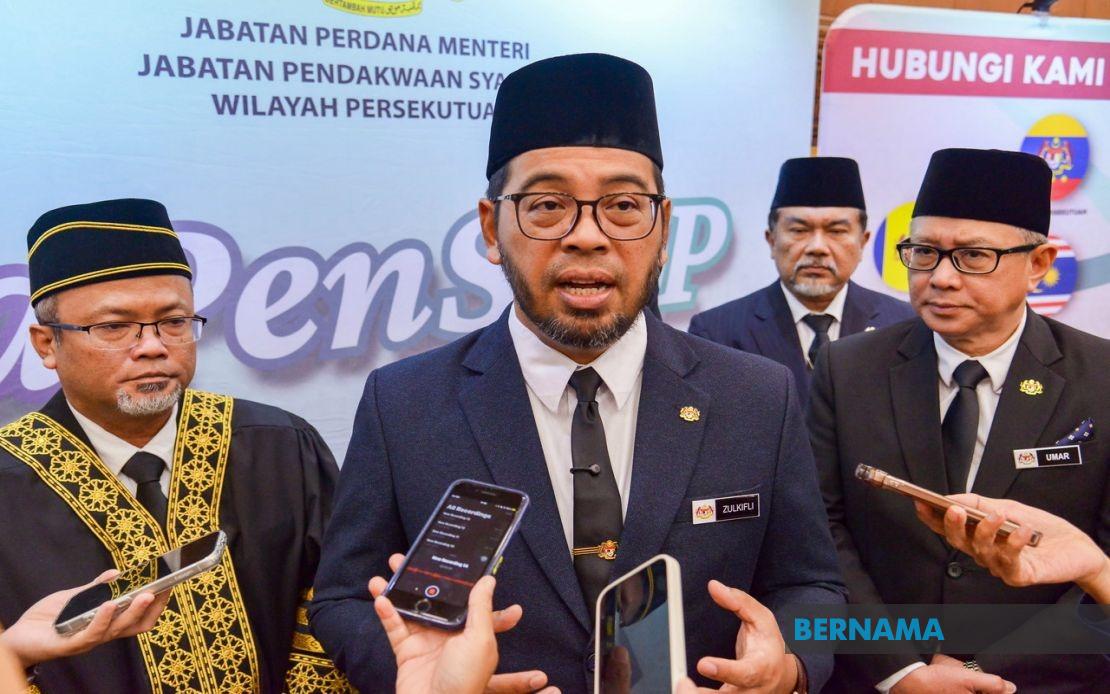
The Malaysian government has substantially advanced its efforts to establish a dedicated remuneration framework for Syariah Court judges, with Dr Zulkifli Hasan, Minister in the Prime Minister's Department (Religious Affairs), confirming that the legislative proposal has reached its concluding stages. Speaking at the second Malaysia Syariah Prosecutors Conference in Putrajaya on July 15, Dr Zulkifli disclosed that preparatory documentation has been largely completed and is undergoing final refinements before formal submission for further governmental action.
The initiative represents a significant undertaking within Malaysia's Islamic judiciary system, addressing long-standing concerns about judicial remuneration and professional standing. The Department of Syariah Judiciary Malaysia (JKSM), working in collaboration with allied government bodies and regulatory agencies, has been conducting comprehensive research to support the legislative framework. This research effort has included structured engagement sessions with key stakeholders across the Islamic legal ecosystem, ensuring that diverse perspectives inform the policy development process.
Dr Zulkifli emphasised that the extensive consultation phase reflects the complexity inherent in such institutional reform. The proposed Act carries substantial budgetary considerations alongside structural implications for Malaysia's religious courts, necessitating careful analysis and consensus-building among multiple governmental levels. Despite the thorough approach, officials remain committed to accelerating the timeline, with Dr Zulkifli expressing hope that the process can be expedited through more rapid refinement and feedback consolidation.
The government's commitment to this reform aligns with broader statements made by Prime Minister Datuk Seri Anwar Ibrahim on July 15, 2024, when he affirmed the administration's determination to fast-track the Act's implementation. The Prime Minister framed the initiative as essential for enhancing the professional status and recognition of Syariah Court judges within Malaysia's broader judicial architecture. This political commitment at the highest executive level signals that institutional elevation of Islamic judiciary personnel remains a priority within the current administration's governance agenda.
Parallel to the Syariah Judges' Remuneration Act, the government is simultaneously advancing another significant institutional restructuring: the establishment of a dedicated Syariah Prosecution Department (JPSM). Dr Zulkifli indicated that policy-level refinement of this proposal continues, with Cabinet presentation anticipated once documentation reaches completion. Like the remuneration initiative, this prosecutorial framework represents a substantial reconfiguration of Malaysia's Islamic legal institutional landscape, requiring careful coordination across departmental boundaries.
The proposed Syariah Prosecution Department would establish a specialised prosecutorial body exclusively focused on cases within the Syariah Court system. Currently, prosecutorial functions within Islamic courts operate under various arrangements, and the creation of a dedicated department would represent a fundamental institutional evolution. This structural separation could enhance prosecutorial independence, professional development, and case management efficiency within the religious courts, though implementation requires substantial coordination and resource allocation considerations.
State government engagement has proven central to both reform initiatives. Dr Zulkifli underscored that consultation sessions and discussions with state authorities have proceeded constructively, reflecting recognition that Islamic law and Syariah Courts operate within a constitutionally shared federal-state jurisdiction framework. Malaysia's constitutional structure reserves Islamic affairs primarily for state governments, necessitating consensual coordination when implementing national-level institutional reforms that affect state-based judicial operations. This federated approach ensures that state perspectives shape the final policy architecture rather than imposing top-down mandates.
The emphasis on collective effort rather than unilateral action demonstrates institutional sensitivity to Malaysia's constitutional arrangements and historical relationships between federal religious authorities and state Islamic administrations. Dr Zulkifli's repeated reference to incorporating state views reflects political awareness that successful implementation depends upon securing state cooperation and buy-in. This collaborative stance contrasts with more centralised approaches and acknowledges the practical reality that states retain substantial authority over their respective Islamic courts and legal personnel.
The broader context for these reforms includes long-standing concerns within Malaysia's Islamic legal community regarding judicial remuneration, professional development, and institutional prestige relative to civil courts. Syariah Court judges have historically occupied a different compensation and status position than their civil court counterparts, despite equivalent educational qualifications and judicial responsibilities. The proposed remuneration legislation directly addresses this disparity, potentially enhancing recruitment and retention of high-calibre legal professionals within Islamic judiciary positions.
Beyond individual compensation concerns, these institutional reforms reflect a strategic vision for Malaysia's Islamic legal system. By establishing dedicated prosecution frameworks and professionalised remuneration structures, policymakers aim to strengthen the institutional capacity and credibility of Syariah Courts. Enhanced institutional legitimacy could prove particularly significant as these courts handle growing caseloads and increasingly complex matters spanning family law, commercial transactions, and religious affairs requiring sophisticated legal analysis.
For Malaysian stakeholders invested in religious law and institutional development, these pending reforms carry substantial implications. Legal professionals considering careers within Islamic judiciary may view the remuneration framework as enhancing career viability and professional progression. State governments must prepare for coordinating with the proposed Syariah Prosecution Department while maintaining their constitutional prerogatives over Islamic affairs administration. The broader legal community watches whether these reforms will substantively improve institutional functioning or primarily represent administrative reorganisation.
The timeline for Cabinet presentation remains unspecified, though the characterisation of both initiatives as within their final stages suggests formal consideration could occur within coming months. Once Cabinet approval is obtained, legislation would require parliamentary passage, followed by potential implementation phases dependent upon resource allocation and institutional transition planning. For regional observers, Malaysia's approach to strengthening Islamic judicial institutions through dedicated prosecutorial structures and enhanced professional compensation offers a notable model within Southeast Asia's diverse approaches to religious law institutionalisation.

