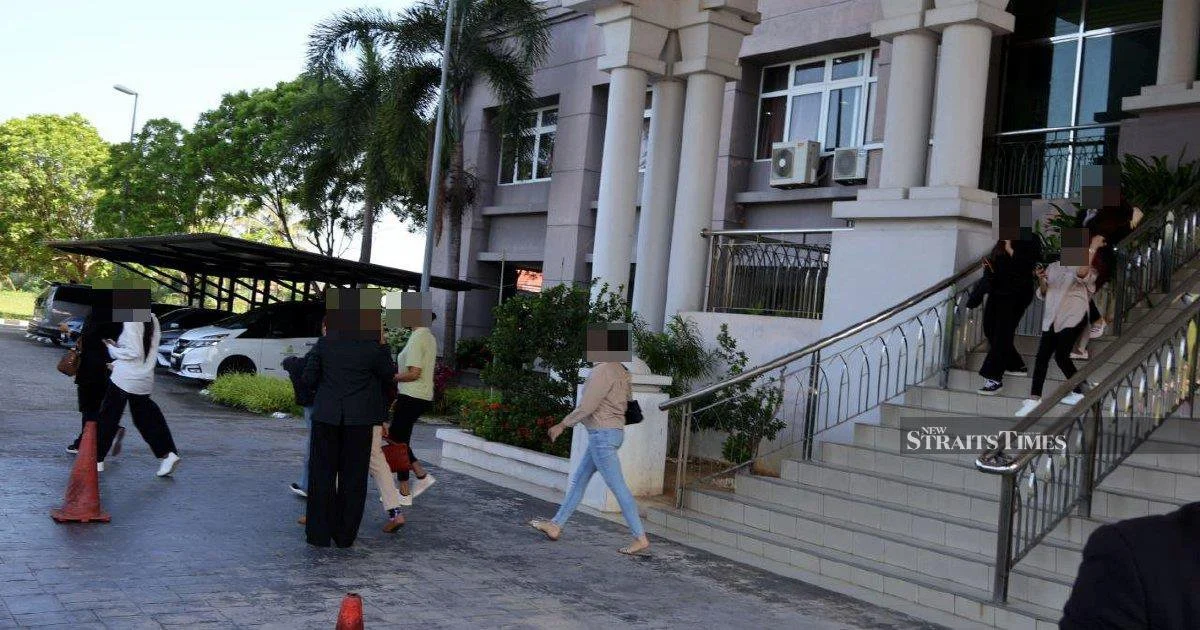
The Syariah Lower Court in Kota Baru postponed proceedings today in the trial of 14 men who face charges related to an incident involving cross-dressing at a residential property on Jalan Mahmood in the city. The adjournment represents a significant delay in what has become one of the more closely watched cases involving Islamic law enforcement in Malaysia, particularly given the large number of defendants involved and the circumstances surrounding their arrest.
The case centres on an alleged gathering at the apartment that occurred during the previous calendar year, when enforcement officers reportedly discovered the group engaged in activities that contravened Islamic laws governing proper conduct and dress codes under Syariah jurisdiction. The specific nature of the charges and the exact statutory provisions invoked highlight ongoing debates within Malaysian society regarding the scope of Syariah court authority and how such matters are prosecuted within the Islamic legal framework that operates in tandem with civil law across Malaysia's federal and state systems.
Kelantan, governed by Parti Islam Se-Malaysia (PAS), has gained particular prominence in recent years for its assertive approach to enforcing Syariah law. The state's Syariah enforcement apparatus has become increasingly visible in public consciousness, generating considerable discussion across Malaysian media and social platforms regarding cultural values, individual freedoms, and the application of religious law. This case exemplifies the intersection of these concerns, attracting scrutiny from various quarters including civil society organisations focused on human rights and religious freedom matters.
The postponement of trial proceedings is not uncommon within Malaysia's court systems, whether civil or Syariah, though each adjournment extends the period during which the accused remain in legal limbo awaiting resolution. Multiple procedural factors can necessitate such delays, including the need for additional evidence preparation, witness availability issues, representation matters, or administrative scheduling conflicts within the court system. The specific reasons for today's adjournment have not been elaborated, though the court will have scheduled a subsequent hearing date for the matter to proceed.
The involvement of fourteen defendants simultaneously presents substantial logistical and procedural complexities for the court. Coordinating legal representation, ensuring all parties receive fair hearings, and managing the volume of evidence and testimony becomes increasingly intricate as defendant numbers rise. Malaysian courts, both civil and Syariah, have experienced mounting caseloads in recent years, a reality that can contribute to the frequency of adjournments across various proceedings regardless of their particular subject matter or jurisdiction.
From a broader perspective, this case sits within Malaysia's continuing evolution in how Islamic law intersects with contemporary social norms and individual conduct. While Syariah courts maintain clear authority over religious and moral matters affecting Muslim citizens, high-profile cases such as this inevitably generate public discourse regarding proportionality, enforcement priorities, and the balance between religious observance and personal liberty. International observers and human rights organisations often scrutinise such proceedings, viewing them through frameworks emphasising individual autonomy and non-discrimination.
The Syariah legal system across Malaysia operates independently from civil courts while remaining part of the broader judicial architecture. Kelantan's Syariah courts have jurisdiction over Muslims in the state concerning matters falling within Islamic law's purview, including personal conduct, morality, and religious observance. The penalties that Syariah courts can impose range from warnings and fines to imprisonment, though the maximum sentences available in state-level Syariah courts generally remain more modest than those in civil criminal courts, with recent legislative moves in certain states expanding these powers.
For the 14 accused individuals, the postponement means continued uncertainty regarding the ultimate outcome of their case. Employment, reputation, and personal circumstances may all be affected during the extended period before resolution. This reality underscores the significant impact that Syariah prosecutions can have on individuals' lives beyond the formal legal consequences, as social stigma often accompanies such cases regardless of final verdict.
The case also reflects broader tensions within Malaysian politics and society regarding the role of Islam in governance. Conservative constituencies and political parties advocate for robust enforcement of Islamic law and values, viewing such efforts as essential to maintaining societal morality and religious observance. Conversely, secular-oriented observers and liberal advocacy groups raise concerns about proportionality, privacy rights, and whether enforcement efforts appropriately target genuinely harmful conduct or overstep into regulating personal behaviour that causes no demonstrable harm to others.
As proceedings remain suspended, the next chapter in this case awaits judicial scheduling. The postponement itself demonstrates how Malaysian legal processes, whether operating through civil or Syariah frameworks, frequently experience delays that extend the time between accusation and resolution. For the accused and their families, obtaining final clarity on their legal status remains a priority, while observers continue monitoring how Malaysia's Syariah system addresses cases involving contemporary social issues and the parameters of religious law enforcement.

