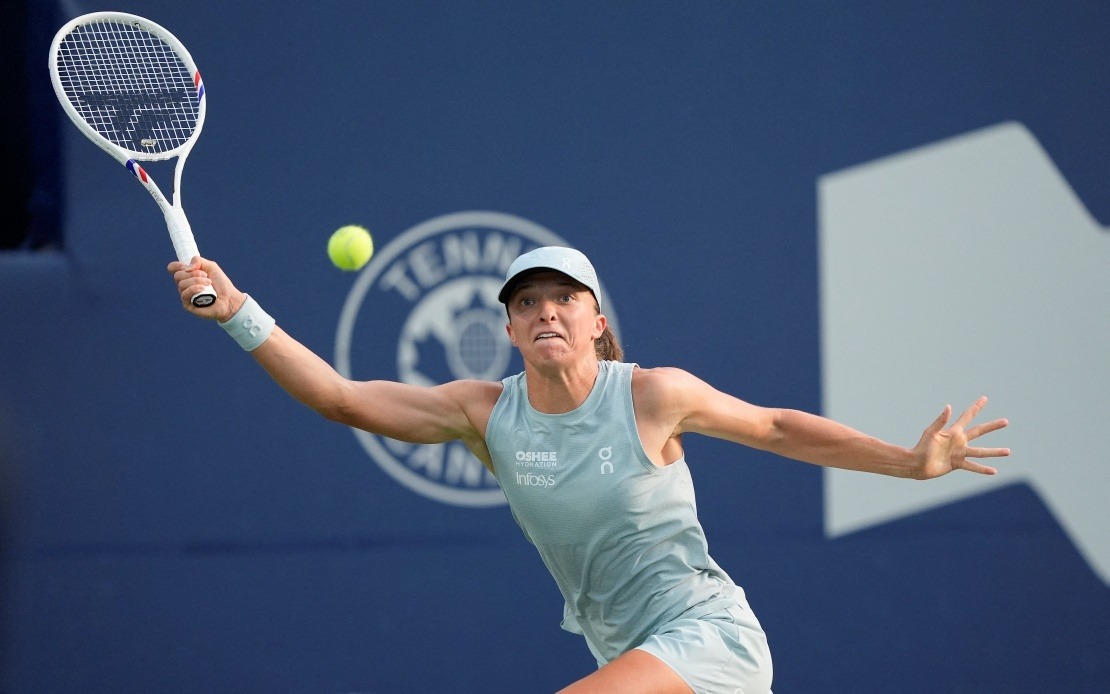
Polish seventh seed Iga Swiatek has broken through her title drought this season after sweeping past Elena Rybakina 6-2, 6-3 in the National Bank Open final in Toronto. The victory marks Swiatek's return to the winner's circle, more than eleven months after her last triumph in September 2023, signalling a potential resurgence for the 23-year-old star as the professional tennis calendar enters its closing months.
Swiatek's dominance at the Canadian hardcourt event was evident from the opening exchanges, when Rybakina, currently ranked world number two, faltered with consecutive double faults that presented the Polish player with an immediate break opportunity. This early service malfunction by the Kazakhstani proved decisive, as Swiatek capitalised immediately to establish control of the opening set and never looked back. The momentum she had constructed through the earlier rounds of the tournament carried seamlessly into the final, allowing her to dictate the pace and terms of engagement from the baseline.
The first set represented a masterclass in capitalising on an opponent's mistakes. Swiatek's aggressive baseline game combined with Rybakina's unforced errors created an asymmetrical contest where the Polish player could focus entirely on maintaining her attacking posture. By the time the opening set concluded 6-2, it was apparent that Rybakina would need to make significant tactical adjustments to mount any meaningful comeback in the match.
Into the second set, Rybakina's difficulties persisted rather than diminished. Two poorly executed backhand shots in succession gifted Swiatek a second break of serve, extending her advantage and leaving her firmly in control of the match's trajectory. The world number two appeared unable to find rhythm or confidence as the contest progressed, with her usually reliable groundstrokes misfiring at critical junctures. This pattern suggested not merely a bad day for Rybakina but rather that Swiatek's superior positioning and court sense were simply overwhelming her opponent's natural strengths.
Despite the mounting pressure and the apparent inevitability of the outcome, Rybakina managed to save one championship point through sheer determination and clutch play. This momentary reprieve suggested that the Kazakhstani competitor would not yield without resistance, yet it proved merely a temporary respite from Swiatek's relentless assault. On her second title-clinching opportunity, Swiatek converted decisively, claiming her first championship since the autumn of the previous year with a 6-3 second-set victory.
The significance of this breakthrough extends beyond mere statistics or rankings. For Swiatek, who has flirted with inconsistency over the past year despite her undisputed talent, reclaiming a title represents both vindication and momentum heading into the final stretch of the season. In the context of Asian and regional tennis development, where players from the region increasingly compete at the highest levels, Swiatek's resurgence provides a counterpoint to the narrative of emerging challengers and demonstrates that established elite players remain capable of recalibrating and reasserting themselves when form returns.
At the awards ceremony following her triumph, Swiatek offered remarks that transcended the immediate context of tennis. She dedicated her victory to "everyone who is dealing with unfair judgement and hate," a statement that resonated with her own experiences of intense scrutiny and criticism throughout her career. The young Polish champion encouraged others to "keep pushing, keep growing, keep focusing on yourself because you know what's best for you," words that suggested she had navigated recent challenges with philosophical maturity.
Swiatek's message carried the weight of hard-won perspective. For athletes operating under constant examination from media, sponsors, and public discourse, the psychological resilience required to maintain competitive standards becomes as critical as technical proficiency. Her exhortation to "always remember what's ahead and what might be possible" indicated that she had consciously chosen to direct her energy toward future possibilities rather than dwelling on the frustrations of her title-free stretch in 2024.
From a Southeast Asian perspective, Swiatek's victory at Toronto underscores the fluid hierarchy within professional tennis at the highest echelon. The region has produced increasingly competitive players who now regularly challenge these established European and global stars. The nature of Swiatek's dominance, built on controlled aggression and exploitation of technical errors, provides instructive lessons for developing players in Malaysia and the broader region regarding the technical refinement and mental fortitude required to compete at the pinnacle of the sport. Her journey back to title contention serves as evidence that sustained excellence demands not only talent but also resilience, adaptability, and an ability to convert periods of adversity into strength.

