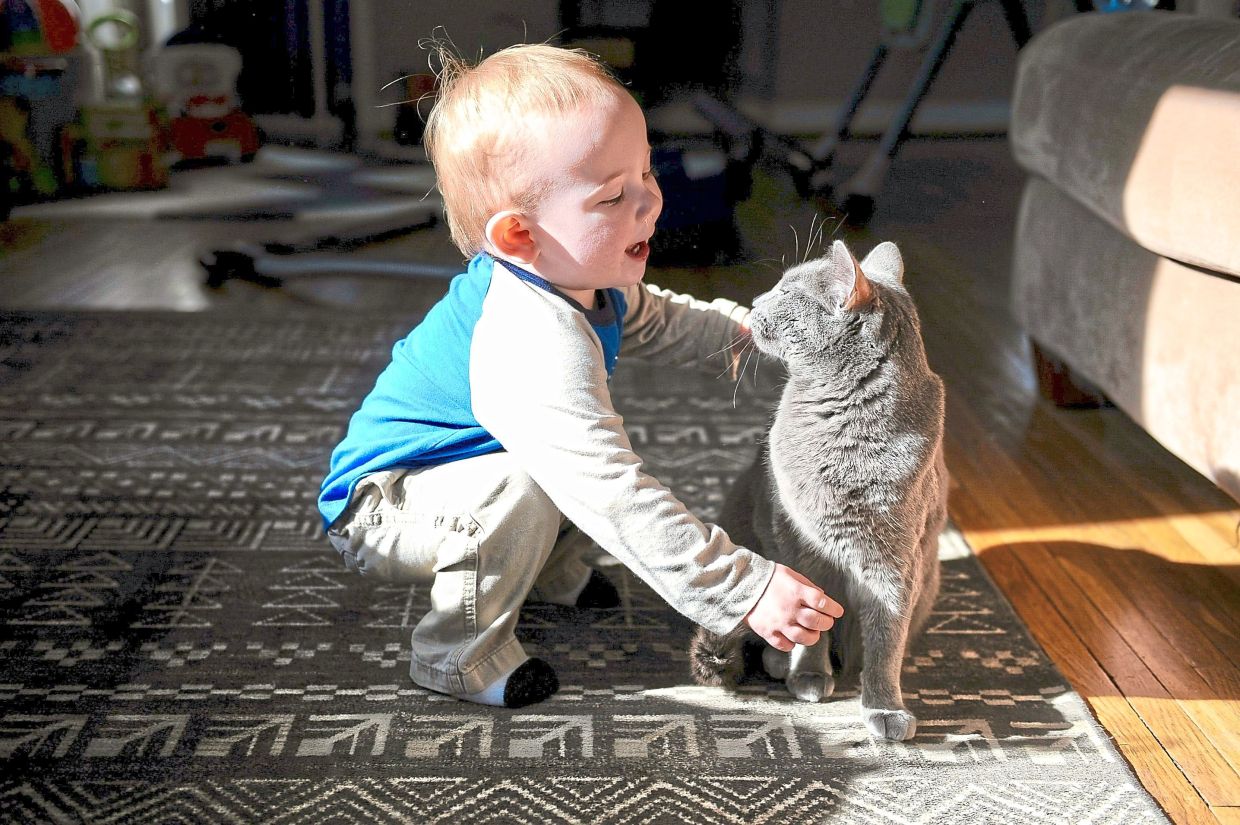
Asthma remains one of the most prevalent chronic conditions affecting children worldwide, yet misconceptions about its triggers persist in many households. A comprehensive Swedish study has now provided robust evidence against one of the most entrenched assumptions: that living with cats significantly worsens childhood asthma. The research, which followed over 30,000 children for two years, found virtually no difference in asthma severity, attacks, or lung function between children exposed to cats at home and those without feline companions.
The prevalence of asthma in children is a significant global health concern. According to the Global Asthma Network, approximately 9.1 percent of children and 11 percent of adolescents worldwide live with the condition, though these figures vary considerably depending on geography and local environmental factors. The disease remains a leading cause of childhood hospitalisation and absence from school across developed nations. Understanding which factors genuinely exacerbate asthma, rather than perpetuating myths, is therefore crucial for families and clinicians making decisions about pet ownership and household management.
Historically, cats have been identified by patients as apparent asthma triggers, with many families reporting that exposure to cats seems to precipitate attacks. This perception has become so widespread that medical advice often reflexively discourages cat ownership among families with asthmatic children. However, the scientific evidence underlying these recommendations has been surprisingly weak. Most prior research on animal allergens and asthma has relied on small, non-representative studies of specific population subgroups, often producing conflicting findings that fail to provide clear guidance for the broader population.
The Swedish team, led by Dr Resthie R Putri at Karolinska Institutet in Stockholm, designed a study specifically to address these gaps. Beginning in 2023, researchers examined data from 30,277 children aged four to seventeen who had been diagnosed with either asthma or airway allergies. These children, born between 2006 and 2020, were tracked over a 24-month period through 2024 using comprehensive health records linked across Sweden's National Patient Register, Prescribed Drug Register, and National Airway Register. This approach provided objective clinical outcomes rather than relying on self-reported symptoms or patient perceptions.
The study benefited from Sweden's mandatory National Cat Register, implemented in 2023 for all cats born after 2008, enabling researchers to definitively identify which households owned cats. Among the cohort, 9.4 percent of children lived with at least one cat. Researchers then compared asthma outcomes between these two groups, examining multiple indicators including disease severity based on prescribed medications, frequency of asthma exacerbations or attacks, overall asthma control, and objective measures of lung function through spirometry testing.
The results were striking in their consistency: living with cats made no meaningful difference to asthma outcomes. Among children with moderate-to-severe asthma, 9.6 percent of those exposed to cats met this classification, compared to 10.1 percent of those without cats—a negligible difference. Similarly, asthma attacks occurred in 3.3 percent of cat-exposed children versus 3.5 percent of non-exposed children. Even among the subset of 1,428 children for whom detailed lung function testing was available, no significant differences emerged between the two groups on standard measures of respiratory capacity.
Dr Putri offered a compelling explanation for these findings that has important implications for understanding asthma triggers. She noted that cat allergen exposure is ubiquitous in modern environments, extending far beyond individual households. Children without cats at home may encounter cat allergens in schools, public transportation, friends' homes, and other shared spaces. This widespread exposure could explain why the absence of a cat at home provides no protective advantage—children are likely encountering allergens regardless of their household pet status. If allergens are already present in a child's broader environment, the presence or absence of a home cat becomes largely inconsequential.
The researchers were candid about limitations in their research that should inform interpretation of the findings. The study lacked detailed information about which specific allergens individual children were sensitive to, meaning some children may have had genuine cat allergies while others did not. Additionally, because the National Cat Register is relatively new, the researchers acknowledged that some cat-owning households may have been incorrectly classified as non-cat households, potentially obscuring real effects if they existed. These caveats suggest the study provides evidence of the average effect across the population rather than definitive proof that cats never trigger asthma in any individual.
The implications for Malaysian and Southeast Asian families are significant. In a region where asthma prevalence has been rising and where many families face difficult decisions about pet ownership, this evidence provides reassurance grounded in rigorous data rather than anecdote. Parents worried about their child's asthma should focus on documented risk factors: exposure to air pollution, secondhand smoke, childhood viral infections, and obesity. Earlier allergic conditions like eczema or hay fever are established predisposing factors. Cats, it appears, need not be sacrificed based on asthma concerns alone.
Furthermore, this research exemplifies how large-scale population studies using linked health records can overturn persistent medical assumptions. Many households restrict pet ownership based on beliefs that lack strong empirical support, potentially reducing children's quality of life and missing opportunities for the developmental and emotional benefits that pet ownership can provide. As health systems in Asia become increasingly sophisticated, more such population-level studies could help families make housing and lifestyle decisions based on evidence rather than outdated generalizations.
The study does not claim that no asthmatic child is ever triggered by cats, nor that individual sensitivities do not exist. Rather, it demonstrates that at a population level, across thousands of children with diagnosed asthma, cat ownership confers no measurable disadvantage. This distinction matters: individual clinical assessment should still guide recommendations for any particular child, but blanket advice against cat ownership in asthmatic households appears to lack scientific justification. For families considering a feline addition to their homes, this Swedish evidence offers welcome reassurance.

