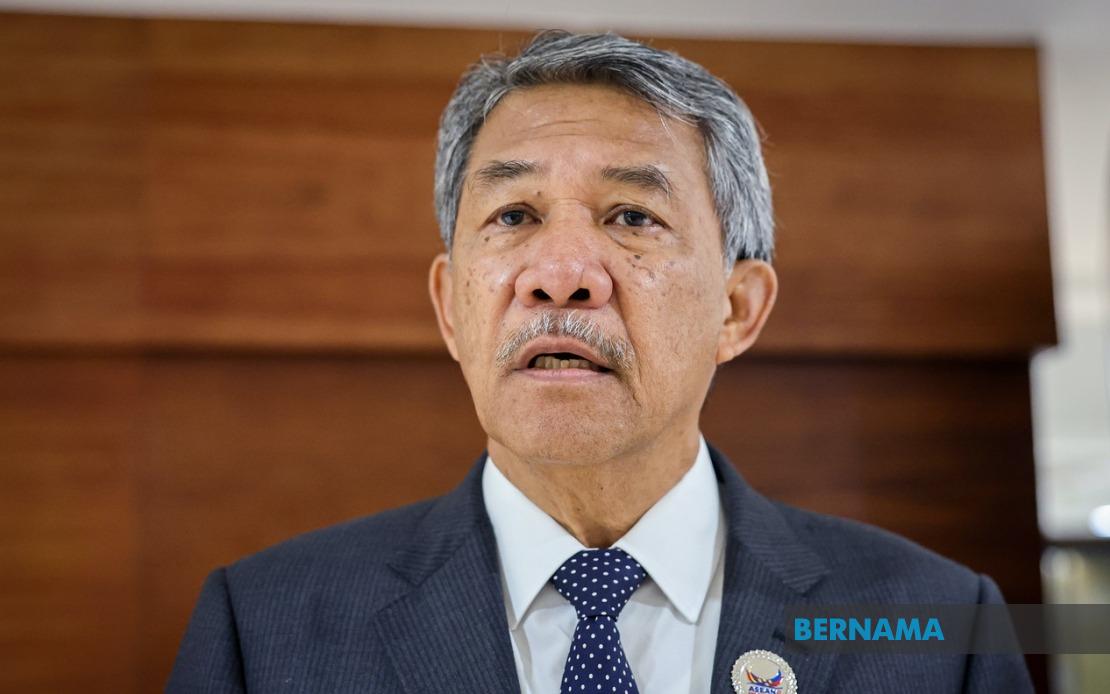
Four European countries have joined the Treaty of Amity and Cooperation in Southeast Asia (TAC), marking a significant expansion of the regional bloc's international diplomatic footprint. Sweden, Poland, Romania and Lithuania were approved during meetings held in Manila on 21 July, with Malaysia's Foreign Minister Datuk Seri Mohamad Hasan confirming that the quartet will formally execute their instruments of accession this Friday as part of ceremonies commemorating the treaty's half-century anniversary.
The admissions took place during deliberations of the 59th ASEAN Foreign Ministers' Meeting (AMM), the Post-Ministerial Conference (PMC), and ancillary sessions convened at the Philippine International Convention Centre. The Philippines currently holds the ASEAN chair for 2025 and has themed its tenure around the concept of "Navigating Our Future, Together". The inclusion of these European signatories underscores what Malaysia's top diplomat termed the international community's confidence in ASEAN's role as a stabilizing force and its commitment to regional harmony.
Modamad Hasan highlighted that the ASEAN Secretariat in Jakarta is actively processing multiple additional applications from countries worldwide that seek to become party to the accord. These pending requests will eventually reach ASEAN member states for formal evaluation. The minister's remarks suggest that momentum is building for further geographical diversification of TAC membership, as nations beyond Southeast Asia increasingly view the treaty framework as a vehicle for contributing to regional peace and prosperity.
The Treaty of Amity and Cooperation, formally adopted in 1976, functions as a binding diplomatic instrument that establishes mutual expectations among signatories. Its core principles—peaceful coexistence, respect for sovereignty, prohibition of interference in internal affairs, and commitment to collaborative problem-solving—have endured as touchstones for interstate conduct for nearly five decades. The treaty essentially codifies ASEAN's founding philosophy and extends that framework internationally to any nation willing to embrace these commitments.
With the acceptance of the Swedish, Polish, Romanian and Lithuanian governments, the TAC now encompasses 58 High Contracting Parties. This roster includes all 11 ASEAN member states, plus a diverse array of non-regional actors spanning six continents. Beyond Europe, signatories range from traditional powers such as Australia, China, India, Japan, New Zealand and the United States to emerging partners including Brazil, Peru, Germany, Türkiye, Ukraine, Saudi Arabia, Iran, Egypt and Morocco. This geographical breadth illustrates how ASEAN's diplomatic architecture has transcended its original regional boundaries.
The strategic significance of these European admissions extends beyond ceremonial recognition. Sweden and Poland bring Nordic and Central European perspectives to the treaty framework, while Romania and Lithuania represent nations with deep historical experience navigating geopolitical pressures and great power competition. Their formal commitment to ASEAN's principles signals European interest in shaping the region's peace architecture at a time of intensifying strategic competition in the Indo-Pacific. For Malaysia and other ASEAN members, these additions reinforce the principle that regional stability serves universal interests.
The timing of these accessions carries particular weight for Southeast Asia. The region faces mounting challenges from trade disruptions, maritime security concerns, and competing claims over strategic waterways. By bringing additional major economies and respected democracies into the TAC framework, ASEAN reinforces multilateral mechanisms that privilege dialogue over confrontation. The treaty's emphasis on non-interference and respect for territorial integrity provides a neutral ground where countries with divergent interests can still find common cause around foundational principles.
For Malaysia specifically, the expansion of TAC membership reflects broader trends in its foreign policy. As a key ASEAN nation that actively engages major powers, Malaysia benefits from having more international players bound by shared diplomatic norms. The inclusion of European nations also provides additional weight to ASEAN's voice in global forums, as member states can now point to a genuinely global network of countries committed to peaceful resolution of disputes.
The ongoing processing of additional applications by the ASEAN Secretariat suggests the treaty remains attractive to aspiring members across regions. This sustained interest vindicates ASEAN's belief that its foundational principles possess enduring relevance. However, it also places responsibility on existing signatories to demonstrate that the treaty framework produces tangible benefits and genuine commitment to its tenets, not merely ceremonial adherence.
Looking ahead, the four new European members will participate in TAC-related mechanisms and consultations, potentially amplifying European voices in regional discussions on security, trade and sustainable development. Their membership also serves as a reminder that ASEAN's influence now extends far beyond Southeast Asia's shores, making the bloc's internal cohesion and adherence to its stated principles matters of genuine international concern. The Philippines' current chairmanship, with its emphasis on collective navigation of future challenges, provides an opportune moment to leverage these new relationships and strengthen the treaty's relevance for its expanding membership.

