Green finance has evolved from a niche banking product into a mainstream competitive arena across Southeast Asia, as soaring demand for electric vehicles, renewable energy systems and climate-conscious homes compels financial institutions to radically restructure their lending and investment portfolios. The acceleration is particularly pronounced in the region's rapidly expanding EV sector, where consumer appetite for low-carbon transport solutions is reshaping both manufacturing and financing landscapes in ways that were unimaginable just a handful of years ago.
The International Energy Agency's data underscores this seismic shift in buyer behaviour. Malaysian electric car sales doubled in 2025 while Indonesia's surged more than twofold year-on-year, signalling that mass adoption of cleaner vehicles is no longer a distant aspiration but an immediate commercial reality. This dramatic uptick has created corresponding pressure on financial institutions to develop sophisticated products and expertise capable of supporting the energy transition at scale. For banks operating across the archipelago, the message is unmistakable: those failing to pivot toward sustainable finance risk losing substantial market share to more nimble competitors.
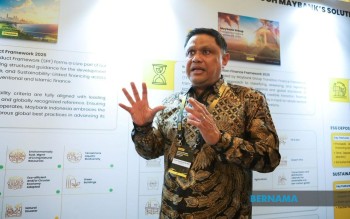
Maybank Group's aggressive expansion exemplifies how regional banking giants are responding to this transformed landscape. The institution has committed to mobilising RM300 billion in sustainable finance throughout ASEAN between 2026 and 2030, a staggering sum that underscores the magnitude of capital flows now directed toward climate-friendly projects. Group chief sustainability officer Datuk Shahril Azuar Jimin revealed that implementation momentum has already exceeded expectations, with the programme tracking well despite being less than six months into its rollout. This brisk pace suggests that demand from corporations, businesses and households seeking green financing solutions vastly exceeds what many sceptics anticipated even twelve months ago.
The depth of appetite becomes clearer when examining Maybank's track record under its previous five-year commitment concluding in 2025. The group mobilised RM176 billion in sustainable finance, shattering its original RM80 billion target announced in 2021 by more than 120 percent. Rather than signalling supply constraints, this overperformance reveals persistent misconceptions about market dynamics. Shahril explicitly dismissed the notion that liquidity shortages hinder sustainable finance expansion, arguing instead that banks increasingly recognise both the commercial opportunity and institutional responsibility inherent in backing the energy transition. The shift reflects growing board-level confidence that green lending generates healthy returns while aligning institutions with long-term macroeconomic and environmental imperatives.
Malaysia's policy environment has further catalysed this transformation. The Energy Transition and Water Transformation Ministry's decision to increase the residential quota under the Net Energy Metering Rakyat programme by 100 megawatts in May 2025 exemplifies how government support mechanisms amplify banking sector initiatives. The original allocation's complete subscription prompted the quota expansion, enabling additional households to install rooftop solar photovoltaic systems. This virtuous cycle—where policy-enabled demand drives banking product innovation, which in turn deepens consumer participation—illustrates how sustainable finance has transcended narrow technical banking circles to become embedded within broader development strategies across the region.
The institutional transformation extends far beyond simple product expansion. Maybank's Sustainable Product Framework now encompasses transition finance, EV financing, green homes, green mortgages, social finance and green bonds—a portfolio breadth that would have seemed unrealistic merely five years ago. This diversification reflects the reality that sustainable finance increasingly addresses everyday consumer and business needs rather than remaining confined to specialized environmental projects. The evolution has fundamentally altered relationship manager responsibilities within financial institutions. Rather than passively arranging financing, these professionals now serve as sustainability advisors, tasked with educating clients about climate impacts, regulatory trajectories and project-level social consequences.
Implementing this cultural and professional transformation requires substantial institutional investment. Maybank has committed significant resources to capacity-building programmes and sustainability certification for relationship managers, recognizing that technical financial acumen alone no longer suffices in contemporary banking environments. Staff must articulate climate science, understand transition dynamics across sectors, and communicate complex sustainability linkages in accessible language to diverse client bases. This educational infrastructure investment both strengthens individual banks' competitive positioning and elevates overall industry standards across the region. The professionalization of sustainable finance expertise signals that this transition represents permanent structural change rather than temporary regulatory accommodation.
Indonesia's emerging role within the broader regional framework deserves particular attention given the nation's significance as Southeast Asia's largest economy and most populous nation. Maybank Indonesia mobilised approximately Rp17 trillion in sustainable financing under its previous commitment period, establishing a substantial foundation for expanded operations. Maria Triffany Fransiska, the subsidiary's sustainability head, identifies transportation as the strongest sustainable financing segment as EV adoption accelerates across the archipelago. However, the portfolio's composition reveals how sustainable finance increasingly penetrates lower-income communities historically underserved by traditional banking. Financing for affordable housing and low-cost electric two-wheelers exemplifies how green finance extends beyond wealthy consumers and major corporate clients to support everyday households transitioning toward sustainable consumption patterns.
The banking sector's ecosystem expansion amplifies these trends beyond traditional lending. Maybank Indonesia has introduced Indonesia's first environmental, social and governance deposit product, leveraging depositor preferences for institutions with demonstrated sustainability commitments. Malaysia anticipated to introduce parallel offerings, suggesting this innovation may cascade throughout the region as competing banks seek to differentiate themselves within increasingly crowded sustainable finance markets. Green bond initiatives under development across Maybank's operating jurisdictions further diversify funding mechanisms available for sustaining expanded lending portfolios. This ecosystem approach recognizes that sustainable finance requires coordinated innovation across deposit-taking, lending, capital markets and investment functions rather than isolated product development.
The broader significance of this transformation for Malaysia and Southeast Asia extends beyond banking sector dynamics alone. The region's mounting vulnerability to climate impacts—from rising sea levels threatening coastal cities to increasingly severe weather disrupting agricultural systems—makes accelerating sustainable finance flows a critical development imperative. By channelling capital toward renewable energy, efficient transport systems and climate-resilient infrastructure, financial institutions support national adaptation strategies while generating commercial returns. Conversely, banks maintaining slow-motion approaches to sustainability risk finding themselves structurally misaligned with future economic requirements and regulatory frameworks. The current moment represents not merely a commercial trend but a fundamental reordering of financial intermediation priorities across the region, with profound implications for investment patterns, industrial development trajectories and household consumption behaviour over the coming decade.

