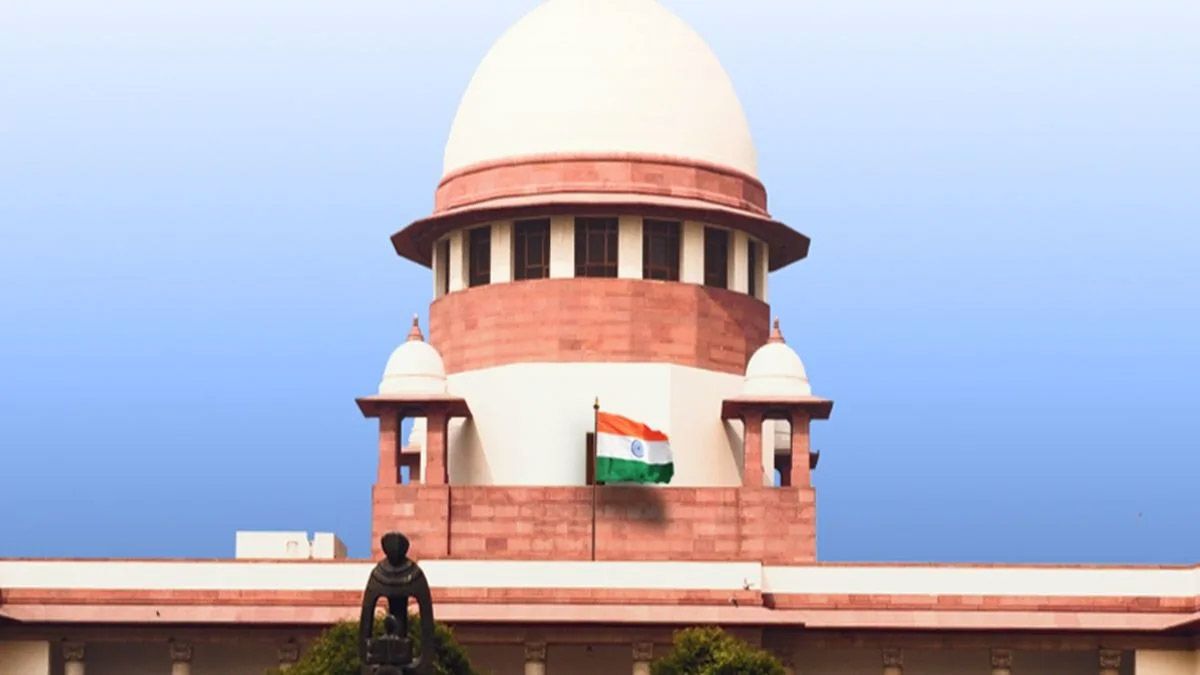
India's Supreme Court has intervened to temporarily suspend a sweeping prohibition on cow and calf slaughter across Tamil Nadu, finding that the Madras High Court had overstepped its authority in crafting the order. A bench comprising Justices Vikram Nath and Sandeep Mehta issued the interim stay on Monday while hearing an appeal by the Tamil Nadu government, which contested that the High Court's May 27 judgment went far beyond what the original case had sought to address. The decision underscores the complex legal tensions surrounding animal welfare, religious sentiment, and state authority in India's federal system, with particular relevance for Southeast Asian democracies grappling with similar questions about judicial restraint and executive competence.
The Tamil Nadu government's challenge centred on a fundamental constitutional principle: that courts should not impose remedies broader than the grievances presented before them. The original public interest litigation, filed by K Surya Prasanth of the Hindu Makkal Katchi, had specifically complained about temporary structures erected in Coimbatore for cow slaughter during Bakrid celebrations. The petitioner sought directions ensuring that such activities occur only in authorised slaughterhouses and that public spaces remain protected from ritual slaughter. However, the Madras High Court's response transformed this limited complaint into a statewide prohibition, declaring that no cow or calf could be slaughtered anywhere in Tamil Nadu on any day, effectively disregarding the statutory framework governing animal husbandry.
Justice Nath's observation during the hearing that the impugned order required "correction" signals judicial concern about the High Court's methodology and reach. The Supreme Court's willingness to grant an interim stay suggests scepticism about whether the lower court had properly considered the layered legislative architecture governing animal slaughter in the state. This legal complexity reflects the reality that animal welfare in India is not a unilateral matter but rather a shared responsibility distributed across multiple statutes, regulations, and constitutional principles, each carrying distinct weight and purpose.
Tamil Nadu's statutory regime on cattle slaughter reveals the nuance that the High Court's blanket ban had effaced. The Tamil Nadu Animal Preservation Act, 1958, does not impose an absolute prohibition but rather regulates the conditions under which slaughter may be permitted, recognising that animal agriculture operates within defined legal boundaries rather than absolute moral commandments. This statute coexists with the Prevention of Cruelty to Animals Act, 1960, and the Prevention of Cruelty to Animals (Slaughter House) Rules, 2001, which establish standards for humane handling and processing. The state also relies on the Tamil Nadu Urban Local Bodies Act, 1998, and its 2023 rules, alongside national food safety regulations, all of which contemplate that slaughter remains a lawful activity when conducted under prescribed conditions.
The High Court had grounded its reasoning partly in Article 48 of the Indian Constitution, which directs states to endeavour to prohibit the slaughter of cows, calves, and other milch and draught cattle. However, Article 48 uses advisory language—"endeavour"—rather than commanding an absolute prohibition. Additionally, the court had cited a 1976 Government Order purporting to ban cow and heifer slaughter in state slaughterhouses, asserting that this administrative directive possessed the force of law. The Supreme Court's intervention suggests that the relationship between such historical government orders and contemporary legislative frameworks requires careful examination, particularly when orders potentially conflict with laws enacted subsequently or with the constitutional balance between judicial and executive authority.
The implications of this dispute extend beyond Tamil Nadu's borders, resonating across India and relevant to other South Asian jurisdictions. The case illustrates how competing constitutional values—animal welfare, religious sentiment, secular governance, and individual liberty—can generate sharp legal disputes when courts attempt to resolve them through sweeping remedies. For Malaysia and other Southeast Asian nations with religiously diverse populations, the tension between judicial activism and democratic accountability evident in this case carries cautionary lessons about institutional boundaries and the dangers of courts substituting their judgment for legislatively crafted compromises.
The interim stay also reflects the Supreme Court's recognition that blanket prohibitions may produce unintended consequences for legitimate economic activity, food supply chains, and communities whose livelihoods depend on regulated animal agriculture. By suspending the High Court's order pending full argument, the Supreme Court has preserved the status quo ante while signalling that any eventual judgment should grapple seriously with the statutory scheme already in place rather than bypassing it through judicial decree. This procedural choice respects both the complexity of animal slaughter regulation and the legitimate role of legislative bodies in balancing competing interests through detailed rules and exceptions.
Tamil Nadu's contention that the High Court's order effectively prohibited slaughter even in designated slaughterhouses, contrary to the existing legal framework, points to a critical doctrinal question: whether courts may rewrite statutes through the vehicle of public interest litigation without formally amending legislation. The state argued that its existing laws already contemplate that slaughter in authorised facilities, under prescribed conditions, remains permissible. If the High Court's order stands, it would render those statutory permissions hollow, effectively overruling the legislature through judicial fiat. The Supreme Court's interim relief protects against this structural imbalance pending fuller consideration of the legal questions at stake.
The Bakrid controversy that triggered the original petition itself merits attention, as it illustrates how religious occasions involving animal slaughter periodically generate public litigation across India. The High Court's response reflected sensitivity to concerns about animal welfare and public sensibilities, yet the court may have underestimated the extent to which existing regulatory frameworks already address many such concerns. Slaughterhouses subject to rules, inspections, and health standards offer pathways to accommodate both animal welfare and religious practice without resort to complete prohibition, a middle ground that the statutory regime already recognises but that the High Court's judgment appeared to foreclose.
As the Supreme Court proceeds with full hearings on the Tamil Nadu government's Special Leave Petition, the bench will likely confront fundamental questions about the proper scope of public interest litigation in constitutional democracies. Should courts, in responding to complaints about specific abuses, feel empowered to remake entire regulatory schemes? Or should they remain confined to narrower remedies, leaving comprehensive legislative change to elected bodies? These questions matter not merely for Tamil Nadu's animal slaughter policy but for the broader health of judicial institutions and the separation of powers across South Asia and beyond.
The interim stay represents a temporary restoration of administrative normalcy, but the underlying constitutional tensions remain unresolved. The full Supreme Court judgment, when it comes, will likely establish important precedent about the limits of judicial authority in regulating socially divisive matters where religious sentiment, animal welfare, economic interest, and state capacity all intersect. For observers across Southeast Asia watching how India's courts navigate these fraught questions, the case offers instructive lessons about the risks of judicial overreach and the enduring necessity of democratic processes in resolving disputes that admit of no simple legal answer.

