The industrial and trading communities in Sungai Rengit are pinning their hopes on incoming leadership to resolve mounting infrastructure and security concerns that have plagued the coastal town for nearly a decade. Located within the Tanjung Surat state constituency, this strategic hub serves workers and residents connected to the Pengerang Integrated Petroleum Complex, yet persistent facility shortcomings continue to undermine both commercial operations and public safety in the area.
The predicament facing food court operators at Medan Selera Sungai Rengit illustrates the scale of the problem. Traders were relocated from their original site to accommodate a development project, but the transition has created far more difficulties than solutions. The temporary location they now occupy lacks the fundamental infrastructure needed for dignified business operations, leaving vendors in a precarious position that extends well beyond mere inconvenience.
Beverage trader Lai Swee Hong, who has operated her stall for three decades, describes conditions that undermine her ability to serve customers effectively. The site suffers from severe parking constraints and its positioning on a one-way road discourages foot traffic and vehicle access. These geographic disadvantages compound the operators' original concern—they were promised relocation would take approximately eighteen months, yet the process has dragged on indefinitely without clear explanation. The community's institutional trust in government timelines has eroded as deadlines repeatedly slip past.
Physical deterioration of the temporary structures accelerates the erosion of trader viability. Stalls constructed only from canopy roofs and plywood walls offer minimal protection against weather and virtually no security. The absence of proper doors transforms the food court into an open environment vulnerable to systematic theft. Lai notes that criminal activity has intensified rather than diminished during her time at the temporary site, suggesting that the infrastructure deficit creates conditions enabling crime rather than deterring it.
Wini Fasiha Zawawi, another food trader operating at the complex, has experienced direct losses through multiple theft incidents. Despite reporting crimes to police and local authorities, protective measures remain absent. The cumulative psychological and financial impact on small business operators cannot be underestimated—even losses described as modest materially represent significant proportions of tight merchant profit margins. The failure to respond to documented security complaints signals institutional neglect of working-class concerns.
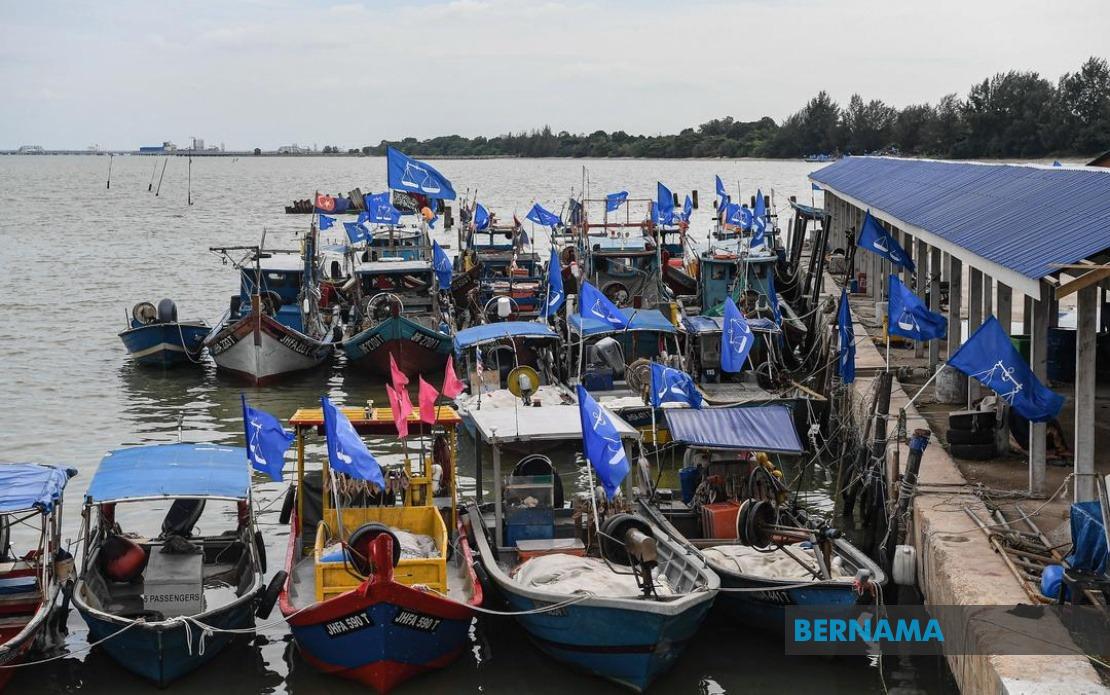
The fishing community faces a parallel but distinct set of pressures rooted in broader economic conditions. Fisherman Sin Hock Hwee, who has pursued his vocation since age fifteen, identifies fuel subsidies as essential to maintaining viable operations amid escalating maritime costs. Eliminating or reducing fuel support would render fishing economically unviable for operators without alternative income sources. The intersection of subsidy policy and fishing community welfare demonstrates how state-level decisions ripple through small-scale economic ecosystems.
Younger fishermen articulate broader institutional expectations beyond simple financial transfers. Hidayat Isa, at thirty-five, seeks investments in jetty infrastructure alongside demonstration that elected representatives genuinely listen to community voices. His advocacy for making Kampung Sungai Rengit an "adopted village" for the incoming assemblyman suggests aspirations for sustained political engagement rather than transactional election-year promises. This reflects growing sophistication among voters who distinguish between symbolic gestures and material commitments.
The political contest unfolding in Tanjung Surat frames these local grievances within broader electoral competition. Pakatan Harapan candidate Faizul Abdul Ghani faces incumbent Barisan Nasional representative Aznan Tamin in a direct confrontation. Both candidates encounter the same base of voters articulating interconnected demands—facility upgrades, security improvements, policy continuity, and genuine responsiveness. Success or failure in addressing these concerns may determine political fortunes in this marginal constituency.
The timing of these appeals is significant, occurring within the 16th Johor state election cycle involving 172 candidates contesting 56 seats. Sungai Rengit's specific grievances exist within a broader statewide political realignment. Candidates across constituencies face voters increasingly focused on materialist concerns—business conditions, personal safety, subsidy maintenance—rather than abstract ideological positioning. Communities like Sungai Rengit represent the granular political terrain where elections are ultimately decided.
For Malaysia's broader development narrative, Sungai Rengit exemplifies tensions between strategic industrial planning and local community welfare. The Pengerang Integrated Petroleum Complex represents modernisation and economic expansion, yet peripheral communities supporting this infrastructure remain marginalised within planning hierarchies. Traders displaced to make room for development projects should not face decade-long limbo, and fishing communities dependent on subsidies deserve policy frameworks reflecting their structural vulnerabilities.
The infrastructure deficit affecting Sungai Rengit also illustrates governance challenges extending beyond this single constituency. Temporary facilities regularly become permanent, unsolved problems accumulate across electoral cycles, and communities must repeatedly petition incoming representatives to address issues previous officeholders neglected. Breaking this pattern requires elected officials willing to prioritise implementation capacity and community engagement alongside symbolic initiatives.
Looking forward, the incoming Tanjung Surat assemblyman inherits both an opportunity and an obligation. These constituencies possess clearly articulated demands and documented grievances awaiting response. Whether the election winner demonstrates genuine commitment to infrastructure upgrades, security improvements, and sustained political engagement will establish the standard against which voters evaluate subsequent performance. Communities like Sungai Rengit are signalling that electoral legitimacy flows from delivering tangible improvements to lived conditions rather than rhetorical exercises in democratic participation.

