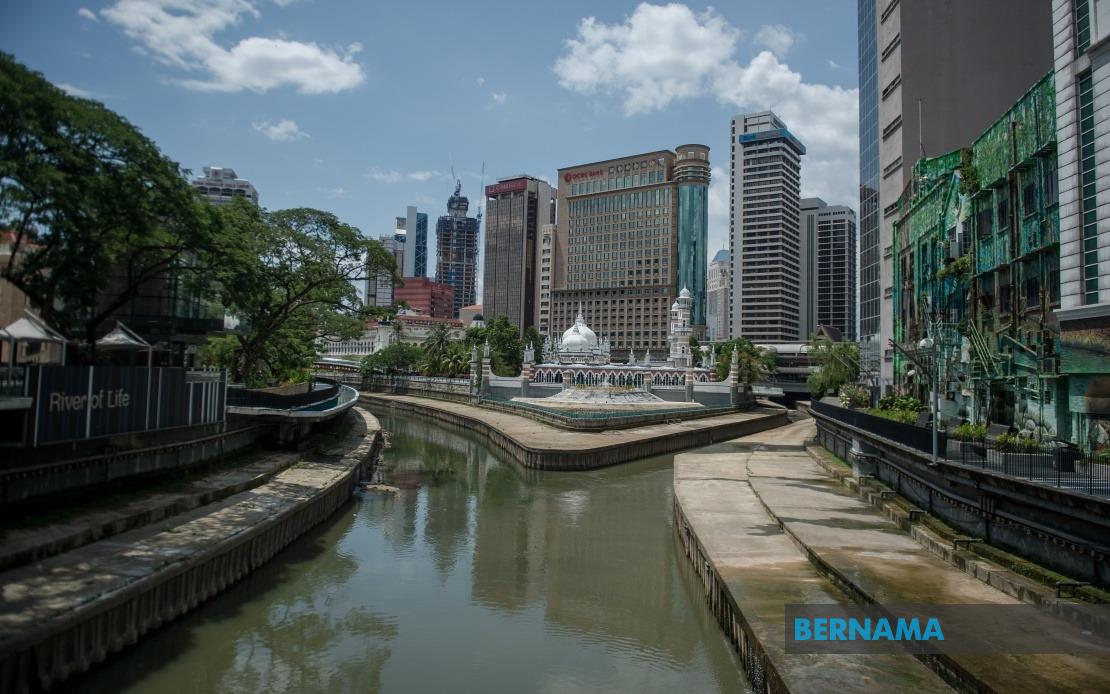
A transformational infrastructure initiative in Selangor is fundamentally reshaping the region's flood management landscape. The capacity of Sungai Klang has expanded dramatically to 22 per cent from its previous threshold of less than five per cent, according to Landasan Lumayan Sdn Bhd (LLSB), the company overseeing the ambitious river enhancement programme. This substantial improvement directly addresses the overflow dangers that have historically threatened Selangor's densely populated zones, particularly areas such as Taman Sri Muda that experienced severe inundation during the catastrophic 2021 floods.
The breakthrough stems from a comprehensive 56-kilometre river widening and deepening initiative that has now reached 68 per cent completion. Syaiful Azmen Nordin, LLSB's managing director, detailed the scale of the undertaking at a media conference in Shah Alam, explaining that since 2017, approximately 1.2 million cubic metres of sediment have been excavated from the riverbed and banks. This massive volume of material removal has fundamentally altered the waterway's geometry, creating a significantly wider and deeper channel capable of accommodating far greater water volumes during rainfall events. The dredging operations have specifically targeted the most vulnerable stretches, with riverbank reinforcement works complementing the excavation efforts.
The distinction between river overflow and other flood mechanisms has become critically important in understanding Selangor's flood challenges. Syaiful Azmen emphasised that the recent flooding incidents experienced by the state did not originate from Sungai Klang's capacity being exceeded. Rather, the inundations resulted from deficiencies in the internal drainage infrastructure that feeds into the main river system. This clarification underscores a broader reality affecting Malaysian urban centres: while major river systems represent one component of flood risk, the intricate network of smaller tributaries, stormwater channels, and local drainage systems often proves the decisive factor determining whether water reaches residents' homes. The dredging project therefore represents essential but incomplete protection, requiring parallel improvements to secondary drainage networks.
Looking toward completion by year-end 2025, the LLSB-managed initiative aims to push Sungai Klang's capacity to 40 per cent once all dredging is finished. The Federal government has committed to extending these improvements along the Shah Alam to Mid Valley corridor, indicating a multi-level governance approach to this critical infrastructure challenge. Achieving the 40 per cent target would effectively double the current capacity and represent an extraordinary enhancement to the river's flood-bearing capability. However, experts note that even at this level, Sungai Klang would still be operating below the theoretical maximum efficiency of modern waterway design, suggesting that long-term urban planning in Selangor should continue prioritizing watershed management and development controls.
Beyond physical dredging, the complementary river-cleaning programme has yielded equally impressive results. Since 2017, more than 98,000 tonnes of accumulated rubbish have been removed at a cost of RM19.6 million. This systematic waste extraction has produced measurable water quality improvements, with Sungai Klang's classification upgraded from Class 5 to Class 3 and 4 status. The economic and environmental implications are substantial: cleaner water improves the river ecosystem, reduces maintenance costs for downstream users, and enhances the aesthetic value of riverside communities. Simultaneously, the annual waste entering the river has plummeted from 16,000 tonnes to between 5,000 and 6,000 tonnes, reflecting both the removal of historical accumulations and behavioural changes among residents and businesses adjacent to the waterway.
The success in reducing riverside litter demonstrates the symbiotic relationship between infrastructure investment and public cooperation. Accompanying the physical dredging and cleaning works, sustained public awareness campaigns have encouraged residents and businesses to minimise waste entering the river system. This reduction of roughly two-thirds in annual rubbish input suggests that educational initiatives are reshaping attitudes toward the waterway. For Malaysian policymakers grappling with similar flood challenges in other states, the Sungai Klang experience offers a template: comprehensive solutions require combining major capital works with community engagement and behavioural change programmes. The relatively modest cost of the cleaning effort compared to its environmental and maintenance benefits indicates strong return on investment.
The 2021 floods, which devastated parts of Selangor and neighbouring areas, served as a watershed moment prompting this accelerated remediation effort. Those events exposed vulnerabilities in the state's flood management infrastructure and catalysed political will for substantial investment. The dredging project's 68 per cent progress suggests momentum is building toward tangible risk reduction. For Selangor residents in historically vulnerable areas, the expanding river capacity represents concrete hope that similar catastrophes might be prevented or mitigated. However, the fact that recent flooding did not originate from Sungai Klang overflow underscores that improvements to the main river alone cannot guarantee flood prevention across an entire state.
For the broader Southeast Asian context, Sungai Klang's transformation illustrates both the challenges and possibilities of managing urban waterways in rapidly developing regions. Rising urbanisation, land conversion, and climate change-related precipitation intensification have increased flood pressures across the region. Proactive investment in river infrastructure, coupled with maintenance and public participation, provides a viable pathway for managing these risks. The Malaysian experience also demonstrates that reversing decades of sediment accumulation and pollution requires sustained commitment and substantial financial investment, typically measured in tens of millions of ringgit for projects affecting major urban waterways.
As Selangor continues implementing these improvements, the project's outcomes will be closely watched by other Malaysian states and Southeast Asian nations facing similar challenges. The success metrics—capacity increases, waste reduction, water quality improvements—provide measurable benchmarks that other authorities can reference when planning their own interventions. The projected completion timeline and progressive capacity targets offer a realistic roadmap for what ambitious but achievable river management looks like. Ultimately, while the 22 per cent capacity increase represents significant progress, Selangor's flood management strategy must continue evolving, with attention to climate adaptation, urban planning reform, and comprehensive drainage network modernisation complementing the ongoing river enhancement works.

