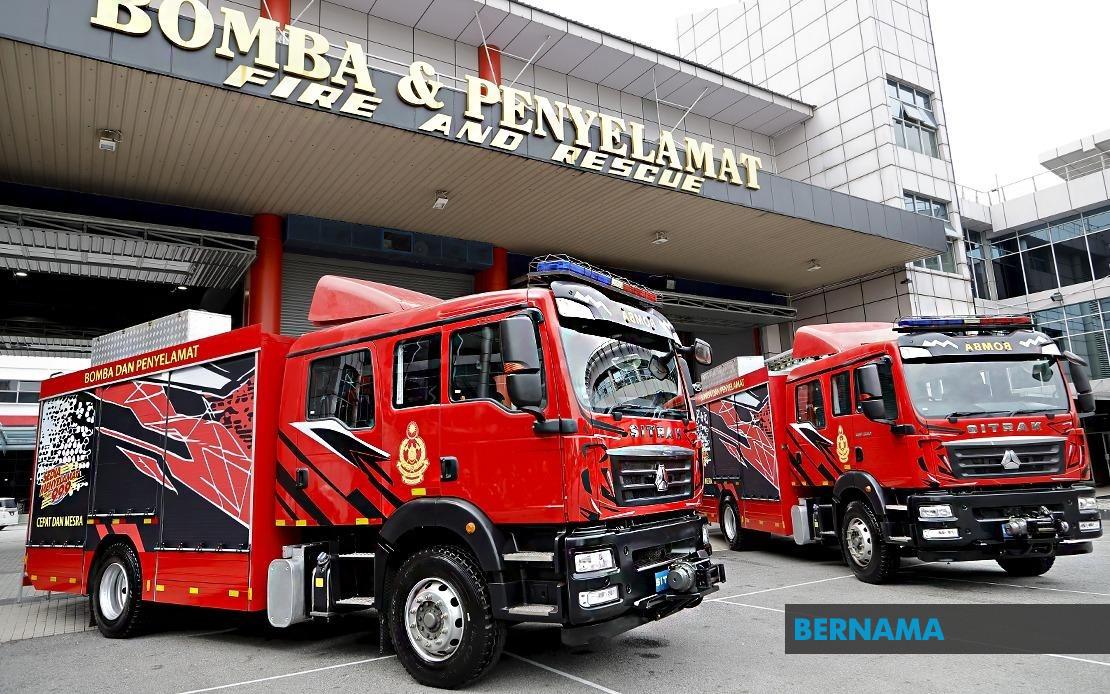
A magnitude 5.7 earthquake centred in North Sumatra triggered emergency response procedures across the Klang Valley on July 22, with Malaysia's Fire and Rescue Department receiving multiple reports of tremors at commercial and institutional buildings in the greater Kuala Lumpur area. The earthquake, with its epicentre approximately 55 kilometres southwest of Langsa, Indonesia, was felt across the region just after midday, prompting swift assessments by rescue teams to ensure public safety and building integrity.
The first indication of the tremors came shortly after the earthquake struck at 12.18 pm, when the Kajang Municipal Council building registered noticeable vibrations. Emergency responders from the Kajang fire station arrived within thirteen minutes to conduct a comprehensive structural assessment. Their inspection revealed no cracks, fissures, or damage to the building's framework, allowing the facility to remain operational without evacuation. The quick response and thorough examination provided reassurance to occupants who had experienced the initial tremors but faced no ongoing risk.
Within minutes, a second emergency call came from INTI International College Subang on Jalan SS15, where occupants had felt sustained vibrations. The Subang Jaya fire and rescue team mobilised to the campus and completed a detailed inspection of the facility. Their findings mirrored those from Kajang—the building structure remained intact with no visible damage, and the college was certified as safe for continued occupation. The rapid deployment and professional assessment helped calm concerns among students and staff who were concerned about potential structural compromise following the seismic event.
The Kuala Lumpur Fire and Rescue Department also responded to an emergency call from Menara B2 Maju Link in Bandar Tasik Selatan, a commercial high-rise located on Jalan Lingkaran Tengah 2. The tremor, lasting approximately fifteen seconds, prompted most building occupants to evacuate as a precaution and gather in open areas away from the structure. A team from the Sungai Besi fire station attended the scene and discovered that the building's occupants had already taken appropriate safety measures by moving to secure locations. After conducting their own thorough inspection, rescue personnel confirmed that the building had sustained no structural damage and presented no hazard to those wishing to return to their workplaces.
According to Selangor JBPM assistant director of operations Ashrul Riezal Asbar, the sequence of emergency calls demonstrated how the earthquake's effects rippled across multiple districts within minutes. The first report arrived at 12.31 pm from Kajang, followed by the Subang Jaya incident at 12.40 pm, and the Bandar Tasik Selatan call at 12.32 pm. This timeline illustrated both the widespread nature of the tremors and the rapid public response in reporting observed vibrations to emergency services. The coordinated response by multiple fire stations highlighted the effectiveness of Malaysia's emergency management system when mobilised across jurisdictions.
Beyond the formal emergency response structure, social media platforms became a secondary but significant channel through which residents sought confirmation and shared experiences of the earthquake. Threads, a relatively newer social networking platform, filled with posts from users across the Shah Alam region describing their encounters with the tremors. These informal networks served an important psychological function, allowing individuals to verify that others had experienced the same phenomenon and reducing anxiety about isolated incidents or building-specific problems. The digital exchange of earthquake experiences reflected how modern communication tools complement traditional emergency response frameworks.
One user posting under the handle 'nabilaishah' from Section 26 shared a brief account of feeling tremors before conditions returned to normal within minutes. The brevity of the online post masked the underlying concern that often accompanies unexpected seismic events—the uncertainty about whether the initial tremor signals the onset of more severe shaking or represents a singular event. Such posts often served as de facto seismic reporting for people in suburban areas who might not have formalised channels to communicate their observations to authorities.
Another social media user, 'nadiaxzailan', described a more subtle experience where the physical sensation of tremors went initially unnoticed amid workplace activity. The vibrations manifested as a shaking desk, which the user initially attributed to normal workplace disturbances rather than recognising it as evidence of seismic activity. Only through subsequent consultation with colleagues and checking online discussions did the true cause become apparent. This phenomenon—the difficulty in recognising earthquake tremors during routine activities—underscores why emergency response teams rely on multiple reporting channels rather than assuming that all affected individuals will independently identify and report seismic events.
The earthquake's distance from Malaysia—approximately 1,500 kilometres from the epicentre—meant that tremors reaching the Klang Valley represented the far-field effects of moderate seismic activity rather than direct impact. The 5.7 magnitude rating placed the event well below the destructive threshold but sufficient to be perceptible to attentive observers and sensitive equipment. The fact that tremors were distinctly felt across multiple buildings in Selangor and Kuala Lumpur, despite the considerable distance from the epicentre, reflected the efficiency with which seismic waves propagate through geological structures across the region.
For Malaysian readers familiar with the region's seismic activity, such incidents serve as periodic reminders of the area's vulnerability to Sumatran earthquakes. The Sunda Strait region, where the earthquake originated, lies along major tectonic boundaries where the Indo-Australian Plate subducts beneath the Eurasian Plate. This geological configuration ensures that significant earthquakes in North Sumatra will continue to generate tremors perceptible in Malaysia. The professional response demonstrated by fire and rescue teams, combined with transparent public communication and swift structural assessments, provides confidence that emergency management protocols are both activated and effective when seismic events occur.
The incident also highlighted the importance of regular building inspections and maintenance standards in high-density urban areas. The three structures inspected—a municipal building, an educational institution, and a commercial tower—all met safety standards despite experiencing noticeable tremors. This outcome reflected years of building code improvements and enforcement in Malaysia, ensuring that structures can withstand moderate seismic activity without compromise. For occupants of Klang Valley buildings, the swift clearance from rescue teams provided certainty that buildings could be safely reoccupied without prolonged disruption to work, education, or commercial activities.
Looking forward, the incident underscores the value of maintaining public awareness about earthquake safety procedures and the importance of responding to tremors with calm, methodical assessment rather than panic. The occupants of Menara B2 Maju Link who evacuated to safe areas demonstrated appropriate precautionary behaviour, even though the earthquake ultimately caused no damage. Emergency services agencies continue to encourage such vigilance, recognising that proper response during smaller seismic events builds institutional and public capacity for managing more severe earthquakes should they eventually occur. The Klang Valley's exposure to Sumatran seismic activity makes ongoing preparedness and professional emergency response essential components of regional safety infrastructure.

