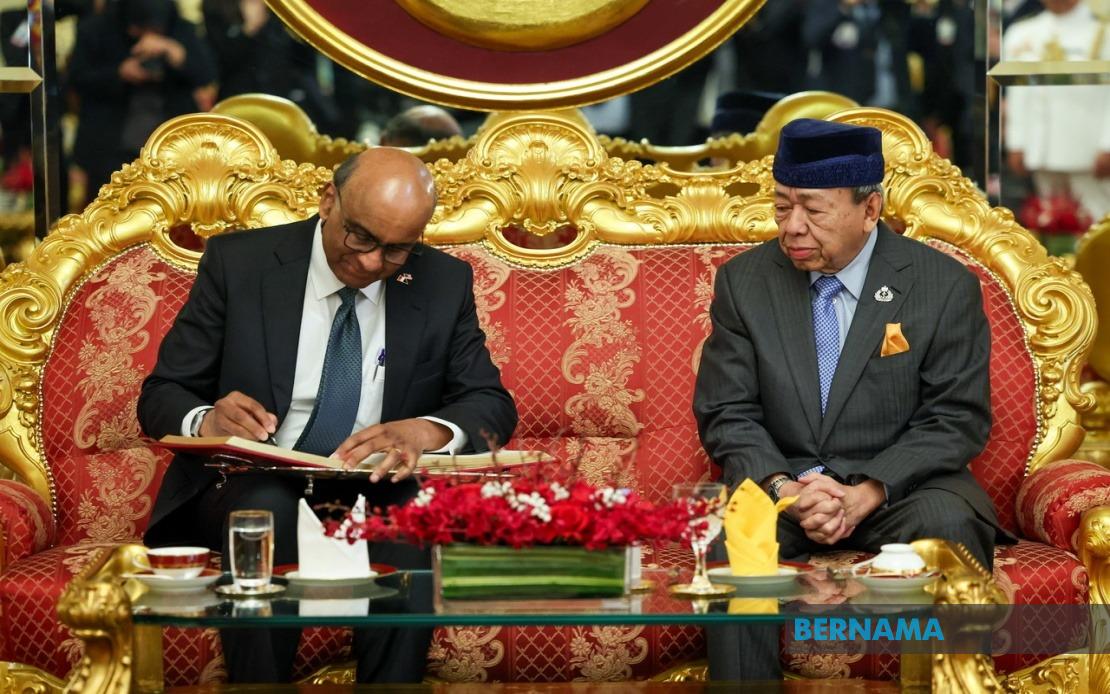
Sultan Sharafuddin Idris Shah, the reigning monarch of Selangor, extended formal recognition to Singapore President Tharman Shanmugaratnam on Monday through an official audience at Istana Alam Shah in Klang. The high-level engagement underscores the ceremonial importance placed by Malaysia's states on diplomatic interactions with neighbouring nations, particularly those within the ASEAN framework. President Tharman's presence at the royal palace marked a significant moment in the protocol calendar, with the meeting occurring as part of a three-day state visit spanning July 13 to 15 at the formal invitation of His Majesty Sultan Ibrahim, the reigning Yang di-Pertuan Agong.
The president arrived at the palace promptly at 11 am, where he was formally received by Tengku Amir Shah, the Raja Muda of Selangor, who holds the position of heir apparent to the sultanate. This ceremonial reception followed established diplomatic protocols befitting a head of state visit. The occasion was attended by Entrepreneur Development and Cooperatives Minister Steven Sim, who assumed the role of minister-in-attendance to facilitate coordination between the Malaysian government and the visiting dignitary. The presence of a federal minister alongside state-level officials reflected the collaborative nature of Malaysia's diplomatic apparatus, blending federal and state responsibilities in receiving high-ranking international guests.
The substantive audience proceeded for approximately ninety minutes, with discussions concluding at 12:40 pm before the Singapore president departed the palace. The duration of such meetings typically reflects the depth of engagement between parties and the range of issues addressed during formal diplomatic exchanges. While the specifics of their discussion remained undisclosed through official channels, such audiences conventionally encompass matters of mutual bilateral interest, regional cooperation frameworks, and the strengthening of institutional relationships between the two nations.
President Tharman's visit to Malaysia carries particular significance as a reciprocal gesture. The Foreign Ministry clarified that this state visit returns the diplomatic courtesy extended by His Majesty Sultan Ibrahim during his own state visit to Singapore on May 6 and 7, 2024. This pattern of reciprocal high-level visits demonstrates the formal commitment both nations maintain towards sustained diplomatic engagement at the highest levels, a hallmark of mature bilateral relationships within Southeast Asia.
The economic dimension of Malaysia-Singapore relations remains formidable and strategically consequential for both economies. Singapore stands as Malaysia's second-largest trading partner on the global stage, while simultaneously occupying the paramount position among Malaysia's trading partners within the Association of Southeast Asian Nations. This distinction illustrates how regional trade integration has become increasingly significant relative to global commerce patterns, reflecting the deepening economic interdependence fostered through ASEAN mechanisms and bilateral arrangements. The commercial ties between Kuala Lumpur and Singapore extend across diverse sectors including manufacturing, financial services, energy, and petrochemicals.
For Malaysian readers and observers, President Tharman's state visit carries implications extending beyond ceremonial formality. The engagement at Istana Alam Shah, particularly involving Selangor's leadership, highlights how state governments play active roles in Malaysia's diplomatic architecture. Selangor, as the most economically developed state and home to the federal territories of Kuala Lumpur and Labuan, occupies a strategically prominent position in Malaysia's international relations. The Sultan's direct involvement in receiving the Singapore president underscores the significance of state-level engagement in advancing national interests and regional cooperation.
The timing of this visit also reflects broader Southeast Asian diplomatic rhythms. With ASEAN functioning as the institutional centerpiece of regional cooperation, bilateral visits between member states serve to reinforce consensus-building mechanisms and maintain the channels of communication necessary for addressing transnational challenges. The visit occurred during a period when regional attention has focused increasingly on maritime security, digital economy development, and climate change mitigation—areas where Malaysia and Singapore share overlapping interests and complementary capacities.
From a Malaysian perspective, the cultivation of relations with Singapore represents a balancing act between competition and cooperation. Both nations occupy relatively similar developmental positions within ASEAN, yet pursue sometimes divergent strategic interests. Regular high-level diplomatic exchanges serve to manage potential friction points while identifying areas for productive collaboration. The audience at Istana Alam Shah thus functioned as both a symbolic affirmation of bilateral goodwill and a practical opportunity to advance specific policy objectives through direct dialogue.
The involvement of Minister Steven Sim in his capacity as minister-in-attendance signals the Malaysian government's intention to channel discussions towards substantive economic and developmental cooperation. The Entrepreneur Development and Cooperatives Ministry's engagement suggests possible discussions around small and medium enterprise collaboration, skills development, and cooperative frameworks that could benefit entrepreneurs in both nations. Such working-level coordination complements the ceremonial aspects of state visits, ensuring that diplomatic engagement translates into concrete cooperative outcomes.
Looking forward, this visit exemplifies how Southeast Asian nations continue to invest in face-to-face diplomatic engagement despite expanding digital communication capabilities. The personal dimension of state visits—the opportunity for leaders to establish rapport and exchange perspectives in informal settings—remains irreplaceable in contemporary international relations. For Malaysia and Singapore, maintaining robust channels of communication and demonstrating commitment to bilateral relationships through such visits helps ensure that the relationship continues to evolve positively, underpinned by shared recognition of mutual economic and strategic interests within the broader ASEAN community.

