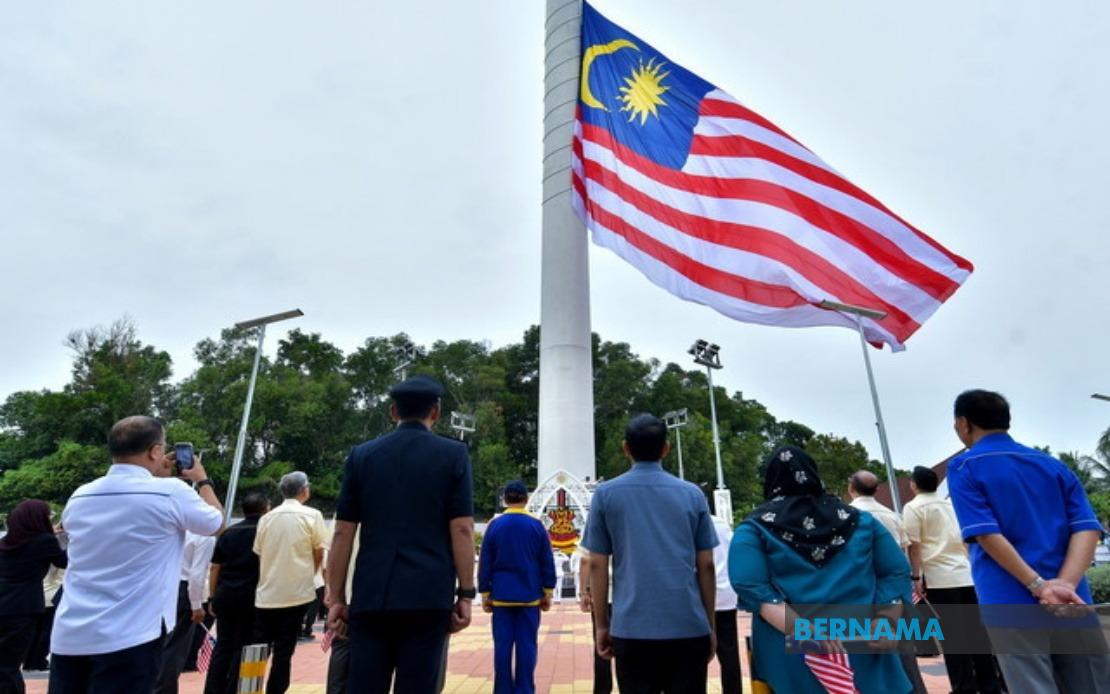
The Sultan of Selangor, Sultan Sharafuddin Idris Shah, has underscored that the Jalur Gemilang represents far more than a ceremonial banner unfurled during Independence festivities. Speaking in Shah Alam on August 26, His Royal Highness stressed that the flag embodies the collective identity of the Malaysian nation, serving as a poignant reminder that despite profound differences in ethnicity, faith, language and political ideology, all Malaysians remain bound by citizenship of a single country.
In granting consent for the national flag to be raised at the Selangor Flagpole at Dataran Selangor throughout the National Month—from August 26 through September 17—the Ruler sought to kindle deeper reflection on what the symbol represents. The flag-hoisting ceremony held at the venue that morning was framed not merely as ritual, but as a deliberate gesture to rekindle patriotic sentiment and reinforce the bonds of communal cohesion among the population. The emphasis placed on these occasions underscores the ongoing importance placed by Malaysia's traditional leadership on using national observances to cultivate solidarity.
Sultan Sharafuddin articulated a compelling distinction between the superficial and the substantive dimensions of national celebration. While displaying thousands of flags throughout streets and public spaces demands minimal effort and resources, he argued that the genuine challenge facing Malaysia lies in constructing a society where citizens from every demographic feel genuinely valued, integrated and genuinely content to be Malaysian. This observation carries particular weight given contemporary discourse surrounding social cohesion, migration patterns and generational attitudes toward national identity in the region.
The Ruler advocated for a deliberate shift in how younger Malaysians are educated regarding pluralism and coexistence. He emphasized that the rising generation must be deliberately instilled with respect for religious diversity, cultural variation and ethnic difference. This pedagogical emphasis addresses a recognized gap in Malaysia's social fabric, where educational institutions have struggled to consistently embed interfaith understanding and cross-cultural empathy in curricula. The call represents recognition that national unity requires intentional cultivation rather than passive inheritance.
Critically, Sultan Sharafuddin directed pointed remarks toward the nation's political and administrative elite. He admonished leaders to embody the virtues of restraint, reciprocal respect and compassionate governance, cautioning them against weaponizing sectarian, communal or ideological fault lines for narrow partisan advantage. This rebuke carries considerable resonance in Malaysian politics, where periodic episodes of inflammatory rhetoric and divisive positioning have sparked community tensions and undermined efforts at bridge-building. The Ruler's intervention signals institutional concern about political conduct and its corrosive effects on social fabric.
A particularly striking dimension of His Royal Highness's statement lay in its assertion regarding the flag's historical neutrality on matters of demography and faith. Sultan Sharafuddin emphasized that the Jalur Gemilang has never discriminated between Malays, Chinese, Indians, Kadazan-Dusuns, Ibans or other ethnic communities, nor has it favored adherents of Islam, Buddhism, Christianity, Hinduism or alternative belief systems. This framing directly counters narratives that sometimes construct the flag or national symbols as representing particular ethnic or religious constituencies rather than the broader polity.
The statement reflects broader patterns of institutional messaging from Malaysia's royal institution, which has increasingly positioned itself as custodian of pluralistic national values in recent years. This posture represents significant symbolic weight in a constitutional monarchy where the Rulers retain considerable moral authority, particularly on questions of national identity and social cohesion. The timing of such pronouncements during Independence observances signals deliberate strategic communication aimed at countering narratives of division.
For Southeast Asian observers and the diaspora communities scattered across the region, Sultan Sharafuddin's remarks carry implications extending beyond Malaysia's borders. The challenge of building durable pluralistic societies while managing competing identities represents a pressing concern across the region, from Thailand's communal tensions to Indonesia's interfaith challenges. Malaysia's institutional efforts to articulate an inclusive national narrative merit attention as a potential model, even as critics acknowledge ongoing implementation gaps between rhetorical commitment and lived reality.
The Ruler's emphasis on the distinction between ceremonial nationalism and substantive nation-building addresses a phenomenon observed across Southeast Asia, where flag-flying and patriotic rhetoric sometimes obscure persistent inequalities and intercommunal friction. His Royal Highness essentially challenged Malaysians to move beyond symbolic gestures toward genuine psychological and institutional transformation. This framing invites deeper questions about whether existing social structures and political incentives genuinely encourage the reconciliation and mutual recognition he advocates.
Ultimately, Sultan Sharafuddin positioned Independence Day commemoration not as historical retrospective but as recurring opportunity for national self-examination and recommitment. The argument advanced suggests that authentic independence transcends political sovereignty to encompass the capacity of diverse populations to coexist with dignity and mutual respect. His call for strengthening unity, interdependence and reciprocal regard during the anniversary period articulates a vision of national maturation wherein citizens demonstrate loyalty to shared constitutional frameworks rather than to particularistic identities.
The statement's underlying message resonates with constitutional multiculturalism principles embedded in Malaysia's Federal Constitution, yet His Royal Highness's intervention suggests ongoing anxiety about whether such principles are adequately championed across the political and social landscape. By elevating these themes during a nationally significant moment, the Sultan seeks to reset expectations for how leaders and citizens should conduct themselves in relation to national symbols and shared civic life. The extent to which such institutional exhortations catalyze behavioral change among politicians and communities remains an open question.

