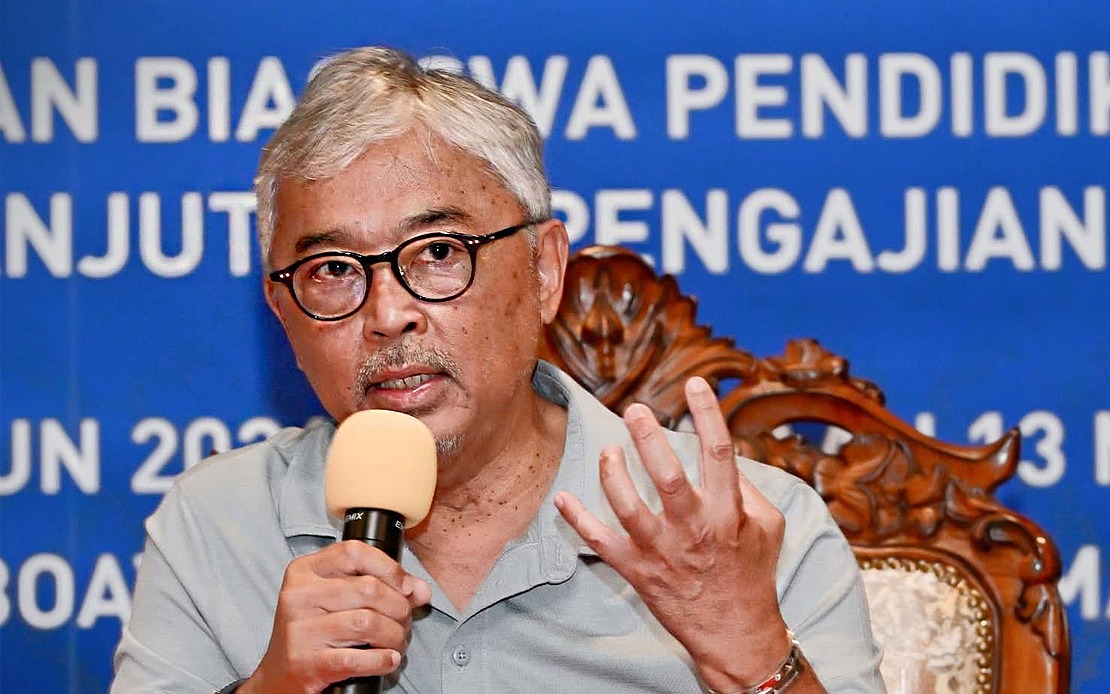
The Sultan of Pahang, Al-Sultan Abdullah Ri'ayatuddin Al-Mustafa Billah Shah, has made a public appeal for higher education institutions across the state to broaden scholarship opportunities for students from Tioman Island, seeking to create a sustainable pipeline of qualified professionals from Malaysia's more isolated communities. His intervention follows the Institut Jantung Negara University College's decision to award scholarships to two exceptional students from the island, an initiative the Sultan has identified as a blueprint for other universities to emulate in their efforts to develop human capital from rural and peripheral regions.
The Sultan's directive represents a deliberate strategy to democratise educational access across geographical boundaries within Pahang. His emphasis on institutional responsibility reflects a broader concern that proximity to urban centres should not determine educational opportunity, and that island communities merit equivalent investment in youth development. By positioning the IJN scholarship awards as a catalyst for systemic change, the Sultan has essentially challenged other universities to move beyond token gestures toward substantive commitments to regional equity.
The specific context of Tioman Island carries particular significance for Pahang's development agenda. As a remote maritime community, Tioman's youth face structural barriers to higher education, including limited local facilities, transportation costs, and the difficulty of maintaining family support systems during university years. The Sultan's intervention acknowledges these realities whilst framing scholarships not as charity but as strategic investment in the state's future workforce and professional class. His reference to "our children" emphasises the state's collective responsibility for all its residents, regardless of residential remoteness.
The Sultan's comments during the IJN Scholarship Presentation Ceremony underscored the exceptional academic merit of the two recipients, establishing a clear expectation that scholarship awards should reflect rigorous selection standards. By praising their academic excellence, the Sultan legitimised the initiative as merit-based rather than quota-driven, a distinction that carries weight in Malaysian educational discourse. This framing may encourage other institutions to develop similarly rigorous but accessible scholarship pathways without compromising institutional prestige.
Central to the Sultan's message is an exhortation to the scholarship recipients themselves, delivered with the directiveness befitting his constitutional role. His instruction that the students treat their opportunity with absolute seriousness—framing success as non-negotiable and positioning them as benchmarks for their island community—places significant psychological and social weight on their shoulders. This expectation-setting reflects a traditional leadership approach where royal patronage carries implicit responsibilities for the recipients to vindicate the institution's faith in them.
The Sultan's broader recognition of IJN's institutional excellence extends beyond its medical credentials into its corporate social responsibility orientation. By publicly commending the hospital's commitment to ground-level community engagement, including programmes in remote settlements such as Kampung Bantal, the Sultan has effectively created social and reputational incentives for other institutions to develop comparable initiatives. This public acknowledgment of institutional contribution to state welfare represents a form of soft power that influences organisational decision-making through prestige and royal favour.
The timing and venue of this pronouncement amplify its impact within Pahang's institutional ecosystem. A royal decree delivered via official channels carries substantially greater weight than informal suggestions, signalling that the Sultan views educational equity as a matter of state policy concern rather than peripheral interest. This transformation of a scholarship initiative into a monarchical priority potentially shifts the calculus for other universities evaluating their social contribution strategies and budget allocations.
For Malaysian universities more broadly, particularly those in less economically developed states, the Sultan's intervention provides both a model and a challenge. It demonstrates how royal patronage can be leveraged to advance social equity objectives, whilst simultaneously establishing expectations for institutional participation in community development. The emphasis on rural and island communities reflects growing national concern about regional inequality and the concentration of educational resources in urban centres, an issue increasingly relevant to Malaysia's aspirations toward inclusive development.
The scholarship initiative also addresses a practical challenge facing remote communities: the brain drain that accompanies higher education opportunities. When talented young people leave island communities for university and subsequent employment in cities, their home regions lose not only population but accumulated human capital and community leaders. By establishing pathways for Tioman students into quality higher education institutions, the Sultan's initiative hopes to eventually produce professionals who retain connections to their origins and potentially contribute to community development.
Implementing the Sultan's vision requires more than rhetorical commitment. Universities will need to develop recruitment mechanisms that effectively reach Tioman residents, create support systems for geographically dispersed students, and potentially adapt programme delivery to accommodate island-based participants. Financial sustainability of scholarships represents a significant consideration; institutions must evaluate whether they can commit recurring resources or whether each award represents a one-time gesture. The Sultan's emphasis on multiple institutions participating suggests recognition that burden-sharing across institutions enhances programme sustainability.
The Sultan's intervention also carries implications for neighbouring Southeast Asian regions facing similar challenges of island and rural educational access. Malaysia's approach to leveraging institutional networks and royal influence to advance educational equity may offer insights for other governments seeking to reduce geographic disparities in higher education opportunity. The model demonstrates how traditional leadership structures can be mobilised to support contemporary development objectives.

